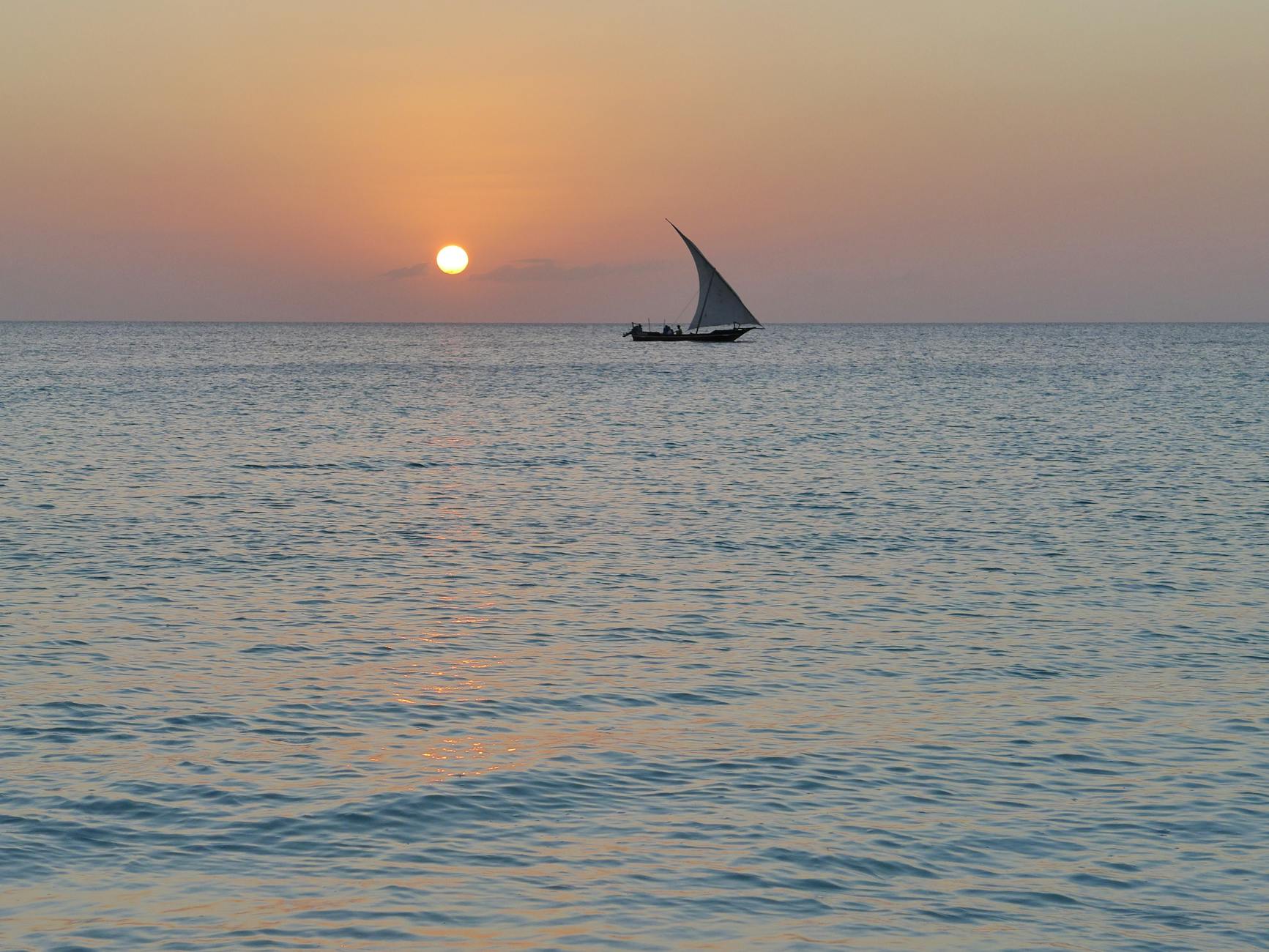
Photo by Gavin Rain on Pexels.com
by Phil Hall
.
The dhow tacks from side to side while its squatting boatmen take big swings at getting us to our destination. And the sailors sit and chat as miss the quay twice and chew quat. After a journey across open sea they manage to get near the island. Unfortunately they have mistimed our arrival and the tide is out. We have to walk for half a mile in shallow water and feel the shock and wriggle of rock pool life against our feet, and risk being spiked by sea urchins through our flip flops before we reach the beach.
But on this small island, not too far from the Kenyan coast the people aren’t black, but yellow-black. They seem sallow with small island inbreeding and very, very poor. They stare at us from behind the ruins – dusty stone Arab arches. The children show us an ancient well down which the whole of island’s history seems to have disappeared. No one can tell us anything about the island at all. What language do they speak here? It’s not Swahili. Is it Arabic?
The history of slaving and of trade and abandonment, boats lost and off course on the way to the land of Punt, the story of Sinbad is here to read in faces and bodies.
Time to go back. It’s late, much too late. The sailors have made another mistake with the tide. On the beach at dusk we see a thousand red, one-clawed crabs run, their eyes on stalks, up and down the gray, volcanic sand. We have to tiptoe through the crabs and step into the waves and swim a few metres to the dhow before getting hauled on board.
It gets dark and the dhow enters a channel cut through the mangrove swamp. The channel separates us from the open sea and Lamu. A cloud of mosquitoes is waiting for us and swarming as we move through. We are in a loud mist of small hungry insects, and slap and shake and wave to ward off their tiny hungry pinpricks.

Then something glorious happens. The sky clears and there are the first and last stars in a gread broad arc. We are imprinted by them like children looking for the first time at their mother’s face – we float along with them and they float above.
We are out in the ocean again and the dhow is beginning to rock – and rock harder – and the boat starts to tilt and tip. It’s a storm. And in the growing blast of the storm the boatmen consign themselves to God saying:
“Showri ya Mungu.”
Showri ya Mungu means ”We are in the hands of God.” in Swahili. This is the men’s feeble excuse for incompetence. It doesn’t wash with us. The three largest, Antonello, Dad and I, throw ourselves from one side of the dhow to the other side to try and stop the boat from tipping over. We have to lean so far overboard bending backwards, that we feel the spray from the waves. Mom shouts to dad. If the boat capsizes, you take one twin and I’ll take the other (later on she laughs about this).
I am fifteen and I whimper: “I don’t want to die.” It still embarrasses me to this day to remember.
On the orders of the sailors, my twin brothers and my mother curl up quietly at the bottom of the partly flooded bottom dhow giving it a little extra ballast and stability.
Suddenly, the storm just stops. Just like that. Everything calms down like some Galilean miracle. The boatmen assure us “The coast is very near” but we sail for at least an hour without seeing anything.
Then, suddenly: ”Get into the water now. Start moving. The shore is over there. We need to take the boat back.”
I don’t believe them. Is there a shore? It is 1 a.m. and sky is overcast. We can’t see the anything. Still, we all dip ourselves into the water and start moving into the darkness, invisible to each other, only the sound of voices. We swim until, finally, feet touch the bottom. Now the sea blows its water softly like a warm wind against our chests. We wade forwards blindly and the sea gets shallower and shallower.
We reach Lamu beach and can make out the shadows of the palms above. All of us lie down and rest. I am face down, soft dry sand still warm from the sun against my cheek. In the quiet I have time to think. ”The sun went down about seven hours ago. Why is the sand still warm?”
I felt such a such a love of the Earth my family and friends – overjoyed to be alive – such happiness.
After a while we all got up. We walked the last miles along a tarmac road to bed and then immediately to sleep. That night I dreamed a wide dream of all life on Earth and was comforted.
“Shwri ya Mungu” means we are in God’s hands or alternatively: It means ‘It’s all God’s fault.’
Quat is a drug that accelerates the metabolism – it’s stronger than coffee
Discover more from Ars Notoria
Subscribe to get the latest posts sent to your email.
You must be logged in to post a comment.