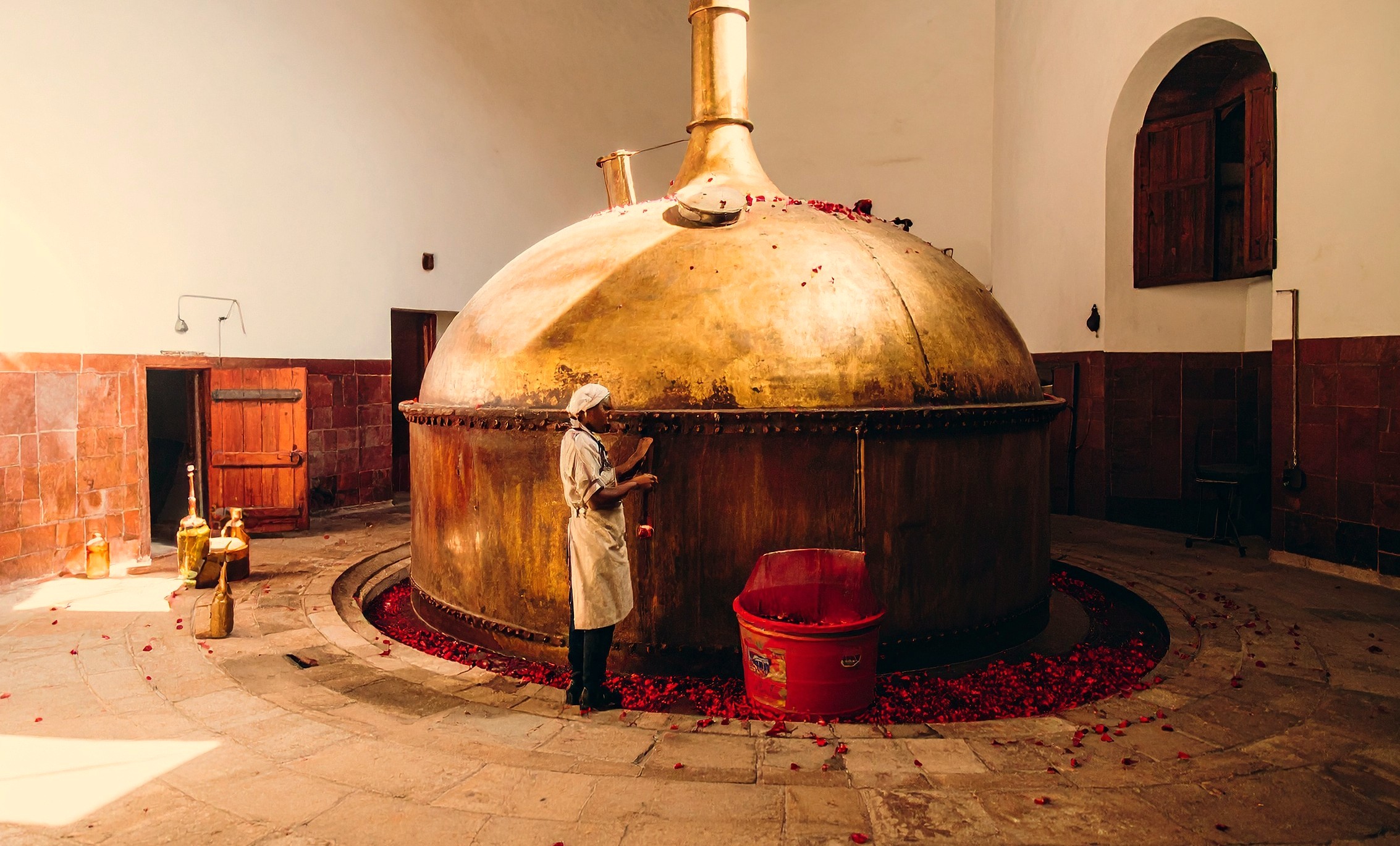
Kannauj, India’s attar capital, still distills, photo Arun Kapil
Throwing Open the Kitchen Windows
by Arun Kapil
The first time I served a dish in Ireland to paying guests, my hands shook. Ballymaloe House, cold starter section, summer. Myrtle Allen—matriarch, mentor, midwife to so many Irish food dreams—looked over her glasses and said, dry as a refined Cork stout: “It’s ready. You’re not the one eating it.” With a wise grin and a glint, she sent me on my way and the dish, ‘away!’
That first plate? Mimosa salad. Garden leaves just kissed by the sun, grated yolk and white snowed across, and a whisper of chive flower. Soft. Fresh. Fragrant. That dish lit a path I’ve walked ever since—not cooking for applause, but for instinct. For feeling. For scent. It taught me early: the best food isn’t intellectual. It’s emotional. A shiver of surprise. A scented memory. A flavour that lingers.
Cooking with waters, flowers, and perfumes isn’t trickery. It’s the oldest kind of alchemy. We distil, reduce, infuse, coax. We borrow what nature offers and remix it into emotion. This piece is for that art. For the cooks who understand that beauty isn’t owned. It’s noticed. It’s nurtured. It’s remembered.
Today, as I write in the thick breath of an Irish summer, there’s scent everywhere. Petrichor after a soft rain. Wild blackberry blossom. Clover. The sea’s salt. It’s not exotic. It’s exact. Every nose knows its place. This piece is for the flowers, the waters, the innovating dreamers. For those who believe flavour isn’t just tasted, it’s smelled first.
The West, if we’re honest, has always had a strange relationship with scent in food. It approaches botanicals like a spreadsheet. Medicinal. Measured. Useful, sure, but rarely romantic. In medieval Europe, physic gardens bloomed in monastery courtyards and behind universities. Plants were classified, boiled, codified. Recipes were less feast, more formula. From the Materia Medica: “Cut wild apples across, fill with powder of cloves, nutmeg, and lignum aloes… roast and eat to comfort the digestion.”
In contrast, the East cooked with feeling. In Ayurveda and Unani traditions, scent was not a flourish, it was a function of spirit. Cooling vetiver water. Rose and saffron milk. Kewra in rice. Spiced sharbats. Here, aroma was nutrition. It was part of balance, of being, of thanks.

Europe drank to remember. India drank to revive. The Middle East sweetened life. But really, they all did the same thing: they honoured what grew around them. They honoured joy.
Take hydrosols. The ghost waters left after plants are steam-distilled for oil. In the modern lab, they’re called by technical names. In the kitchen, they’re poetry. Hydrosols are the whisper left after the music ends. They don’t shout. They sway. Rose water swirls through Indian phirnis, Iranian faloodeh, Turkish delights, and yes, even a batch of Irish shortbread if you’re brave. Orange blossom is bottled sunshine—Moroccan couscous, French pastries, Spanish sweets. Kewra, distilled from pandanus, chills rice with a high floral coolness. Vetiver water, or khus, turns a summer drink into ceremony. And then there’s succory water: chicory distilled and sipped in Persian tradition, bittersweet and bracing, a drink that clears both palate and mind.

And it’s not just over there. Ireland’s hedgerows steeped into syrups—meadowsweet, borage, nettle, angelica. The Druids knew their roots and flowers. Meadowsweet was sacred. Mugwort was mystical. Angelica was an offering. Hydrosols brewed by monks were taken not for scent alone, but for spirit. Across the water in Britain, cooks stirred elderflower into puddings, made primrose vinegar, and laced mead with gorse (floral, coconutty tones) and thyme. Rose water was once a pantry staple from Suffolk to Somerset. Herbs were not garnish, they were backbone.
But let me tell you where it all clicked for me. I must have been six, maybe seven. Mum was baking. I remember the scent of sugar, egg, and something fresh and grassy-like, I couldn’t name. She handed me a flower dipped in egg white and rolled in sugar. Beside it sat strips of candied angelica, once packaged bought from a shop, now unboxed—a bright green, sliced jewel. But this? This flower came from outside. A garden. A field. The egg white—glue, the sugar the sparkle. I was tasting something alive, something magic. That day my brain flipped. Food didn’t have to be boxed. It could grow. It could be gathered. And with a little play, it could be glorious.
The East has never been afraid of perfume. Especially in the kitchen. Mughal cooks in India would infuse rice and meats with ittars—rose, jasmine, vetiver, saffron. Attar or ittar, same origin, Persian “itir,” essence. One drop was enough. Not seasoning, spell-work. Perfume that opened the dish. That lifted it. The first time I added rose-oud ittar to a deep, meaty masala, it was like throwing open the windows. Not sweet. Not floral. Just bright. A high note grounding in the bass of spice. It didn’t overtake. It illuminated. Made it dance.
These perfumes weren’t made for fragrance counters, they were made in copper stills, over slow fire, from sacred things. Musk (once from deer, now thank God synthetic), oud from resin-sick agarwood, rose petals from a thousand blooms. Cardamom crushed, saffron steeped. Alcohol-free. Sacred. Seductive. Stored in glass or clay. Each drop, a legacy. Kannauj, India’s attar capital, still distills them by hand. I get mine direct. When I open a bottle, it’s not just scent. It’s a story waiting to escape.

Come summer, I think about stuffed courgette flowers. A bit precious? I once thought the same. But fill them with a favourite farce—for me, rice, chopped prawn, chilli, dash of kewra, cracked coriander seed, marigold petals. Suddenly they sing. Of summer, of celebration, of showing off without shouting. It’s a simple dish that says: I’ve arrived. And I brought joy.
Of course, not all flowers belong in the kitchen. Instagram might suggest otherwise. But rhododendron is toxic. Sweet peas are not for dinner. Know your petals. Lavender, chamomile, borage, nasturtium, calendula, rose—these you can trust. But don’t cook what you can’t name. Grow your own. Buy from a forager. Never decorate with a bouquet sprayed in heck knows what. And trust your nose. If it smells like bleach, it won’t taste like joy.
Used well, flowers are not garnish. They’re grammar. Calendula brightens lemon. Lavender softens custard. Chamomile hums in honey. Hibiscus stains like a bruise. Blitzed into sugar. Infused into honey. Steeped in syrup. Scattered over eggs. Salting rose on dark chocolate. Garden sugar on pancakes. It’s not twee. It’s triumphant.

I’m no tweezer chef. I haven’t the patience. But when the petal fits, use it. Marigold in yoghurt? Glorious. Rose on chaat? Divine. Borage in a G&T? Essential. Just don’t shove dehydrated petals on a pub salad and call it craft. Context is everything. Get it right, it’s a poem. Get it wrong, it’s potpourri.
Science backs this instinct. Linalool in lavender is calming. Geraniol in rose is sensual. Methyl salicylate in violet cools. These are chemicals. But they’re also emotions. They alter mood. Aromatherapy? Sure. But also, dinner.
It’s the same across the world. French chefs add orange blossom to madeleines. Lebanese cooks stir rose into pastries. Irish foragers steep hawthorn into syrup. Indian aunties lace milk with kewra. Nobody owns scent. We all chase it. Some with more flair. Some with more logic. But all seeking the same thing: the delicious. The beautiful. The memory.

So, if you ask me what’s the difference between the West and the East when it comes to flowers and scent in cooking, I’d say it’s a trick of the light. The West classifies. The East consecrates. One thinks. The other feels. But both are reaching for the same thing. To flavour what feeds us. To scent what sustains.
Add flowers to your fridge, not just your vase. Cook with scented water like you mean it. Don’t whisper flavour. Drop it. If the dish feels heavy, add a whisper of kewra. If your day feels grey, stir rose into yoghurt. If your curry’s gone dense, try musk, not mint. And if you’re making memories, always add scent.
Because no culture owns beauty. But if you’ve got the nose, you’ll find it on the plate.
So, on this theme, my August recipe, you can prep ahead of time but keep all ingredients separate—cherries, cucumber, cheese chilled and only combine just before you serve, dressing in a jug. Shrub Cooler on the side? Always. Fragrant, sharp, doesn’t ask permission. Enjoy!
Cherry Bomb & Sunshine Salad

Thinly slice half a fennel bulb, mandoline-thin if you’ve got the nerve. Deseed half a cucumber, chop it into juicy half-moons. Toss both through with a tangle of bitter greens: a little radicchio, wild rocket, torn nasturtium leaves if you’re lucky enough to be growing them. Arrange on a large, flattish plate.
Slice a red chilli into whisper-thin rounds, scatter them along with a handful of chilli-roasted chickpeas—make them yourself or steal them from the pub snack stash. Then tear in a ball of burrata, messy and glorious, soft cream streaking through the crunch. Halve a couple of big handfuls of dark cherries—the kind that stain your fingers and bite back—and drop them onto the plate like stolen jewels.
Shave a little charred lemon rind over—burnt yellow zest straight from the flame, citrus smoke. Finish with a generous glug of my Sunshine Dressing: fruity olive oil, juice and zest of an orange, a splash of Worcestershire sauce, sweet mirin, white wine vinegar, salt and a couple of teaspoons of Green Saffron Garam Masala whisked well. Scatter with torn mint and basil leaves, marigold petals and rived nasturtium flowers like summer confetti, then serve before the heat steals the scent. Store the rest of the dressing in the fridge ‘til next time, or for the next guest who deserves a little sun on a fork.
Shrub Life: Ginger, Plum & Pepper Sip

Grab two ripe plums—dark, bruised, and bursting—chop them roughly, throw into a saucepan, stone and all. Grate a fat thumb of fresh ginger root (no need to peel if clean) and toss it in with the plums. Add a tablespoon of cracked black peppercorns, half a cinnamon stick, a single clove and two green cardamom pods if you’re feeling dramatic. Pour in 200ml apple cider vinegar and 100ml water. Add 3 tablespoons of sugar, jaggery if you’ve got it, soft brown if you don’t, and bring the whole mess to a boil, then drop to a simmer for ten minutes. Off the heat, let it cool and steep for a few hours or overnight if you’ve got the patience. Strain into a bottle. Chill.
To serve: pour a double shot of the shrub into a glass with lots of ice. Top with sparkling water or a shot of dark rum, or both if you’re feeling on it. Wedge of lime. Hit of mint. Maybe a bruised plum slice on the side. It’s tart, peppery, alive with ginger fire and full of attitude. The kind of drink that clears its throat, then belts out summer in full voice. Serve it next to my Cherry Bomb & Sunshine Salad and you’ve got a gig, not a lunch.
The Bright Knuckle
Poitín. Orange blossom. Saffron. A gold-plated punch with perfume in its fist.
Pour 50ml of clean, unaged poitín into a mixing glass, something with burn but backbone like Mad March Hare. Steep a pinch of saffron in 15ml of warm honey syrup, just long enough to release its gold. Add that liquid sun to the poitín , along with 10ml orange blossom hydrosol and two dashes of bitters – cardamom or orange, your call. Stir slow over ice till it hums. Strain into a low glass over a single rock. Garnish with burnt lemon peel and a thread of saffron balanced like a dare.
It starts soft, but swings. The orange blossom floats above, the saffron weaves through, and the poitín brings heat like a bare-knuckle in a silk glove. This isn’t a cocktail. It’s a back-alley poem that smells like a summer wedding. Sip with care. And conviction.
Arun Kapil, Food Editor of AN Editions, and punk food poet, founded and owns a spice company, Green Saffron Spices. He works sustainably direct with partner farms mainly to the west and north of India and some in the south. He works directly from source. He owns total chain of custody, depleting links in the chain, bringing direct line of sight to fields of cultivation. Arun and his partner Olive began by selling one or two sachets a week of bespoke blends with accompanying recipes at a farmers market stall in Mahon Point, Cork. They now sell spices and seasonings to globally based blue chips, onward food processors and are just in the throes of re-launching their brand, based on Modern India meal solutions, sauces, spice blends, naan, condiments and basmati. They started the business boot-strapping from the bottom up, managed with a good deal of jugaard. He considers himself to be a masaalchi and at best a khansama supported by a strong network of Irish, Indian and British agri-experts and businessmen.
Discover more from Ars Notoria
Subscribe to get the latest posts sent to your email.

You must be logged in to post a comment.