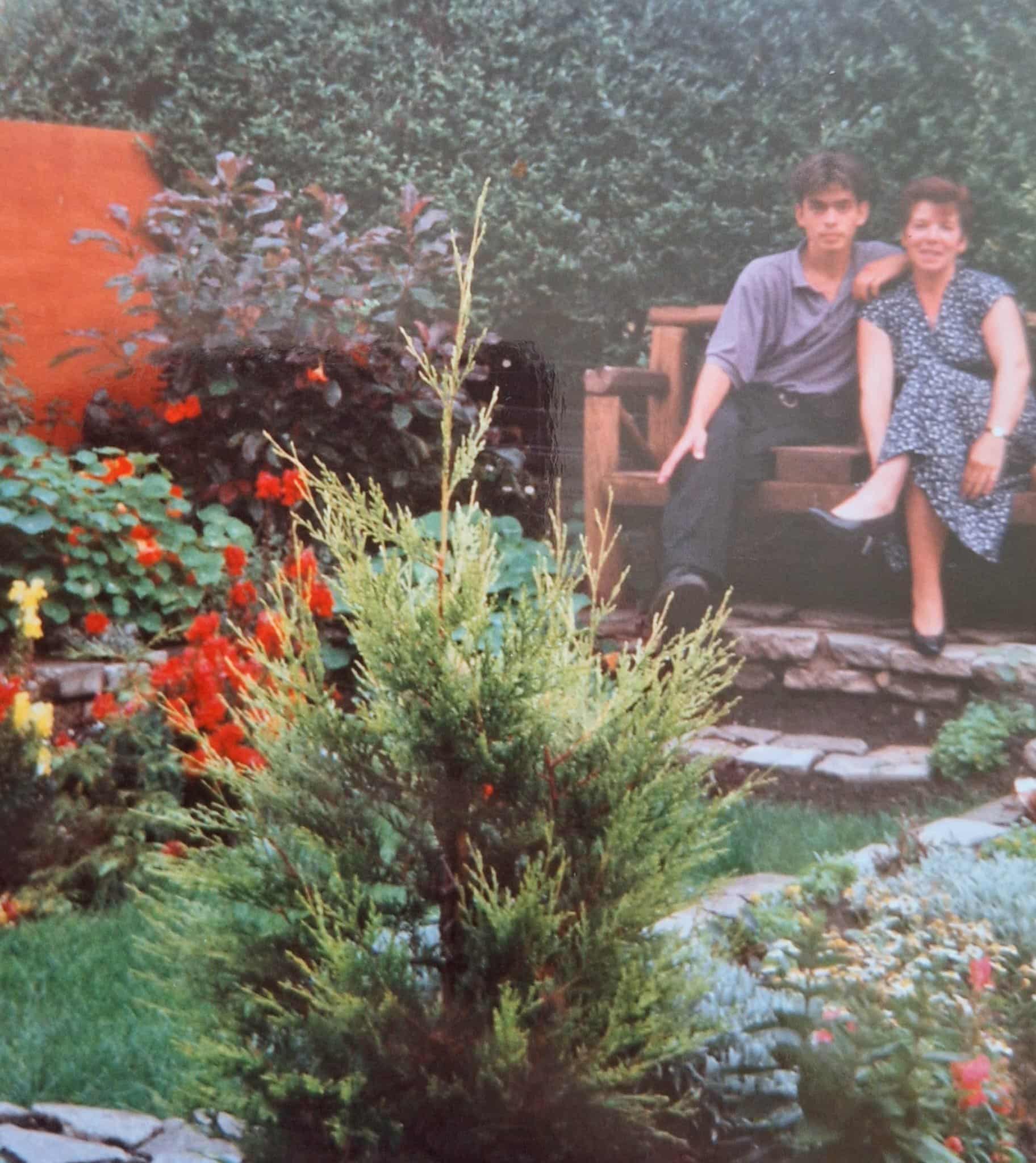
David re-modeled the gardens. The house is beautiful, unrecognisable. A new beginning, photo Margaret Yip
by MARGARET YIP
It is 1984 – four of my children are in their teens. Suzanne is eighteen; Linda is 17. Suzanne is a receptionist at a local hotel. Linda is in college doing a BTEC in Business Studies plus RSA in reception skills; she left with distinctions. She will go on to Manchester University and gain a degree in Business Studies in her twenties. Martin, my eldest son, is 14; David is 13; Diane is 10. Diane is the only one left attending St George’s Junior School. All the children have attended this school, which had a wide range of activities: sports, music, chess, acting. Diane excels at sports. In her last year, she plays football, likes to run, enjoys sports days, and plays chess. In her last year as a junior, she wins the school Cup for the best all-rounder.
They all attend the secondary school, which was the Grammar School. None of them thrive here; the school is huge, miles away in curriculum from the small community junior school they have been used to. They all leave with no qualifications or a few low grades.
Martin and I continue to have problems over bills, unpaid rent – he continues to gamble: cards, dominoes, bandits, in the bookies; he loses more than he wins. He leaves when things become unmanageable. Finally, I leave when Martin returns and becomes unmanageable. The arrears have built up on the tenancy; again, Martin has gone to work near Southport, and the council puts the house in my name when Martin doesn’t return.

During the time of my absence, I had obtained a live-in position running a B&B for a merchant sea captain who lives in his house in Windermere when he is home on leave. I maintain this house too when he is away. David comes along but stays there for a few days, maintaining the huge garden while I clean the house.
We take seven residents in the Barrow B&B; I can work between 60 – 80 hours a week. I am responsible for all the laundry, cleaning, shopping, cooking, bookkeeping, and banking. We charge £35 per week for each resident, breakfast included. If they want an evening meal, I have to supply it, but the owner tells me I can’t charge more than £1.50 per meal. I am a good manager, cooking from scratch, so can provide a two-course meal for each man but make very little profit. The B&B takes mostly men working for BAE, Barrow’s dockyard building submarines.
If any residents leave – mostly those who fail their welding tests – I am responsible for replacing them; this isn’t difficult because the B&B is off the main drag, and our rates can be half of what others charge because there is only one bathroom. The men don’t seem to mind this and work out between themselves a rota. A certain sum is paid to each worker for digs, so the cheaper they can find a reasonable place, they can buy a few pints with the money that is left. Some of the men return to Scotland or Newcastle at weekends; some remain to work overtime. Those who remain, I allow their wives to come for no extra charge to occupy the empty rooms. This incurs more laundry, cleaning, etc., but I don’t mind. Mostly the men are courteous, cause no trouble, no late-night drinking or noisy late arrivals after visiting the pub a few doors down. They are all good family men, working hard, making sure their wages go to their wives.

My bedroom in the B&B is downstairs. When I move back home, I keep my job but live out, so this room is let too. Time goes on.
The owner of the B&B buys another house two doors away; this is to take five lodgers but no meals provided. This makes three houses in Barrow because he also owns a two-bedroom house that is let as a private tenancy. I am responsible for all three, as well as his Windermere house when he is away at sea. It is too much, so he employs my eldest daughter Suzanne to help; our wages are to be £60 each per week now, as we both live out – yet still work long hours.
At this time too, the local council begins renovating the houses in my area: knocking out the pantry, coat cupboard, and downstairs bathroom, replacing it in the smallest bedroom upstairs, which will also have a huge walk-in storage cupboard adjacent. So the four-bedroom property becomes a three-bedroom with a large kitchen-diner, downstairs toilet, a lounge, and a dining room which I have had knocked into one. While the work is going on, they take out the old boiler and gas fire, replacing it with a new central heating system. New double glazing is added, new front and back doors; the house is built of red engineering bricks – semi-detached.
In 1987, I apply to buy my council house; a 30% discount is available due to the tenancy. After the deposit, the mortgage is a lot cheaper than the rent. The owner of the B&Bs offers me a loan which will be repaid by deducting it from my weekly wage. No interest is charged.
This enables me, for the first time, to have a lovely home. We decorate, do all the papering, painting of ceilings, scrubbing old paint off skirting, doors, and picture rails with caustic soda – hours of work before three coats of boiled linseed oil is added. The house smells lovely. We buy gorgeous curtains and poles from a sale in the local co-op. We also buy twinkling light shades, lamps, new bedding, good quality furniture from sale rooms or charity shops. The last thing is fitted carpets in every room, which we have never had (no more scrubbing the floorboards); these were also bought from the co-op, plus the underlay and fitting. David re-models the gardens after the granite paths were dug up from the front to the back to fit a new water system underground; we were allowed to keep the broken-up granite, which David uses to build dry wall flower beds, a fish pond in the back, and a sunken bed in the front with a fountain. The house is beautiful, unrecognisable. A new beginning.
Margaret Yip is a mother of five, grandmother of seven and great grandmother of two. She lives in a small village in Cumbria. She is for social and economic justice, social housing and the NHS and she opposes all forms of prejudice and hatred.
Discover more from Ars Notoria
Subscribe to get the latest posts sent to your email.


You must be logged in to post a comment.