
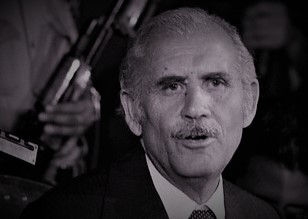
Screenshot from Yogesh Patel’s new poetry film, Dumah
The Demands of the Art of Making a Poetry Film Using AI
by Yogesh Patel
“Thunderbirds are go,” I command myself when the creative current hits. It’s an almost primeval surge—the familiar, heady rush of a launch sequence. Just like the nostalgic wires of that puppet show, where the authenticity of the craft was in the storytelling—and the visible strings didn’t matter—the threads of modern filmmaking, and especially the delicate, redolent art of poetry film, are woven from a potent tension: the one between human vision and artificial intelligence.
The wires are replaced by CGI and AI. But they don’t hold the strings.
This friction isn’t a threat to repel. AI and CGI are sparks—if we’re directing properly. They ignite the modern filmmaker’s toolkit. Let the set and stage leap somewhere unimagined. But here is the truth I hold fast to: AI doesn’t make the film—the artist does.
That’s not to say film cannot be created without these tools. Good directors will explore every aesthetic—AI or analogue.
But it’s always the director who dictates the soul of the film. Especially in poetry filmmaking.
The Invisible Architecture: The Storyboard as Director’s Soul

Every cinematic masterpiece—from Hitchcock’s Psycho to the mythic world of Avatar—starts with a humble horror: the storyboard.
In poetry filmmaking, it’s not just boxes. It’s rhythm, atmosphere, metaphor. It’s where poetry sheds ink and takes form. It lifts poetry from word to image to lived experience.
Britain still lags behind the US in embracing poetry films. They are often dismissed or misunderstood. This needs to change.
For my recent poetry film, Dumah, the storyboard was my first, most vital act of direction—the moment where my soul dictated terms to the canvas. This is not the AI’s job. Before a single render or sound cue, I had rough sketches and a visual-scripted prompt plan. Each panel was tethered line-by-line to the pulse of the poem.
Each frame served a function:
- Capture a Metaphor — a visual echo of a poetic line (think: ashes falling = memory).
- Engineer a Prompt — language to feed Sora or traditional CGI, translating vision into instruction.
- Curate Footage — researching real video from platforms like Pexels to integrate realism.
- Craft Sound — hearing the virtual need, then diving into archives or creating it myself, second by second.
These scribbled panels became the film’s DNA.
The AI, like Sora, was a powerful tool—but it was still just the brush. I wielded it.
Tools Don’t Make Art — Artists Do
Dumah, A Poetry Film by Yogesh Patel. The text of the poem first published in Vatyanam, Oct 2025
There’s a persistent snobbery suggesting that AI equals laziness. As if typing a prompt yields a finished masterpiece. That’s fantasy.
In Dumah, I used:
- DaVinci Resolve: For alchemy—colour grading, sound engineering, final mood.
- OpenShot, MoviePlus, Kdenlive, Clipchamp: The editing suites—cutting, blending, pacing, layering.
- Foley Artistry: A sword’s clash made from a fork on a mug. A dragging sound from a spoon on stone. No AI library can replicate that intimacy.
- Sora & AI Video Generation: To build raw texture and motion—just like digital matte paintings or background plates.
- Superposition Editing: Where layers of footage merge into a single poetic scene, carefully aligned on the timeline. Chroma key is another such trick used by filmmakes for decades.
The AI gave me raw clay. I sculpted it—trimming to match poetic breath, blending scenes like forming a thought, syncing music to emotion.
AI can calculate rhythm. It cannot feel it.
Sound Is Not Background — It’s Narrative

Sound is breath
In poetry films, sound is breath. It’s heartbeat. It’s the silence between words.
In Dumah, music and SFX were structural. Every pause was a poetic caesura. Every sonic layer carried emotional voltage — high or low pitches functioning like existential poetic stresses. From archive layers to handmade audio textures, I shaped the soundscape intimately — just as in A Quiet Place, where audio design becomes its own character.
Editing sound for a poetry film is like editing life’s breath.
The Human Prompt: Where Meaning Lives

Sound is a narrative
AI doesn’t understand subtext. It cannot know that “cradling a baby in pain” is about mercy, loss, or prophecy. Only you, the artist, understand that. The storyboard is where you make that translation—from poem to image to metaphor.
Each panel became a carefully crafted prompt — regenerated dozens of times, refined over days. It’s the same process a director might go through with a VFX team, ensuring the creature looks real — but also conveys emotion and story.
But poetry doesn’t pay. You’re a one-person team.
So when people ask if AI is taking over creativity, I answer clearly:
Only if you surrender your creative authority.
Final Cut: A Hybrid Future. A Human Hierarchy.

The software doesn’t know emotion, tension, or drama.
You don’t dismiss Marvel films because they use CGI and AI. You enjoy them — they’re worlds built through code and craft. The software doesn’t know emotion, tension, or drama. The filmmakers do.
Dumah is the same kind of hybrid. But the hierarchy remains essential — and unchanged:
The artist directs. The AI assists.

But no artist, no art.
CGI builds worlds. The artist gives them soul.
No “intelligent software,” no poetry film. But no artist, no art.
So, yes:
Thunderbirds are go.
But the strings?
They’re still mine.
Shortlisted for the Aryamati Prize 2023, Yogesh Patel received an MBE for literature in the Late Queen’s 2020 Honours List.
Patel’s last collection of poems, The Rapids, a winner of the Finalist Award in the Indie Book Awards, was published by The London Magazine in 2021. Its Italian translation was published in 2023. Internationally celebrated, he edits Skylark and runs Skylark Publications UK, as well as a non-profit Word Masala project to promote literature. Honoured with the Freedom of the City of London, and nominated for the Pushcart Prize, he has LP records, films, radio, a children’s book, fiction, and non-fiction books, and three poetry collections to his credit. A recipient of many awards, including The International Pinnacle Accolade Award by Vatayan – Poetry on South Bank and a Co-Op Prize for the poetry on the environment, Patel was Poet-of-Honor at New York University in April 2019. Among the venues he has read in, are the House of Lords and the National Poetry Library. Patel’s poem is also scheduled for the moon aboard a NASA/SpaceX rocket to be archived in a time capsule as part of humanity’s cultural record on the moon’s Southern Hemisphere.
His writing has appeared in many notable literary journals, including PN Review, The London Magazine, World Literature Today, Indian Literature, Stand, Envoi, Under the Radar, Shearsman, IOTA, Understanding, Orbis, The Book Review, and Confluence. He has also appeared on BBC TV and Radio. Patel’s work also features in The National Curriculum Anthology, MacMillan educational series, Sahitya Akademi anthologies, and more than fifteen other anthologies across the world. Having written columns and articles for numerous broadsheets and literary journals, he was an editor at Ars Notoria which he helped establish and writes regular columns for Confluence.
Discover more from Ars Notoria
Subscribe to get the latest posts sent to your email.

You must be logged in to post a comment.