
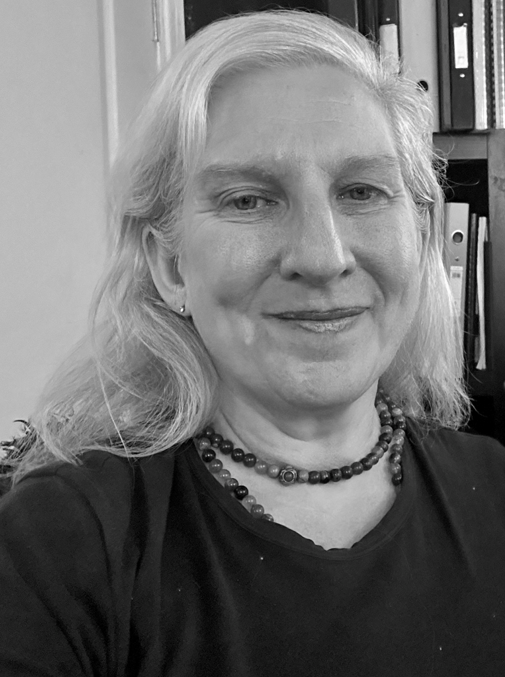
The Poet and founder of the International Colloquium of Poetry and Philosophy, Ulises Paniagua Olivares
Our wondrous journey to the 6th International Colloquium of Poetry and Philosophy
The International Colloquium of Poetry and Philosophy comes round again. This year, 2026, it happens in two countries: Colombia (face-to-face) and Mexico (online). The celebrations will take place among systoles, diastoles, rhythm, verse-making, theory, metaphors, ways of knowing, ways of being, and a senti-thinking proposal within the green lands of Bogotá, Medellín, Paipa, and Manizales; and through online broadcasts with the help of poet Takeshi López (head of the Invencible TV project) and writer Abraham Chinchillas (head of El bibliófono). There will be flower and song, as the Mexica tradition bids; there will be enquiry and phenomenology, both scientific and metaphysical, because, as Gaston Bachelard says, “poetry is instantaneous metaphysics”; because, as Alfredo Silva Estrada holds, “poetry, at its heart, has always sought a return to the simplest things; it is a kind of phenomenology.” Poetry and Philosophy are deeply linked, for “both were born from wonder.”
For this celebration we are backed and joined by two international journals: Ars Notoria from England (with writer Philip R. Hall), and Revista Innombrable from Colombia, which is currently headed by the sculptor and painter Camila Rios Monsalve and which was formerly edited and managed by the poet and philosopher Mauricio Arcila Arango. We also have priceless support and flawless organisation from the beloved poet Valentina Rojas from Medellín, and help from the poet Juan Esteban Londoño from Bogotá, as well as the help of Jannetth Rico Preciado from Paipa.
It is an honour for the colloquium to be held in the homeland of poet José Asunción Silva, who wrote: The verse is a holy vessel; put into it only / a pure thought, and of the fascinating Raúl Gómez Jattin, who says: Why go on being a tree / if the two-year summer / tore off my leaves and flowers…

Poster for the 1st International Colloquium of Poetry and Philosophy
We intended to be worldwide from the start. Our gathering has already taken a short road trip in its need to listen and be heard. Last year, 2025, we went to Gáldar, a small and beautiful town in the Canary Islands, which are part of Spain. The event brought together many poets and people involved with philosophy. People like Antonio Arroyo Silva and Alicia Llarena. The Galdar meeting was expertly organised by the storyteller, journalist, poet and arts manager, Josefa Molina.
The International Colloquium of Poetry and Philosophy is a flower that has grown out of concrete. It sprang up just six years ago during the pandemic out of the need to articulate protest the against horror and unreasoning fear that people were experiencing. The idea behind the Colloquium was to build up a literary and philosophical conversation that would encourage the expression of human feeling and thought in an inclusionary way; regardless of race, culture, sexual leaning, school, country, or continent.
The Colloquium was born in harsh and selfish times, in earshot of the rumblings of war. We stand against competitiveness and barbarism and against coming up with kneejerk answers and explanations. From the start, we had three goals: 1) to show that a civil, small project could spread across the world; 2) to stir up empathy and awareness in times when people more easily show hatred towards others; and 3) to bring poets, writers and academics closer to the ordinary people who need them.
There were several reasons for this way of doing things; reasons that ranged from dispelling personal doubts, to being able to talk through shared misgivings. That made the Colloquium more interesting. Then, I suppose, the event started to came alive and became a creature that provided us with some answers.
Let me tell you a story

I remember a gathering I was invited to. I went up to a man (a poet) and a young woman who were in conversation. I listened as the guy ‘mansplained’. He was offering her classic philosophical arguments full of clichés and quotes: Heidegger, Schopenhauer, Nietzsche. There were a couple of things he said that seemed like nonsense. With the same sharp naivety Elena Garro used to show in the presence of sacred literary cows like Octavio Paz and Co., I ventured a few comments.
The explainer was furious. He was using the philosophical arguments he had learned by heart at university and while reading at his leisure. I let the temptation to argue go, and said little. But the girl nodded and agreed with me and the poet fell apart. Soon after that, I left.
I think something is urgent. We need to think; to build a unique, decolonised way of using our intellect and judgment. We need to avoid falling back on the European – Western systems of argumentation we learn like a catechism. These thoughts of mine, no doubt, are inspired by reading Enrique Dussel and Bolívar Echeverría during my doctoral studies. On the other hand, I understood at the time that it was impossible for those writers to grasp quantum theory, or to understand the ways of knowing of Indigenous cultures. The mansplainer was trying to impress the young woman with his intelligence (he thought of himself as a teacher wowing a student). Nothing could have been more wrong headed. Right now that same woman is a thesis advisor and an important poet. The act was a display of chauvinism, in addition to being harmful to the honest pursuit of truth and knowledge.
Within these arguments, it is no wonder that I found out in the following months, without being an expert in philosophy, that Schopenhauer was a misogynist. Nietzsche too. The Greek philosophers may have been brilliant, but they kept women out of their debates. I asked myself: What kind of one-sided, single-gendered philosophy had been built. And then into my life came the book Women Philosophers in History (Mujeres filósofas en la historia), by Ingeborg Gleichauf, which backed up my insight.

Poster for the 3rd International Colloquium of Poetry and Philosophy
I discovered that few poets and philosophers are willing to make the effort to really understand the great discoveries of our time and to get to grips with subjects like neurology, theories about the cosmos, cross-disciplinary work and the workings of the complex systems of Edgar Morin. In contrast, I saw that willingness to learn in television programmes like La oveja eléctrica, created by Pepe Gordon, who loves these subjects and who is also the creator of the El Aleph Festival, run by the UNAM. I learned (with sorrow) that, on the whole philosophers and poets refuse to absorb and engage with this kind of technical and scientific knowledge, and come to terms with the knowledge which (as part of the 4th Industrial Revolution) now matters so much to everyone. And, above all, academic philosophers and poets do very little to climb down from their Olympus with their arms full of awards, praise, grants, and high research system scores.
“What have our brilliant minds become?” I asked myself. “What has this generation of thinkers and philosophers become?” The gulf between people, between students and academics and agricultural labourers and the masses is wide and clearly visible. Even at the very birth of the fields of poetry and philosophy, Socrates would often be ashamed about the class origens of some his followers. On the other hand, I cannot picture Fernando Pessoa as someone who would have been obsessed with getting a government grant.
Almost right up to the present, I see gatherings of specialists that are only meant for those specialists. It is an Ouroboros endlessly eating itself, Narcissus delighting in his mirror reflection; a bonfire of the vanities. How long until a new way of thinking comes into view; an inclusive approach drawing on Arab, Eastern ways of thinking and pre-Hispanic. How long before we fully include feminist philosophies championing Afro-descendance; an Alephosophy.

Poster for the 4th International Colloquium of Poetry and Philosophy
The 21st century, with all its problems, needs different answers. The Socratic and the pre-Socratic are not enough to understand today’s reality, unless some stubborn person wants to force the world, and to shape it into a set of ideas that are his own. It is like trying to explain the poetry of Netzahualcoyotl using Spanish literary standards and devices. Impossible! In the forcing of a cultural hegemony and obsession with the Western Cannon, much of humanities creative literary efforts got lost. A circle does not fit into a square.
Where, in the course of history did the silly split begin between poetry and philosophy appear? Plato, we know, called for poets to be thrown out of the Greek republic. It is important here to understand that what we know today as poetry was different to what the student of Socrates understood as poetry. There is a book by Wladyslaw Tatarkiewicz that tells us this. This difference between then and now has also been demonstrated by the brilliant studies carried out by María Zambrano, who calls for reconciling both fields. She writes: The philosophical is asking and the poetic is finding,. With these thoughts in mind, with the missing glue of scientific, knowledge-based, even metaphysical ideas and procedures, our event The International Colloquium of Poetry and Philosophy came into being.
The International Colloquium of Poetry and Philosophy

Poster for the 5th International Colloquium of Poetry and Philosophy
The motto came, freely and naturally: Sensibility is thought. One or two gatherings began to get under way. shortly afterwards, amid the uncertainty and unease generated by the pandemic. Later talks, such as those I had with Dr. Virginia Moratiel, showed that there were already, of course, forerunners. The clearest equivalent, from the Western standpoint, was the approach of the German Romantic movement to Wissenschaft. Another close forerunner was that set of critical sessions put together by the unassuming writer and poet, the late Fernando Salazar Torres. The sessions he put together took place in the (now-closed) Casa del Poeta in Mexico City. Fernando Salazar Torres also worked to launch a season of critical poetry; large forum in which the thinker and writer José Vicente Anaya took part. Our International Colloquium of Poetry and Philosophy is the living descendent of this initiative by Fernando Salazar Torres; the coming-together of a framework of ideas made flesh through this human chain of ideas and experiences.
The first meet up was legendary. With backing from the journals Anestesia, Aleteo Poético, and Taller Ígitur and with the invaluable help of Daniel Leyte (who crafted the Colloquium’s logo and image at the time) and with the participation of the writer Gabriela Santamaría, we began to sow hope and offer a healthy online distraction in a world frozen by the threat of COVID. Thanks to our beloved writer Verónica Ortiz, we got the backing of the Fondo de Cultura Económica channel for our broadcasts, and had an unforgettable closing ceremony thanks to the kind words of the head of the Instituto Cervantes, the much admired poet, Luis García Montero.

Poster for the 6th International Colloquium of Poetry and Philosophy
Throughout the different editions there have been star guests: Luis García Montero himself, from Spain, from where we also had Eloy Tizón, Luis G. Maestro, Manuel Ángel Vázquez Medel, María Ángeles López, Miguel Ángel Feria, and Julio César Quesada Galán; from Colombia, we had Federico Díaz Granados; from other countries, Virginia Moratiel, from Argentina, Víctor Coral and Enrique Bernales Albites, from Peru, Athiná-Stylianí Michou Rorris, from Greece. From Mexico we had the participation of Héctor Carreto, Gustavo Osorio De Ita, Elisa Díaz Castelo, Óscar De La Borbolla, Ethel Krauze, Álvaro Solís, and the Círculo de Filósofas de la CDMX, among other wonderful names. In the second, third, and fourth International Colloquium of Poetry and Philosophy, those taking part included writer and television host José Gordon (La oveja eléctrica), poet and writer Alberto Ruy Sánchez, poet and also television host Eduardo Casar (La dichosa palabra), Ana Clavel, Mario Bojórquez, Leonardo Da Jandra, Jorge Valdés, Dana Gelinas, Rubén Rivera, Alfredo Pérez Alencart (Spain), Carmen Nozal, Mariana Bernárdez, César Cañedo, Francisco Trejo, Mónica Soto Icaza, Salvador Gallardo Cabrera, Susana Bautista, Martín Tonalméyotl, Hernán Bravo Varela, Julia Santibáñez, Mijail Lamas, Laura and Marina de Ita, Diego Roel, Luis Jorge Boone, Fernanda Melchor, and Orlando Mondragón. A tribute was also paid to Spanish writer Almudena Grandes. Nearly a dozen Aguascalientes Prize winners and two Loewe Prize winners have been included. We have welcomed writers from four continents—Africa, America, Asia, and Europe—and from different countries such as Russia, Argentina, Mexico, Spain, Italy, Bulgaria, Portugal, Bolivia, Venezuela, Ecuador, Uruguay, Costa Rica, England, the United States, Cuba, Chile, Mali, and Mozambique, among others. Projects and foundations such as Museion, by Hanny Barrios (Cartagena), and Culturízate, by Carolina Servín, who is now our media director, have worked with us. The sharing of Indigenous languages of Mexico and other countries has been encouraged. Thus, we have held two-language sessions in Mixtec, Zapotec, Nahuatl, Basque, Catalan, Guaraní, and many other tongues.

Some of the participants in the 6th International Colloquium of Poetry and Philosophy
The list is long. I would never finish naming and thanking so much talent. In this sixth edition, the face-to-face event includes people from seven countries: Colombia, Mexico, Argentina-Spain, Bolivia, Chile, and Poland. Online, India takes part, with the well-known poet Sudeep Sen; as well as Mali, with the thinker and keeper of the tebrae poetic form, Ismaël Diadié Haïdara accompanied by the Columbian poet and academic Luisa Villa Merino. From the United States we had the exciting Chicana and Chicano poets, Lorna Dee Cervantes, Matt Sedillo, Raul Sanchez and poet, editor and podcaster, Dustin Pickering. From Poland came the poet/translators Ryszard Reisner and Marta Eloy, and from England the poets Roger Murphy and Lyric Deep and the academic Sean Galvin. We will have contributors from Venezuela Italy and Costa Rica with the panel in Costa Rica led by the poet Yordan Arroyo. We will be joined by poet and thinker, Luis Gilberto Carballo, by Carlos Katán, and by the great writer Homero Carvalho Oliva. Virginia López Domínguez will join us together with the teacher and well-known poet Juan Manuel Roca. Víctor Munita, poet and translator, Marta Eloy Cichocka, Daniela Pérez (co-organiser), Ena Victoria Ramírez Peñuela (co-organiser), Ángel Pérez Escorza (coordinator), and figures from the host country with names such as Bárbara Lins and Luis Fernando Cuartas will all be attending.

Some of the participants in the 6th International Colloquium of Poetry and Philosophy
Our colloquium is an honest and profound undertaking. It is a living geyser wanting to burst out. It is a tool for criticism. It is, to quote Baudelaire, both “the wound and the knife”. Our colloquium has became an axe to break the frozen seas within, as Kafka put it. “We seek to make you shudder.” Cristina Peri Rossi writes: “I learned, without words, that desire is like this: it begins with the gaze, with the eyes that discover an object from which a source of pleasure is imagined.” This colloquium is learning wordlessly, to long for knowledge—the true, sensitive, deep kind, not the technical-managerial kind. So far, it has worked.
It has been a long and joyful journey, critical and calm. New ways of understanding being, new ways of knowing, and new poetic voices from more than twenty countries have gathered in it. Of course, someday the ship will stop sailing. But, at least, if what it beautifully sought is enough, it will have linked different islands. The International Colloquium of Poetry and Philosophy, in its very existence, in its “being,” is a message for the world. An inclusive, peace-seeking message, of human search. An open conversation. Or, at least and humbly, it aims to be. It is a tree that makes a sound, falling in the forest, even if there is no “Western” type to hear it. The colloquium both is and is not, at once, and it spreads in its unstoppably gentle invisibility.
Ulises Paniagua (Mexico, 1976) is a narrator and poet. Winner of the Gabriel García Márquez International Short Story Contest in Colombia (2019). Interviewed by Silvia Lemus on the program Tratos y retratos on Canal 22 (2022). In 2023, he was interviewed in an episode of the series La ciudad es mi letra on Capital 21 TV. Featured in the anthology Puente y Precipicio, in Russia (2019). Author of two novels, nine short story collections, two books of chronicles, and seven poetry collections. His work has appeared in Nocturnario, Círculo de poesía, Punto en línea, Ígitur, New York Poetry, Altazor, Algarabía, and Periódico de Poesía. Published in Revista Anestesia through his column “Los textos del náufrago”. Director of the International Colloquium on Poetry and Philosophy (supported by FCE). Former director of the Digital Horror Collection at Editora BGR (Spain). His work has been translated into English, Russian, Greek, Serbian, Czech, and Italian. Ulises is also the Latin American Editor of Ars Notoria Magazine.
Discover more from Ars Notoria
Subscribe to get the latest posts sent to your email.


You must be logged in to post a comment.