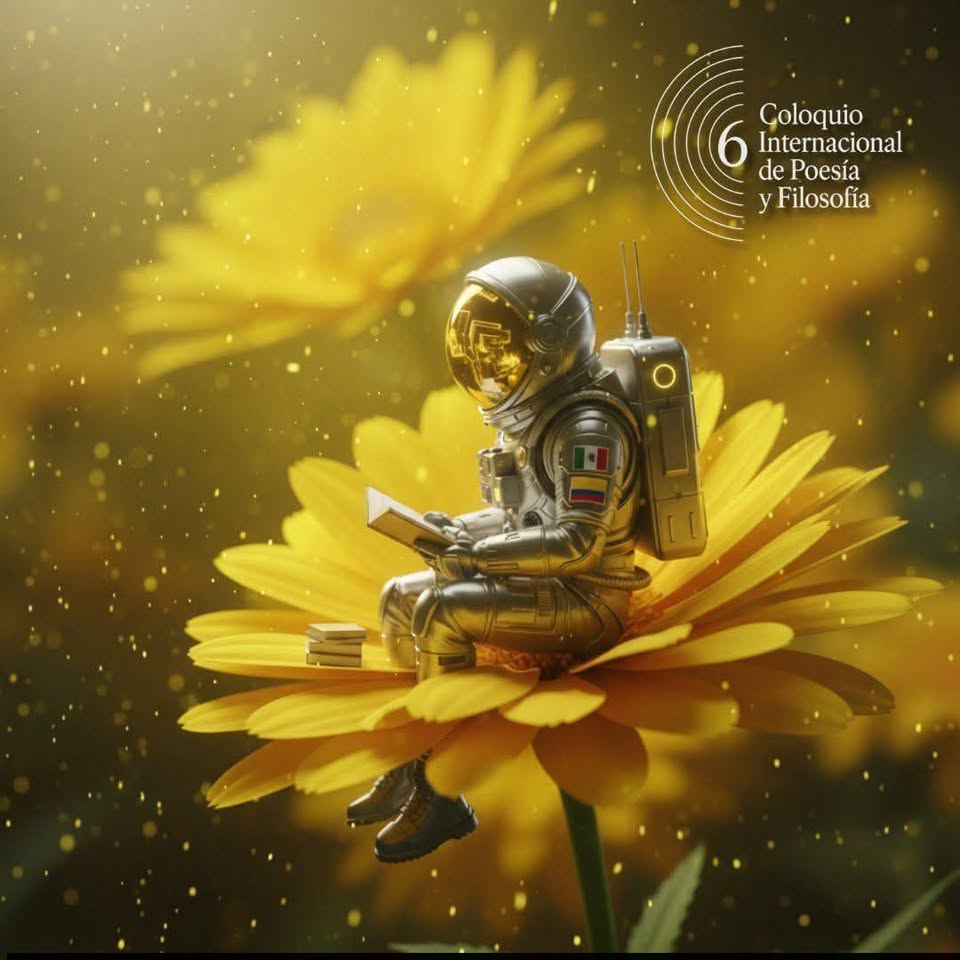
Designed by Carolina Servín
CONGRATULATIONS TO ARS NOTORIA’S PARTICIPANTS IN THE 6TH INTERNATIONAL COLLOQUIUM OF POETRY AND PHILOSOPHY
On behalf of Ars Notoria: The Art of the Noteworthy, I extend my warmest congratulations to all the participants, organisers and editors behind this year’s International Colloquium of Poetry and Philosophy. It is a privilege to celebrate this remarkable sixth edition, unfolding across Colombia and Mexico under the luminous principle of its founder, Ulises Paniagua Olivares: “Sensibility is thought.”
Thank you to the wonderful poets and writers Abraham Chinchillas and Takeshi López, and the designer, Carolina Servín whose dedication and vision and work brought the panels to life.
What began six years ago as an initiative by Ulisies Paniagua Olivares; a visionary response to the isolation and uncertainties of the pandemic has grown into a global gathering of poets and thinkers, a testament to the power and beauty of intelligent conversation. There is deep kinship between poetic and philosophical thinking.

Ulises Paniagua Olivares. Photograph by kind permission of the poet
We honour the vision and dedication of Ulises Paniagua Olivares, whose unwavering commitment to a decolonised, inclusive and heartfelt exchange of ideas has made the Colloquium a vital space for human connection, and we are also grateful that he included Ars Notoria. We also extend our deepest appreciation to the collaborating journals (including Revista Innombrable) and Radio Invencible.
Against the rumblings of world led by greedy dangerous people, the International Colloquium stands as a message of art, empathy and shared humanity. Poetry and philosophy stand together!
Phil Hall, Executive Editor, Ars Notoria
UK Panel
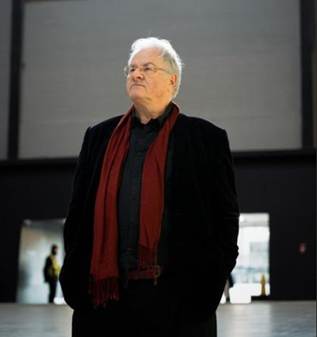
Photograph by kind permission of the poet
Roger Murphy who organised the UK panel is a British poet born in Dublin in 1955, raised in England from age one. Gifted at music, he chose instead to build his father’s publishing design business into an international venture. His lifelong passion for writing was finally realised with a ‘First’ in Creative Writing from Birkbeck College, where he was a careful listener and mentor to many young poets. He forms part of an interesting group of fizzingly new, upcoming talents.
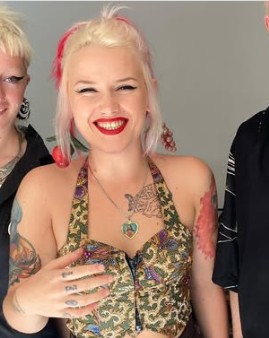
Photograph by kind permission of the poet
Lyric Deep is the pen name of a UK-based poet and songwriter whose work bridges the gap between spoken word, song, and philosophical lyric. Deep’s poetry is characterized by its musicality and its exploration of consciousness, emotion, and the search for authenticity in a mediated world. The work often delves into the nature of creativity itself, treating the lyric “I” as a site of both vulnerability and profound investigation.

Photograph by kind permission of the poet
Sean Galvin is an English poet and academic whose writing navigates the terrain of personal and collective history. His work is marked by a meticulous attention to language and a deep engagement with place, particularly the post-industrial landscapes of Northern England. Galvin’s poems often act as philosophical meditations on time, loss, and the enduring power of human connection, finding the universal within the starkly local.
US-Mexican Diaspora Panel

Photograph by kind permission of the poet
Dustin Pickering who organised this panel is founder of Transcendent Zero Press. He has contributed writing to Huffington Post, Los Angeles Review, The Statesman (India), Journal of Liberty and International Affairs, The Colorado Review, World Literature Today, Asymptote Journal, and others. He is the author of numerous poetry collections and books including Salt and Sorrow. He placed in the top 100 for the Erbacce prize in 2021 and 2023, and was a finalist in Adelaide Literary Journal’s first short fiction contest. He was longlisted for the Rahim Karim World Prize in 2022 and given the honour of Knight of World Peace by the World Institute for Peace that same year. He hosts the popular interview series World Inkers Network on YouTube, and co-founded World Inkers Printing and Publishing.

Photograph by kind permission of the poet
Lorna Dee Cervantes is major figure in Chicana and American literature, Lorna Dee Cervantes is a Texan poet whose work is a powerful synthesis of lyrical beauty and political urgency. Her poetry explores the complexities of cultural hybridity, gender, and colonial violence, all while asserting the transformative power of language. A bridge between oral and literary traditions, her work is a profound philosophical meditation on identity, place, and survival, making her a foundational voice for generations of poets.

Photograph by kind permission of the poet
Raúl Sánchez is a Seattle-based poet, translator, and educator with deep roots in Texas and the Chicano community. His work is a vibrant exploration of language, labor, and the rituals of daily life. A former City of Redmond Poet Laureate, Sánchez’s poetry illuminates the sacred in the mundane, from the mechanics of a workshop to the preparation of food, treating these acts as sites of cultural memory, philosophical reflection, and community building.

Photograph by kind permission of the poet
Matt Sedillo has been called “the best political poet in America” by Greg Palast and “the poet laureate of the struggle” by historian Paul Ortiz. His work has been compared to Brecht, Dalton, Baraka, Ginsberg, and Sandburg. He received the 2017 Joe Hill Labor Poetry Award and has appeared at major festivals and fairs including Texas (2020), San Francisco International (2012), Elba (2022), Palabra Del Mundo in Venice (2023), Guadalajara (2023), FIL Mineria (2023), Medellín (2024), and Boao, Thailand (2024). He was awarded the 2022 Dante’s Laurel and served as plenary speaker at the 14th Biennial Conference of the Hungarian Association of American Scholars. His media appearances include CSPAN, Los Angeles Times, Axios, Associated Press, La Jornada, and NPR. He has spoken at Casa de las Américas (Havana), Dante’s Basilica (Ravenna), and over a hundred universities including Cambridge, UNAM, and Stanford. Matt Sedillo is the author of Mowing Leaves of Grass (2019) and City on the Second Floor (2022), both taught nationally. He is Literary Director of the Mexican Cultural Institute of Los Angeles, National Coordinator of the World Poetry Movement US, Co-Founder of El Martillo Press, and Lead Host of Radio La Raza on KPFK.
Mali/Andalucian/Columbian Panel

Photograph by kind permission of the poet
Ismaël Diadié Haïdara who organised the panel with Luisa Villa Meriño is an exiled Malian poet, philosopher, historian, and librarian. Director of the Kati Fund Library in Timbuktu, he has lived in Spain since 2012, where he presides over the Mahmud Kati Foundation. A gold medalist of the city of Toledo and member of Sites of Conscience (New York), he studied philosophy and drama in Bamako. His extensive body of work includes Le statut du monde (1992), Les Juifs à Tombouctou (1999), Los otros Españoles (2004), Zimma (2014), Journal d’un bibliothécaire à Tombouctou (2017), and Tebrae (2021), among many others.
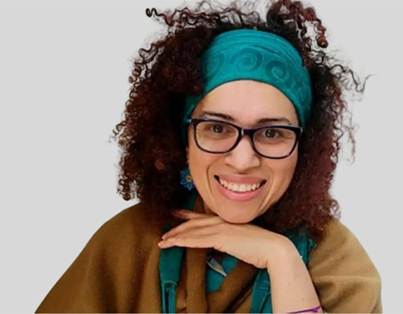
Photograph by kind permission of the poet
Luisa Villa Meriño is a Colombian poet from Copey, Cesar, whose work gives voice to the struggles of Afro-Caribbean women. Winner of the prestigious Gabriel Celaya International Poetry Award, her poetry is celebrated for its evocative, profound exploration of love, loss, and identity, offering a fresh and deeply human perspective that transcends cultural boundaries.
Polish Panel
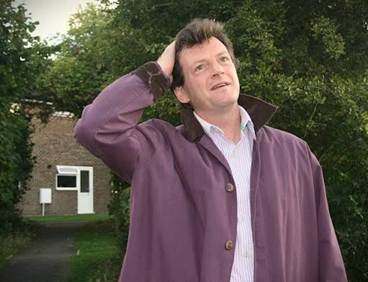
Photograph by kind permission of the poet
Richard J. Reisner is a Polish-Australian poet of Jewish descent. He coordinated this panel. After contributing to the Spielberg Holocaust documentation project and organizing literary events in Melbourne, he returned to Poland on a translation grant. As a translator and scholar, Reisner has co-edited bilingual anthologies like The City of Home and translated major Polish poets—Ewa Lipska, Zbigniew Herbert, Tadeusz Różewicz, and Czesław Miłosz—alongside theatre works and multilingual projects such as Songs on Canvas. His recent translations include Russian poet Regina Derieva. Current projects include a Polish translation of Les Murray’s selected poems, an English edition of Ludmila Petrushevskaya’s aphorisms, and his own poetry volume Letters to the World.
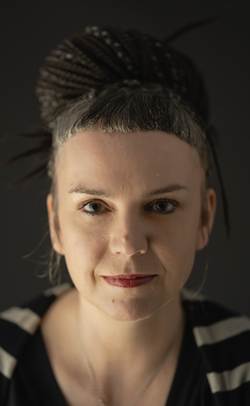
Photograph by kind permission of the poet
Marta Eloy Cichocka is a Polish poet, scholar, and literary translator. Her work often inhabits liminal spaces—between languages, cultures, and artistic disciplines. Her poetry is a rigorous, sensual exploration of perception and the limits of representation, frequently incorporating ekphrastic responses to visual art. As a scholar, her research focuses on the poetics of the gaze, making her a unique voice in the philosophical dialogue between word and image.
India Panel

Photograph by kind permission of the poet
Sudeep Sen is the International and Poetry Editor at Ars Notoria and a leading Indian poet. His prize-winning books include Postmarked India, Fractals, EroText, and Anthropocene (Rabindranath Tagore Literary Prize). He has edited landmark anthologies such as The HarperCollins Book of English Poetry and Converse: Contemporary English Poetry by Indians. A recipient of the Indian government’s senior fellowship for outstanding contribution to culture and literature, Sen was the first Asian honoured to deliver the Derek Walcott Lecture and read at the Nobel Laureate Festival.
Coordination

Photograph by permission of Phil Hall
Phil Hall, the overall coordinator of Ars Notoria’s participation in the colloquium, was born in South Africa into an ANC family with British, French, Austrian, and German roots. After his parents were exiled, they lived in East Africa and India before returning overland to the UK. In the UK he studied Russian and Spanish literature, politics, and economics. After graduating he specialised in descriptive and applied linguistics. Phil has lived and worked in Spain, the USSR, Mexico and the Gulf. Returning to London during the pandemic, he co-founded the Humane Socialist magazine, Ars Notoria (the Art of the Noteworthy) and the micropublisher, AN Editions.

Designed by Carolina Servín
Discover more from Ars Notoria
Subscribe to get the latest posts sent to your email.


You must be logged in to post a comment.