
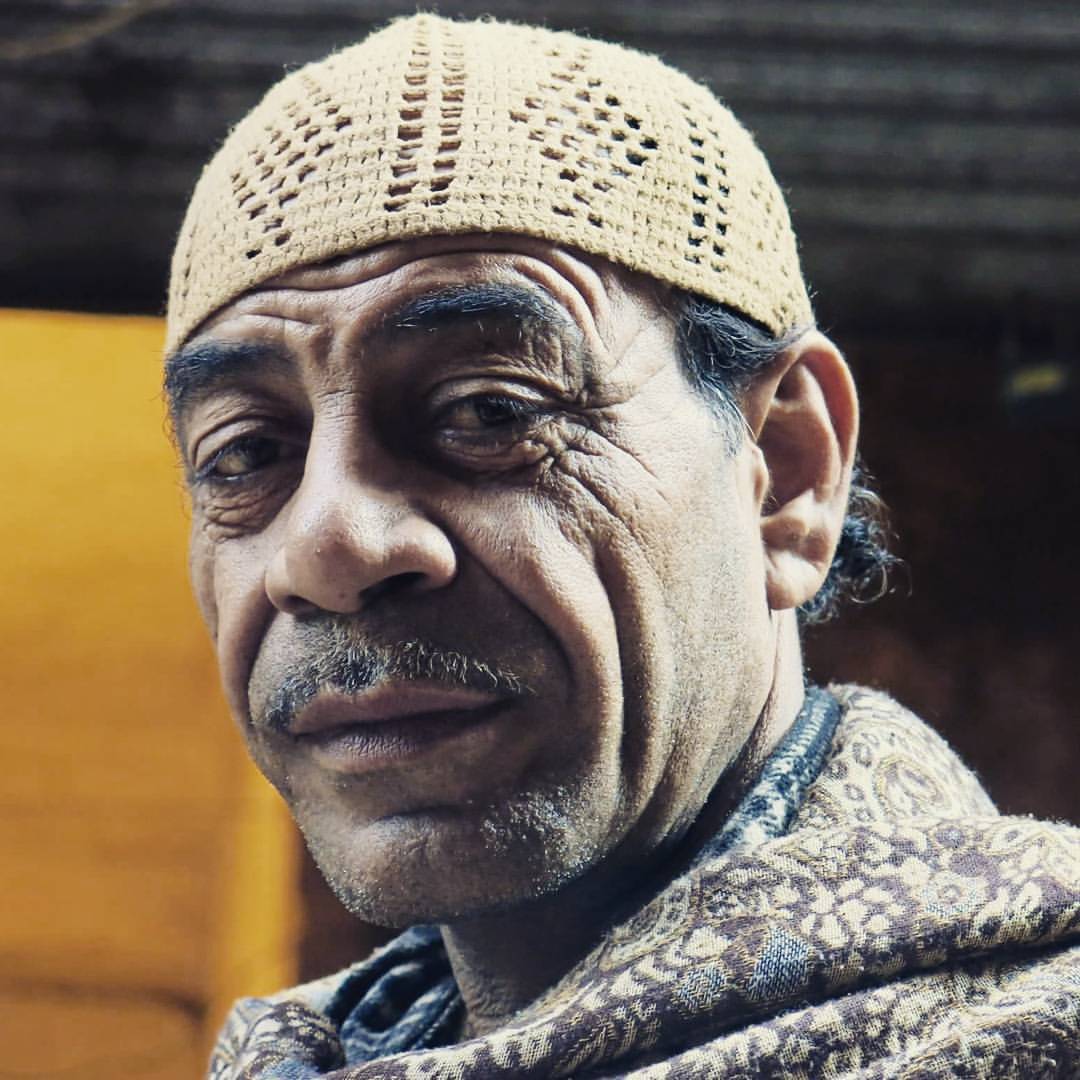
Pexels, Photo by Alex P
Bright black tarmac and the tang of tropical sea in the air. At last. The coconut palms fringing the airport as tall as they had looked matchstick-like from the air. She remembered photographs of lazy days bathed in brilliant sunshine, smiling shiny faces and lush, lush green. She blinked, happiness suffusing her being.
A bus rumbled up. ‘Welcome!’ the face on the poster beamed, surrounded by vignettes of beaches of golden sand, upcountry tea gardens swathed in mist, bedecked dancers. Memories, or near-memories, she had been too young to remember, flooded in. Fish fresh from the sea, sambol from coconuts straight off the tree. In her joy, she laughed out loud. The German couple who’d been beside her on the plane (experienced holiday-makers, ‘Oh, the beaches, the beaches!’) turned surprised eyes to her. She favoured them with a smile of pure joy and they looked away.
Last summer she and two girlfriends had travelled through France, Germany, Switzerland, Italy, getting as far as the Greek islands, then parted ways. The others had found boys, a hotel – she’d spent the last night cringing in a lumpy bed, then fled, caught the ferry back to the mainland, then a plane…home. No, that was to There. This was coming Home, for real, returning from the longest journey of all, one that had begun when she was just two.
Home.
It hadn’t always been that. For years she’d resisted her parents’ insistence. ‘I’m English, damn you!’ she would shout at her father. Her mother would turn sad eyes to her, ‘No. We’re from—’
‘You are, not me!’
‘Not I,’ her brother would correct with a smirk, adding fuel to the fire.
Then one day, she’d hadn’t talked back. The day after Greece with her girlfriends. She wanted to go, she’d announced defiantly. Her parents were first puzzled, then smiled in relief.
After a while her mother said, ‘Lewis Uncle’s there, he’ll look after you.’
Lewis Uncle. Her mother’s cousin, in every family photograph. A card from him every year.
‘Merry Christmas! Wishing all of you the very Best for the New Year!’
The bus stopped at the terminal building. Inside, the young woman in the small booth dispensing brochures (‘Information – Hotel Reservations’) favoured the Germans with a smile of welcome, then turned to her with one less certain. She smiled back defiantly. She didn’t need help, she was Returning, wasn’t she?
A stamp in her passport later she was through doors, into mayhem. Panicked, she stepped backwards, colliding with the Germans. ‘Wiedersehn!’ they cried merrily, heading knowledgeably for a taxi. As she caught her breath, a small, wiry man of about sixty elbowed his way through the scrum to her.
‘Hallo, dear!’ he said, his tone as bright as his batik shirt. ‘Welcome, welcome! Come, I will take your bags. How are your parents? Good, I hope? I spoke to them yesterday…’ he talked so fast, she caught only phrases, ‘…keeping well? You have grown, my dear…you were such a tiny thing…so big now, so pretty too!’
In the parking lot, her bags were stowed in the blink of an eye in a car so old she was surprised it was allowed on the roads.
‘Anything you want, you need, tell me. All arranged….’ He didn’t stop talking as they settled into the car, seatbelts slack and useless as they jolted away. ‘Your mother and father and I, such times together you can’t imagine!’
‘Roadblock,’ he interrupted his own cheerful patter. ‘Nothing to worry about, dear girl.’ They wove through the barriers, paint-streaked concrete. Uniformed men, most no more than boys, watched warily, fingers uneasy on triggers. One approached. ‘Passport,’ Lewis Uncle asked, his own papers already out. She handed it over. The man leafed through, leaned down to look through the window. ‘OK,’ he waved them through. Out, back into traffic, on the road to the city, stalls laden with ripe yellow bananas and golden coconuts.
They travelled for more than an hour, an hour in which the traffic grew denser, the houses closer packed until there could be no doubt, this was the city. Every now and then, less frequently each time, she caught a tantalising glimpse of the sea at the end of a lane. Buses and trucks roared by, electric lights came on as the sun set, turning the sky red, then purple. By the time they reached the house it was dark.
Metal gates, high and black, opened by a man of middle age in spotless sarong and a vest. A long, low porch. Verandah, she reminded herself. Clambering out, she made for the boot and her bags but a hand restrained her.
‘Victor will get those, dear girl,’ Lewis Uncle said brightly. ‘Victor!’
The man who’d opened the gates hurried up, smiling and bowing. ‘Welcome, miss.’
Lewis Uncle chuckled. ‘Good, no? He speaks English. So much easier.’ He ushered her into an airy living room littered with cane chairs and a sofa, teak tables, an electric fan on the ceiling blasting downward.
‘Home, dear girl, home.’ A cricket tested its voice, crrk, crrk, crrk. Tchk, tchk, tchk. A gecko replied. Not England, she thought, smiling to herself, definitely not England.
Victor’s wife, white sari as perfect as her husband’s sarong, led her to a room in the left wing. ‘Own bathroom,’ Mrs Victor said as she drew the curtains. A quick, refreshing shower later she joined Lewis Uncle at the dining table laden with dishes pungent with familiar ingredients – curry leaves, sambol, fish – but of flavour more alive than any in England. Lewis Uncle prattled amiably, asking after her parents, her aunts and cousins. Then, when the meal was over, he rose, fastidiously dabbed his lips with his napkin: ‘I am a spring chicken no longer, dear girl.’ While Mrs Victor cleared away the dishes, the girl went out onto the verandah. A dog barked somewhere, was answered by another. A trishaw purred and rattled, the sound of its engine reaching a peak, then fading away again into the distance, surrendering the night to the crickets.
Half an hour later, she went back to her room, slipped between crisp, starched sheets. Was this really it? Could she really be here? A shaft of moonlight played on her wall, a gecko hurried across the whitewashed surface. Tchk, tchk, tchk, it called – and then she was asleep.
She awoke to Mrs Victor placing a cup of tea on a table by her window. Seeing the girl’s eyes flicker, she smiled and spoke. Although she didn’t understand most of the words, the message was clear, Lewis Uncle awaited. Fifteen minutes later, she was at table, showered again, cool and excited.
Lewis Uncle looked up from his newspaper and smiled. ‘What breakfast would you like? English? Or local?’
Local, of course! The table was soon laden with string-hoppers, fresh fragrant curries, fruit bursting with colour and freshness. Lewis Uncle beamed at Victor’s wife. ‘She’s been with me as long as Victor has. We are all growing old together, aren’t we?’ He translated and the woman laughed. ‘Growing old, miss, with your Lewis Uncle.’
The girl outlined her plans. Lewis Uncle chuckled. ‘So much, dear girl, in so little time? Take it slowly, there will be other times.’ Of course, there would be but could she wait? Lewis Uncle smiled. He had a proposal – a nephew of his, a distant cousin of hers by marriage. ‘Between choices, dear girl. Treading water, everyone needs to do that sometimes.’ The young man could be prevailed upon to show her the city. Victor went to the telephone, arrangements were made.
The cousin presented himself after lunch (more curries, rice, more fruit, she couldn’t imagine ever tiring of them!). Fresh and shiny-faced, spotless shirt, jeans and open-toed sandals. A little older than she expected. Mid-twenties? His greeting was warm, his handshake firm. ‘Welcome, welcome. Lewis Uncle’s family is my family also. But we are family too, no?’ His good humour was infectious, London was a million miles away.
The cousin talked as fast and furiously as Lewis Uncle, as if chatter was genetic, providing running commentary as they drove down Galle Road, pausing only to express mild surprise at her relief at being away from England. ‘Really?!’ he asked , then resumed quick-fire tour-guide patter of the sights.
The Pettah market was a thing alive, people, food, fabrics and colours tumbling out from every shop, every stall. Nearby, colonial remnants and smart new buildings jostled each other. Enough! She wanted to see the ocean.
He knew just the place, the perfect place for afternoon tea, right on the seafront. They pulled into a yellow plaster edifice, Grecian columns meet the East. Unabashedly colonial, pictures on the walls of Merle Oberon and Cary Grant, a Prince of Wales, a duke or two. And a few presidents. The current incumbent watched too, pride of place on the opposite wall. The cousin found a table in the shade, with a view of the brilliant blue and green sea, white-flecked waves breaking on weathered rocks. Tall coconut palms swayed gently, out at sea, a tanker waited to enter port, its bulk at a distance deceptively small. A waiter in a snowy white shirt and sarong took their order: a bottle of beer for him, king coconut for her.
After the drink the cousin offered to drive her to Mount Lavinia.
‘You remember it from Bridge on the River Kwai?’
She didn’t so he told her about it. The Burma Railway, the Japanese and the Second World War. It meant little to her, that war was long over and anyway, in England, it was Germany that had been the enemy. Krauts, 1966 and football, that’s what mattered, not Japan and the East.
Beside the pool high above the city, there were more white faces and red bodies than brown. The staff, neatly, formally dressed, hovered, served impeccably from the shade of yet another colonial wonder, whitewash and green blinds, palm trees and orchids. Her guide talked like a man of the world, he’d seen India, the Maldives, knew Germany, France, New York, but was best on here. ‘The beaches up the North? White sand, absolutely the best! Nothing like them anywhere. Shame about you-know-what.’
After another drink, melon juice for her, another beer for him and a plate of fiendishly hot devilled prawns, he agreed. If she wanted to get her feet wet in the real sea to the beach they would go. Not the world’s finest, he apologized when they reached it, it looked better from the hotel on high than it did up close. But the water was warm, even as the sun slipped down to the horizon, streaking the sky red and purple again. She paddled demurely in. A wave rose up unannounced, she went under, surfaced, laughing. He ran back to the car for the towel. Wrapped in it, damp but not cold, she sat and watched tiny blowholes bubble as the waves rushed out and the little crabs hurried after the retreating water.
On the way home, a Jeep of uniformed men roared by. The cousin turned the car off the main road, and stopped overlooking the railway tracks. Beneath them, lovers sat close to each other between rocks, half-naked children played in the waves that lapped the hulk rusting quietly just offshore. The cargo ships were lit now, illuminated silhouettes on an ocean-reflecting sky.
‘It’s beautiful,’ she whispered.
‘I’ll miss it,’ he replied.
Her heart stopped. She turned puzzled eyes to him. ‘Miss it? Why?’
‘I’m leaving next week. For England. I’ll see you there?’
‘Why England? It’s so beautiful here!’
He looked out at the sea stretched out before them, no landfall all the way to another continent. ‘There’s nothing here for us.’
That night, she wept between the starched sheets, and dreamed of a cold grey city far far away.
.
.
.

An author and creative writing tutor based in Amsterdam and Oxford, Amal Chatterjee’s writing includes novels, short stories, theatre plays, and non-fiction articles. He is currently working on a book, The Legacy of Empire: Why Countries Fail to be published by Hurst Publishers in 2026. Amal Chatterjee is a Senior Course Tutor for the University of Oxford’s MSt (Master’s Programme) in Creative Writing, and teaches on, and helps coordinate, the Paris Institute of Critical Thinking’s Creative Writing programme. He also created and teaches academic and creative writing courses for, amongst others, the VU Taalcentrum, the Amsterdam Institute of Social Science Research at the University of Amsterdam, and the NIAS (the Netherlands Institute for Arts and Sciences). His novel, Across the Lakes, was shortlisted for the Crossword India Best Novel Award in 1998, while his short fiction has been published in numerous countries including the Netherlands, India, and the UK. His non-fiction has appeared in publications such as Prospect, the Huffington Post, The Independent, and the Hindustan Times, and includes the book Representations of India, 1740-1840 (1998). He also edited and contributed to Writers on Writing (2013), featuring writing from the US, the UK, India, Pakistan, Ireland, and Australia. In 2017 and 2018, two of his short plays, Dreams of England and Finding José, were staged by the Tamasha Theatre Company and Pokfulam Road Productions at London venues including the Arcola and Theatre.
Discover more from Ars Notoria
Subscribe to get the latest posts sent to your email.


You must be logged in to post a comment.