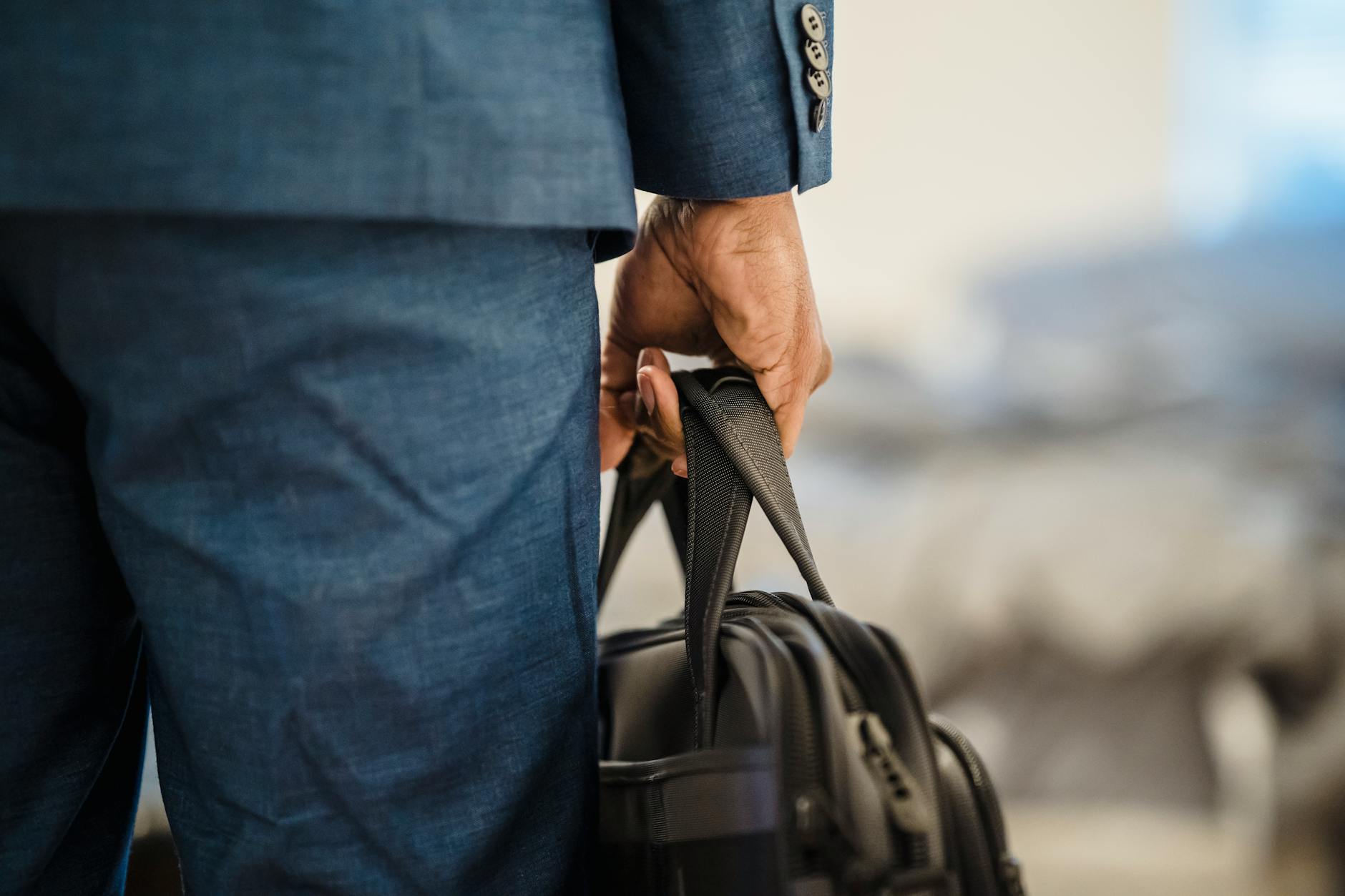
Man in a Blue Suit, Photo by Nicola Barts Pexels
by Charles Dean
For me, writing is therapy. It’s comfort. Freedom. I can write about anything—everything. I can create, destroy, rebuild. I can make my characters laugh, cry, dream. It’s something I can’t always do in real life. Writing is the only place where I can safely dream—because only there do my dreams always come true.
This, then, is my story—a story about a broken man in a broken world, a writer named Carston Dean, who clawed his way back from the edge of despair by putting pen to paper.
I was cold, hungry, and thinking it through I might have jumped from the George Washington Bridge. It had been an awful couple of months. I had been mugged, lost my house, my car, my Olivia, my job. I lost everything. But well… there are limits to what you can lose. You can lose everything, right, but you can’t lose all hope.
Let me start from the beginning? My name is Carston Dean. I was a successful trader here in NY. Before the crash of 2029, I sold stock for big companies and I was good. Really good. One time, I managed to sell so many shares that I bought a Rolls Royce Springfield. God, it was beautiful! Black exterior, leather seats, red details, white-faced tires. I took Olivia to the theater that night in the car.
Olivia was a redhead, freckles, olive-green eyes, and a cute laugh that stole a smile from me every time. We met at a party my mother threw. It was teenage love at first sight, I guess. I remember the first gift I gave her. I worked three months for my father to save as much as I could for it. I saved the money they gave me on my birthday and bought her a bracelet. It was not the most expensive, but she seemed to love it, and her smile made me feel happier than I ever had.
“How did you lose everything?” and that’s a good question. The market crashed they called it: The Second Great Depression. You should have seen how quickly it all got out of control. People selling everything as long as money had value: jewels, cars, houses. People selling their bodies, their organs, men mugging each other on street corners. Even the policemen were stealing. Thought I’d never live to see the day when the Chief of Police would run away from his mates. It was quite… I don’t even know how to describe it. How do you describe chaos?
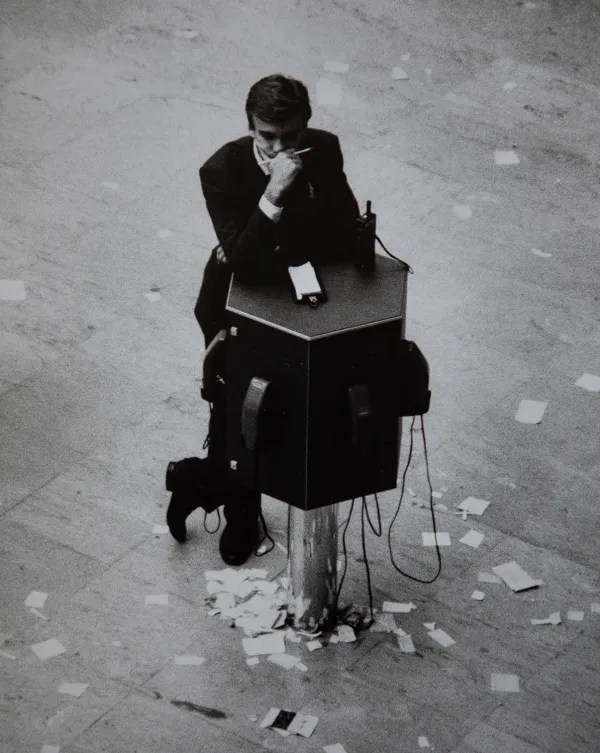
I was fired because my company went broke. The first thing I did was sell my Rolls. Sold it for $100. That was when Olivia decided to leave. We’d been together for five years. After that, I was on my own. I sold my house. Then I had to sell almost everything I had left—my hat, my coat, and my collection of rings. I kept two things: my father’s watch and a flask he had given me. I must say that the flask does help sometimes.
I lived in a shed on the outskirts of NY. The only thing I could get my hands on to eat regularly was old stale bread thrown out by the restaurants, and I survived by doing any work I could find. It seemed as if I didn’t have a speck of hope left, but it could have been worse.
One morning, a year after everything collapsed I was woken up by the smell of food. Real food! I walked out of my shack and followed my nose to my friend’ Arnie’s place. He was an old colleague from work who lived nearby in a shack of his own. As soon as I saw him, he waved at me.
“Morning, Carl!”
“Morning, Arnie. What you got there?” I said as I walked closer.
Arnie had been a banker—an accountant, I think. He’d studied science and maths at college. He was great at maths. He used to count every single bill, coin, and touch every account they had. He was the best of the best. He was good with numbers, and a good fella. He is balding, and his small John Lennon glasses make him look silly, but when I see him I do enjoy his company.

”Well, Carston,” he said, ”I got a job as a writer working for a scientist. At least, I think he is a scientist.”
“As a writer? Weren’t you a banker?” I asked.
“Well, could be worse, right?” He said as he smiled at me. ”The scientist says I am helping people put their trust back in science again.”
I smiled back: “Could be worse, Arnie. Could be worse. So, what you got there?” I asked as I stared at the stew he was making.
“Oh, here. Take a seat.”
He handed me his little stool and went inside his shack for a wooden box. As he sat down, he turned around as if looking for something.
“What are you doing, Arnie?”
With his hands, he told me to get closer and said in a whisper:
“I bought meat. Real meat!”
As soon as I heard him, my body shook with anticipation.
“No!” I said in disbelief.
But he nodded as his eyes opened wide and his smile twisted and he made the silliest face that dumbass friend of mine had ever made.
“Yes. I did. Look.”
Arnie opened his coat, and there it was. Beef. It was hanging from his pocket… well, like beef! I couldn’t believe it. He closed his coat.
“Where did you get it?”
“The science guy paid me yesterday. $5!”
$5 was more than most of us had seen in a while. I felt like yelling out my surprise. I put my hand on my mouth: Then “$5, Arnie! That’s more than I’ve seen in months. What did you really do to get it?”
Arnie simply kept nodding with that silly-ass face he had and said:
“I only wrote some articles for him on basic science and translated some others to English, and before I knew it, I had money again. Look.”
He opened the other side of his coat, and he had a lot of newly sewn pockets.
“I bought cheese, milk, eggs, taters for the stew. I even bought cigarettes.”

I swear I almost fainted when he opened his coat again. The wafting smell was heavenly. He invited me to eat. I tried to refuse out of politeness, but the words didn’t get to my mouth. That day, I felt like a king after a good bowl of stew and a cigarette—and I shared a tumbler of whiskey with him from my secret flask. God, I hadn’t eaten so well in ages.
Days later, Arnie came to my shed and told me he had been called by another scientist to write more popular science articles. People were reading them. Trusting in what he said. His job meant he had to go somewhere. He didn’t say where.
Even though he was kind of silly, he was my friend; generous, and a goddamn good cook. I would miss him. But above all, I was glad he was getting out of this stinkhole. He gave me his last cigarette, and before he left, he said:
“You should try to write something yourself, Carl. You always think things could be worse. You always hope and put a brave face on things. If people like what you write, they pay. If I can do it, so can you. See you, my friend.”
With that, he went back to his shack. That was the last time I saw him. That night, I couldn’t sleep. His words kept me up. I kept repeating what he told me: “If I can do it, you can.”
Next morning, I went downtown and tried to find a job. I needed money to buy paper and a pen—or a pencil at least. After looking around for twelve whole hours, I came across a small convenience store. The owner was a big Irishman called McAbee. After a long discussion and lots and lots of negotiation he sold me some stationary. I also managed to convince him to hire me. He paid me ¢5 an hour. It wasn’t much. I worked in that place for two years before Mr. McAbee decided I was too expensive, and then I was jobless again. But I started to write.
The world was still fucked—don’t get me wrong. The fall of the stock market did screw everything, but well, at least I had a bit of money saved up—and something to write with.
One day, I was walking around downtown and saw the picture of Arnie on the front of a newspaper. It wasn’t the headline, but close enough to be seen. He was now well-known. He wrote science articles. If there was a disease going round, he would explain what it was and what people had to do. People believed him, understood what he wrote and usually followed his advice. That’s precious. I was happy for him. I felt sorry for myself because I was still in the stinking hole, but it could have been much worse.
That night, I drank a whole bottle of whiskey I had put aside. I wanted to keep drinking to give myself the courage I needed, so I looked for my flask. When I did so, I found the cigarette Arnie had given me before he left. I swear to God, I heard his voice: “If I can do it, you can.”

I dropped my flask and laughed, and started crying. I don’t know why I was crying, but I was, and I remember what I said: “Very well, Arnie. If you can do it, so can I.” I will write about happiness and love and give myself and my readers hope.
That night, I spent five hours writing a tale about a broken banker who lost everything, then rose to become a great movie director who inspired people to get together and build a better world. It was pure wish fulfillment. Full of liquor, I worked and wrote and drooled over my story. Cut myself with the paper, sweated because of the whiskey, and then fell asleep on the pages.
In the morning, I read the story. To my surprise, in the cold light of day, it was still good. The following month, I tried my best to get someone to read it, but no one was interested. I didn’t know exactly how to publish it or even how to get someone to give it a try and read it. I kept writing anyway. It made me feel better. I want people to feel better when they read my stories.
One day, I wrote a story for a small girl who lived near me. The mother came knocking on my door, looking for some help—money or medicine—but I had nothing to spare. So instead, I wrote a story about a girl with magic powers who could fix anything and gave it to the mother. Days later, the mother came back, saying that her little girl loved it, and that she was feeling better.
I had almost forgotten about that story until one day, a man came to visit me. He knocked on the door. I opened it. I swear I thought it was the government coming for me. I went pale. Paler than a vampire. Luckily, it wasn’t the government.
“Excuse me, are you Carlton Dean?” asked the man. He was wearing a blue suit, coat, and a hat—glasses and he has an odd mole on his left cheek. Seemed like a nice guy, but it was too early in the morning to be polite.”
“Carston, sir. The name is Carston. What do you need?”
”My name is Albert. Albert Hooks. I am here because I wish to talk about your story.”
“My story? What do you mean? What story?”
The man reached for his briefcase and pulled out a small bundle of papers—it was the story I had written to cheer up the little neighbor.
“Did you write this, sir?”
I grabbed the paper sheets in disbelief and read the title: “The Little Pixie.”
“Yes, I wrote it a while ago. What of it?”
“Oh, it’s because we wish to publish it. Of course, if you want to, that is. All the children are passing it around and reading it. They all want to be pixies.”

I didn’t even know what to say, so I started asking dumb questions.
“You want to publish it? My tale? This thing?”
“Yes, sir. May I come in?”
I swear my brain shut off. I don’t know if it was from confusion or disbelief. I said nothing and moved away from the door. The man came in. We sat at my little dinner table. I had two decent chairs. He sat down on one of them.
After a couple of minutes of talking—and my brain was now working again—we came down to the offer for my children’s story. He offered to pay me $12 if I wrote five more pixie tales to make a book of stories. He gave me $3 for The Little Pixie itself. I was shocked. I swear I couldn’t stop twitching.
“Do you like this? Do you really think it’s any good?”
“My daughters and their friends love it, and I must say, I don’t think they are the only ones who would. It has universal appeal. You are a good writer, Mr. Dean. You cheer people up. You inspire young people. You have an opportunity here. What do you say? Deal?”
He held out his hand, and before I even touched it, I heard Arnie in my mind saying: “If I can do it, you can.”
“Fucking Arnie,” I said aloud as I grabbed Albert’s hand, ”you were right.”
“We have a deal, sir.”
And so, I began writing children’s stories for a book. I liked writing some. I didn’t enjoy writing others. But I wasn’t writing them for me. My young readers loved them all. I found out that good writing could help the little ones escape the grim world we were living in and helping them deal with it and realise that things could be worse.
After a while, in another few years, the economy started to heal and come back to life, and people could buy a few more things. Among the things they bought were my books of stories. The publisher was so pleased with initial sales high enough that he asked me to write several books and I became quite well known.

A year or so later, it got to the point where I had enough money and I was about to move out from my little shack. I was packing when I came across the first story I wrote: The Broken Banker. I read it again—still thought it was good. Still no one had showed any interest, whatsoever so I threw it away.
A couple more years went by, and I was doing alright as a children’s book writer. Living in a small flat. I married someone. She was a French woman with a Russian name: Anastasia. Blondish hair, bluish eyes. Freckles again. I have a thing for freckles. We had a little daughter, Darina. We named her after my mother. We weren’t wealthy, but we were happy enough. Things could have been much worse. My daughter liked my stories and made me read them to her almost every night. She fell asleep in a pixie hat.
One day, there was a knock on my door. I opened it.
”Fucking Albert!”
I recognized him immediately and smiled at him.
“Albert! What a pleasure to see you again, friend.”
He held out his hand, but I just hugged him.
“It’s good to see you again, Mr. Dean,” he said as he patted my back.
“Please, come in. Come in.”
We went to the dining room of my small house. I introduced Albert to Anastasia and Darina. After a while Anastasia took Darina off to bed and left us to our conversation. I asked him:
“What brings you here, my friend?”
“Yes. I came here because a man scavenging on a trash heap found this. He recognised your name and took it to our office in the Bronx. We gave him some money for it. ”
He opened his briefcase and pulled out a bunch of ragged, wrinkled, stained pieces of paper that smelled of the dump.
As he handed the papers to me, I felt I was back in my shack—I remembered how drunk and sweaty I was when I wrote ‘The Broken Banker!’ It was my manuscript!
“Where did you find it? I tossed it away years ago. I thought no one would ever bother to read it.”
You know, this could be a bestseller, Carl. Like your children’s stories, its a lovely dream of something better. What do you say? Deal? Can we publish it?
As Albert held out his hand, I yelled:
”Fucking Arnie! You were right!”
As I grabbed Albert’s hand, he laughed and lifted his lemonade glass.
”To Arnie”.
I smiled at him and toasted:
”To Arnie. Wherever that silly faced friend of mine may be. Wherever you are, I wish you well, Arnie.”

Carlos de Antuñano Meléndez, who writes under the name Charles Dean, was born and raised in Tlaxcala, near Mexico City. From a young age, he discovered an innate imagination that became his escape from reality.
In 2016, he and his family emigrated to Canada, where he began refining his writing during a difficult period marked by depression and personal challenges. Writing quickly became his refuge—his one constant source of comfort. In 2019, due to an administrative error by the immigration department, he was deported back to Mexico, returning to a life he had left behind. The sudden change intensified his struggles, but once again, writing became his sanctuary—a safe space reality could not offer.
Months later, in the middle of his emotional battles, he stumbled upon a writing contest and decided to enter, feeling he had nothing to lose. Though he didn’t win, the experience revealed something more meaningful: people connected with his work. Since 2021, Charles Dean has dedicated part of each day to writing. For him, it is more than a craft—it is therapy, an escape, and creative freedom.
Discover more from Ars Notoria
Subscribe to get the latest posts sent to your email.

You must be logged in to post a comment.