Colonialist is a reference to an interloper; someone who needs to be dislodged, removed, or absorbed
by Philip Hall
I was born in South Africa. The great grandson of colonialists: Arthur Lewis Hall and Rosalie Powell. My great-grandfather was one of Kitchener’s babes. He was a geologist brought out to South Africa to map South Africa’s riches (Hall, 1910). He spent six months of each year travelling with his family in an ox cart, pulled by eight oxen across the veldt (Hall, 1910). He’s famous for mapping the Bushveld igneous complex (Wagner, 1929), for choosing the stone of the Union buildings (Baker, 1934), and according to a BBC documentary, Earth Story (BBC, 1998), for being one of the first scientists to make a good educated guess at the age of the Earth—presumably inspired by his examination of the Bushveld igneous complex.
We were the products of the British Empire in Africa, and colonialism in Africa was no laughing matter (Rodney, 1972). The colonialists came in to steal the arable land (Mamdani, 1996) and destroy all native opposition. The Europeans divided up Africa at the Congress of Berlin in 1884-5. Then they put the people to work across the continent to mine Africa’s riches, to work in its factories, to harvest crops for Europe, to fish Africa’s seas and lakes; to rob it blind, and to do so without any scruples. The Belgians, alone, were responsible for the death of ten million Congolese using utterly ruthless methods, forcing them to work on rubber plantations.

The word ‘colonialist’ in Africa is a vile word. It sounds far worse than the word ‘locust’—and I’ve seen locusts and how they descend onto a field full of maize, fluttering and rustling and eating all the food and greenery, leaving only stalks behind. Of course, this is partially a mischaracterisation; to some extent, in the course of wealth extraction and exploitation settler colonialists did help build up the transport and governance structures of the countries they carved out for themselves.
But in most places the word colonialist has very negative connotations. In Latin America (Galeano, 1971), in India, in China, in Southeast Asia and in the Middle East. In places like Vietnam and Algeria and Iraq, where so many died resisting colonialism the word colonialist refers to an absolute excrescence; something evil, something that needed desperately to be dislodged, removed, absorbed (Fanon, 1961).
Ironically, what seemed to change the meaning of the word colonial into something more acceptable was ethnocide, genocide and erasure. So the word colonial and colonists—notice this slight change in the morphology—has rather more positive connotations in the USA, where the local indigenous population was practically wiped out and still can’t argue back with much force. The ‘frontiersmen’ win the debate and create the language to talk and write about the wide emptied spaces they occupy. The Wampanoag of Massachusetts, the Powhatan of Virginia, the Pequot and Mohegan of Connecticut, the Iroquois of New York and the Palestinians in Palestine.
Colonists (not colonialists) are intrepid lumberjacks and explorers in Canada (where recently the mass graves of indigenous children were dug up in the grounds of the schools they were locked into). The people who colonised Australia and New Zealand and Tasmania were ‘brave, courageous, hardy, cunning, and manly’. They were proof of Darwin’s theory about the right of the ‘superior race’ to eradicate ‘inferior races’. In colonising, they killed the dodo and, in Tasmania, wiped out nearly every last Tasmanian (Ryan, 2012). So haunted is Tasmania that a sensitive friend of mine who was born there, while she was walking along the cliffs one day, said she felt the presence of a crowd of ghosts willing her to jump.

Now, no one dares contest the rights of the Europeans to the ancestral lands of the North American continent or to Australasia. They have set down their roots between purple mountain ranges and on the great plains. You see their boats moving to and fro across the lakes, and huge rocks are carved with the faces of the people who came, saw and conquered.
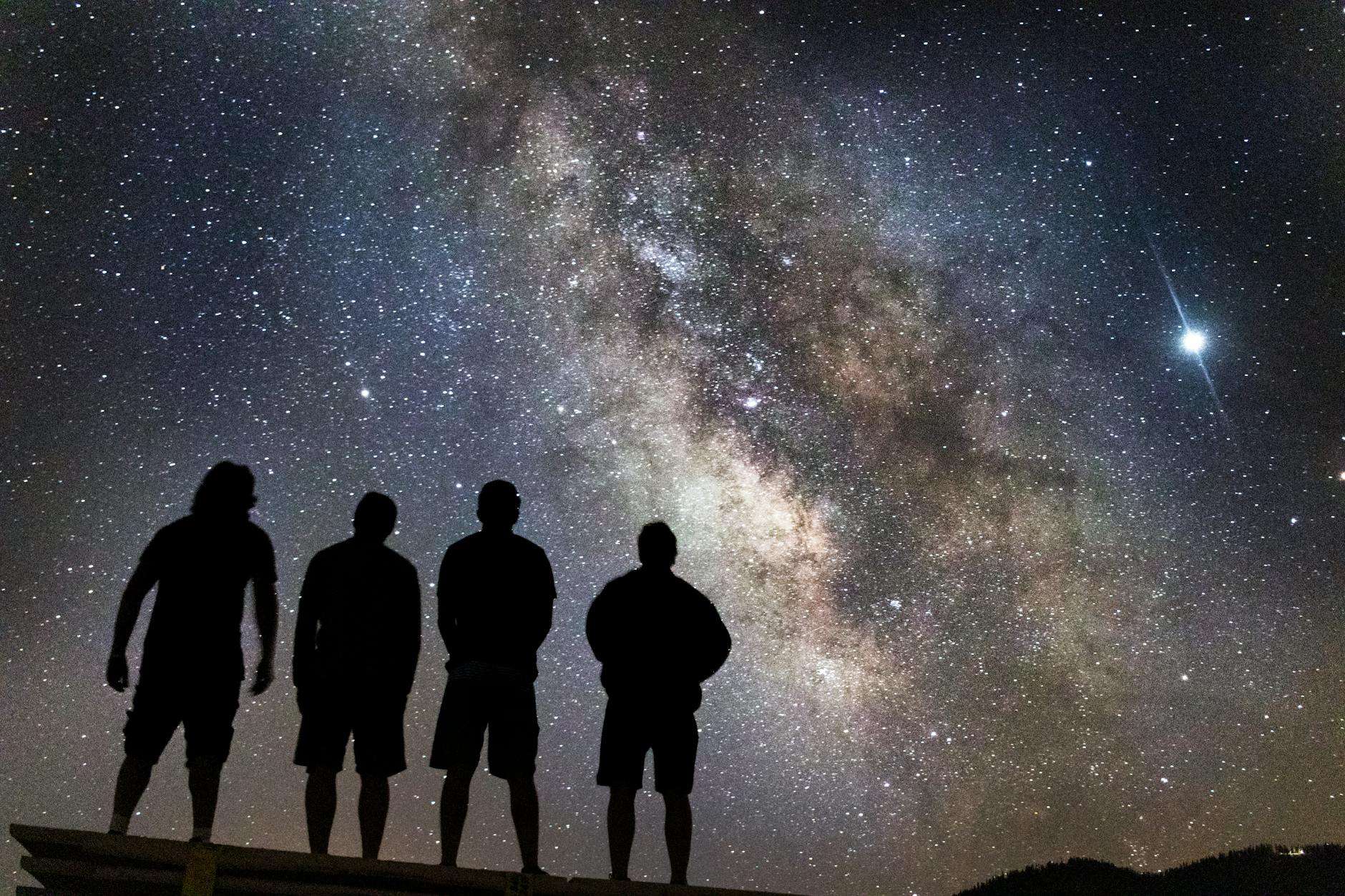
But if colonialism has so many negative connotations for such a large part of the world, then when many discuss space exploration nowadays, why do they use the expression ‘the colonisation of space’? Who uses the expression? I don’t believe the Russians do, or the Chinese, not even the British, (shame on us). In Russian SF, colonialism is a charge levelled against the West. Their own spacefaring future was ideologically framed as cooperative and anti-colonial.
We are not special—Avi Loeb
Modern Chinese SF is deeply influenced by the country’s historical experience of the Century of Humiliation (c. 1839-1949), when China was exploited and carved into spheres of influence by Western powers and Japan. This makes China intensely sensitive to any accusation of colonialism.
The people who talk happily and contentedly about ‘the colonisation of space’ are, quite clearly the descendants of colonialists (Musk, 2017); the descendents of colonialists who, through the piratical actions of people like Clive of India, Cecil Rhodes, George Washington and Lachlan Macquarie, gained vast territories for themselves and their fellows. Now their descendents intend to gain whole planets.

A South African US citizen of Dutch colonial descent would like to colonise Mars (Musk, 2017). And when the space exploration instrument arrays of the United States look out across our galaxy, they look for habitable planets. One might ask the question: if a planet is habitable, might it not also be inhabited? Wouldn’t that be a logical conclusion to draw?
The evolution of our planet, Gaia, its atmosphere, its soil, its water, is partly the result of three and a half billion years of life. Before the anthropocene there was the ‘Bioscene’. Oxygen in Earth’s atmosphere itself is a biosignature because photosynthesis constantly replenishes it, maintaining a state of chemical disequilibrium. Observing large quantities of oxygen in our planet’s atmosphere would not only indicate Earth was habitable, but that it had life.
So what are the assumptions being made here by the people who want to colonise space and find so called habitable worlds? The assumption they make is simply that wherever there is life in space, extraterrestrial life should be a resource at the disposal of the future colonisers (whether or not that life could later be argued to be sentient) just as we use the animals and plants and sea creatures and birds here on Earth. Perhaps this colonising mindset explains why the Search for Extraterrestrial Intelligence (SETI) and similar organisations focus almost exclusively on searching for atmospheric traces of bacteria on other planets and not techno-signatures and extraterrestrial intelligence. You can fantasise about colonising a planet with bacteria without a qualm.

When scientists invoke the Copernican principle, that principle says that there are 100 million other yellow sun-like stars in our galaxy, possibly with a hundred million planets orbiting them not too dissimilar from our own. The Copernican principle says that we are not special.
We do have a data point and that data point is humanity. If there is humanity here on Earth, it is possible (likely, probable, almost certain) that there are other forms of ‘humanity’ out there. Let’s broaden that definition! There are plenty of other ‘humanities’ in our galaxy. Again, as Avi Loeb has said: We are not special (Loeb, 2021).
But if we’re not special (and it’s highly likely that we are not) then the more rapacious amongst us might have extra-terrestrial counterparts.
The assumption is always that an advanced extra-terrestrial culture will be more humane (using the term humane in that broader sense). Yet, looking at the behaviour of governments nations and corporations in the 20th century and the 21st century so far, this is a rather difficult conclusion to justify. This confidence in progress, which people like the Epstein favourite, Stephen Pinker, profess, is more than questionable given the recent history of the human race.

But whether it is questionable or not, we are at the stage now where we can travel into space and soon we will be able to send probes powered by lasers to nearby stars, flying there at a fraction of the speed of light on solar sails—and send large quantities of them if we choose to do so.
In a hundred years, we might be at a stage where we can build giant, generational spaceships, kilometres wide, powered by nuclear fusion motors. Or put everyone to sleep to wake up after very long interstellar voyages to a nearby star system, having tested the waters and found out beforehand whether or not a nice juicy planet was waiting for human locusts to land on.
Not so coincidentally, as I write, there is a large interstellar object that has entered into our solar system travelling along its plane called 3I/ATLAS. It is not a typical comet, and it seems it might even be emitting its own light. The object is due for a close rendezvous with Mars, Venus and Jupiter, and, at the precise moment when it is hidden from us by the sun, according to Avi Loeb (the renowned Harvard astronomer) it will be perfectly positioned to perform a breaking manoeuvre and then perhaps visit us.
If we would consider going to the Centauri triple star system after sending probes there to test the waters, and then, (100 years later) send a large spaceship to that system, this begs the question:
Could it not be that inhabitants of the Centauri system, or people from a planet orbiting Tau Ceti, are doing exactly what we merely intend to do? Perhaps they would first send tiny probes flashing past the Earth, and follow that by sending an object like 3I/ATLAS. They would, of course, have the intention of colonising our planet. Science Fiction, projecting the worst of humanity onto the dark night sky has explored this idea ad nauseum.

Arguments against adopting the mentality of colonisation in space exploration are not arguments against space travel itself. Rather we should argue for a radical shift in attitude in the people who index ‘habitable’ planets with a view to one day ‘inhabiting’ them.
The descendants of colonialists (or colonists if you must) have to shed the offensive cultural assumptions of empire and conquest before projecting such unfortunate values onto the cosmos. If we cannot treat each other ethically, or deal healthily and morally with each other and other forms of life on our own planet, what gives us the right to export our mistreatment, destruction and exploitation to the stars in the form of a new colonialism?
We need to imagine a future in space not of ‘colonisation’, but of something the wannabe space faring colonialists may not even have the language for yet. We need to use different words and metaphors to talk about space exploration.
Perhaps it is difficult for the people in the Anglosphere (and Europe) in the field of space research to re-work their language. Perhaps these people are still are lost in the enjoyment of the fruits the erasure of indigenous peoples brought them. Or perhaps they are still intoxicated by old colonial adventure stories where discovery implied conquest, and so they revel in dark dreams of ‘conquering space’.
Bibliography
BBC. (1998). Earth Story. [Television series]. BBC Two.
Fanon, F. (1961). The Wretched of the Earth. Grove Press.
Galeano, E. (1971). Open Veins of Latin America: Five Centuries of the Pillage of a Continent. Monthly Review Press.
Hall, A. L. (1910). The Geology of the Barberton Gold-Mining District. Geological Survey of South Africa.
Loeb, A. (2021). Extraterrestrial: The First Sign of Intelligent Life Beyond Earth. Houghton Mifflin Harcourt.
Loeb, Avi. “What Should Humanity Do on the Day After an Interstellar Object Is Recognized as Technological?” Medium, 28 May 2024,
Mamdani, M. (1996). Citizen and Subject: Contemporary Africa and the Legacy of Late Colonialism. Princeton University Press.
Musk, E. (2017). Making Humans a Multi-Planetary Species. New Space.
Rodney, W. (1972). How Europe Underdeveloped Africa. Bogle-L’Ouverture Publications.
Ryan, L. (2012). Tasmanian Aborigines: A History since 1803. Allen & Unwin.
Truth and Reconciliation Commission of Canada (TRC). (2015). Honouring the Truth, Reconciling for the Future: Summary of the Final Report.
Wagner, P. A. (1929). The Platinum Deposits and Mines of South Africa. C. Struik.
Phil Hall was born into an ANC family in South Africa. The family was forced into exile in 1963 after his mother was imprisoned and his father banned. They relocated to East Africa, where his parents continued their activism and journalism. In 1975, after a period living in India, they journeyed overland back to the UK, eventually settling in Brighton.
Phil pursued a broad education, studying Russian, Spanish, politics, economics, literature, linguistics, and English grammar and phonology. His path led him to live and study in Spain, the USSR (in Ukraine), and later in Mexico, where he married and started a family. Over the next decade, Phil and his partner balanced activism with work before relocating to the UK—a move initially intended to be permanent.
However, professional opportunities took him to Saudi Arabia and then the UAE, where he spent ten years before returning to the UK during the COVID-19 pandemic. Back in Britain, he founded Ars Notoria Magazine and, alongside fellow humane socialist Paul Halas, launched AN Editions, a small venture dedicated to publishing thoughtful, progressive and exciting new books.
Discover more from Ars Notoria
Subscribe to get the latest posts sent to your email.


You must be logged in to post a comment.