
Africa South…. “Angola Rising”, photo ©Andy Hall
‘I was excited about the victory of the MPLA, but others weren’t’
An Interview with Ars Notoria Magazine
Interviewer: Do you believe your background gave you a perspective on this conflict absent in most Western newsrooms? Because, of course, your parents were members of the ANC and you understood the geopolitical context of what was happening in Angola. Do you think that this is why these images were shelved—because the picture editors lacked your background?
Andy: Well, they weren’t shelved, they were used in different papers and magazines, including Time Magazine, The Independent, The Times and so on, accompanying individual articles. They never appeared as a full set in a photo led feature in the Independent – one of the most prestigious places for photojournalism in the UK at the time.
Obviously, as somebody with an African background, I was most interested in African conflicts in the 60s, 70s, and 80s. As someone born and bred in Eastern and Southern Africa, having the background of my parents’ involvement in the liberation movements, African countries were getting rid of their former colonisers and confronting imperialism.
Angola was probably one of the trickiest conflicts because it was really an essential part of the background to the Cold War. It involved many players, and had all the classic symptoms and causes you would find in any scenario based around post-colonial conflicts. The Cuban withdrawal in 1989 was very interesting because it sucked in a lot of outside protagonists in, not just the political movements in Angola. It was the perfect Cold War playground.

‘The Cuban withdrawal in 1989 was very interesting because it sucked in a lot of outside protagonists,’ photo ©Andy Hall
Interviewer: At the time, the West often framed Cuba’s involvement in Africa as Soviet-backed “Cuban adventurism.” Your photographs, however, seem to tell a different story on the ground, and show a palpable friendship between Cuban soldiers and Angolan civilians. Did you witness what you would genuinely describe as friendship?

A palpable friendship between Cuban soldiers and Angolan civilians, photo ©Andy Hall
Andy: Yes, I went there because I was excited that in March 1988 the Angolans and the Cubans together defeated Apartheid South Africa. Because up until the late 80s, South Africa had invaded parts of Angola and had helped Western-backed UNITA. It all came to a head in the late 80s.
At that time, South Africa had a lot on its plate. There were uprisings in the townships, everybody was boycotting Apartheid, and the outside world was starting to let go of South Africa. The situation in Angola came to a head around the time of the Battle of Cuito Cuanavale the year before. It took place in March 1988 a year before my trip. The South Africans and UNITA threw everything they could at the MPLA and the Cubans, and they were defeated.
Interviewer: You arrived in an Angola ravaged by a prolonged and vicious civil war, a proxy conflict. Tell me more about the reason you wanted to go to Angola at that exact time.
Andy: The reason why I wanted to go to Angola was because the Angolans had announced that the Cubans were withdrawing at the very end of ’88. It was the formal withdrawal that was in January 1989. Obviously, this was a big turning point in Angola’s history. I was starting my career and wanted do a more challenging project away from the UK. I had contacts at the Angolan embassy who could give me access because of my ANC links. Angola was a very tricky country to get into, and I had a better chance than most photographers and journalists of getting in.
Interviewer: Did any other journalists get in, or were you on your own?
Andy: Yes, other journalists did get in, including Richard Dowden from The Independent. But there weren’t that many. I think that what happened was that at the very same time that we went to Angola the Russians were formally pulling out of Afghanistan. The Russian pull-out of Afghanistan grabbed more of the world press’s attention than Angola.
Interviewer: What evidence did you see of the war? Did you see any evidence of the suffering of the Angolan people?

They used my picture for one article written by Dowden with the headline: A lot more than a front for Pretoria, Independent 19th September 1989, ©Andy Hall
Andy: I went there to cover all the events around the withdrawal: the parades of Cubans and government soldiers together, the street parties, the ceremony. But there were also visits to see the communities in and around Luanda and the country, and there we saw how cities had been ravaged, and buildings were pockmarked with holes. There was a lot of collapsed infrastructure and we saw burned out tanks and vehicles on the road. We went to see clinics where people had lost limbs, because a big feature of the conflict in Angola was all the landmines that were planted on the farms. But we were heavily managed by the authorities. We couldn’t just move around freely. There were reports of the odd arrest of a journalist who tried to go rogue (as it were) and go off on their own. We travelled around in a pack.

‘…a big feature of the conflict in Angola were all the landmines that were planted on the farms.’ photo ©Andy Hall
Interviewer: Didn’t Lady Diana go there to campaign against land mines?
Andy: Yes, exactly. She went there in ’96, ’97. nearly 10 years later. Angola was plagued with landmines. So there were lots of people without limbs, lots of rehabilitation centres and people being cared for in clinics.
Interviewer: Did you speak some Portuguese, or did you have a translator?
Andy: We had a translator. While I was there, I teamed up with a couple of Italian guys, a photographer and writer. One them was Danilo Malatez. When we arrived, we were put up at very expensive hotels where they could keep an eye on us. Anyway, we made friends with one of our fixer-drivers, and because we didn’t have that much cash, we decided to stay in his house with him at his invitation.
On these kinds of jobs you’re only as good as your fixer-driver. Anyway, we had the streetwise Mauricio Gomez looking after us and he was a bit of a ladies’ man, but a really sweet guy. We stayed in his house. But then the authorities found out and they brought us straight back into the hotel and said: ‘You can’t do that!’ In those days, foreign exchange was a scarce resource. The Angolans wanted us to spend lots of cash and US dollars. Unfortunately, we had to go back to the hotel and pay out whatever it was that it cost a night.

The UN oversaw the formal signing of the withdrawal agreement, Time Magazine, ©Andy Hall
Interviewer: When you returned to London with your pictures, what was the response to your work?
Andy: When I was in Angola, I was talking to Angolans and Cubans. I didn’t hear anything bad from the Angolans about the Cubans being there. I am a socialist myself, and followed the stories of many countries as they got rid of their colonisers, I was excited to be there. I definitely felt I was recording an uplifting moment in history. I was full of hope for Angola. So yes, a lot of my pictures did show Cubans and Angolans celebrating together. They were upbeat pictures.
While I was there, I met Richard Dowden from The Independent. And we decided (I was working with an agency) that we would do a big joint feature for The Independent Magazine. I was very excited about it. My agency told me The Independent Magazine did indeed plan to use my pictures in a photo led feature.
The first thing I did when I got back to England was to meet the picture editor of The Independent Magazine in the company of the writer Richard Dowden. Richard’s politics were very different to mine. He was pro-UNITA. He claimed that UNITA was more representative of Angolans than the MPLA, so, my pictures of happy Cubans and Angolans together didn’t fit with his narrative.

‘…a lot of my pictures did show Cubans and Angolans celebrating together. They were upbeat pictures.’ photo ©Andy Hall
I showed The Independent Magazine my pictures. They liked them, but wanted me to come and chat about the situation in Angola and give them my take. Richard Dowden was already there with the picture editor. They let me talk about my slant. Unexpectedly, I found that we weren’t discussing my pictures. They wanted me to talk about what I thought about the situation in Angola.
I used terminology like “Cuban internationalists,” which they probably didn’t like. Cubans would refer to themselves as ‘internationalists’, whereas obviously Richard Dowden probably saw them as interfering adventurists. They just let me talk and then said, “Okay, thanks Andy, we’ll get back to you.” I waited for weeks and weeks. When I finally heard from them, they didn’t want to have a photo led feature after all. I think it was because when they looked at my pictures they could see that they didn’t fit Richard Dowden’s angle on events. However, they did use my picture for one article written by Dowden with the headline: A lot more than a front for Pretoria. I did show war torn Angola, but I also showed the MPLA’s Angola in a positive way.
Interviewer: Would you say that was a kind of censorship?
Andy: Well, Richard Dowden was their main foreign correspondent. I’ll never know to this day for sure whether my pictures weren’t good enough, or whether they didn’t match the required viewpoint. I think it was more to do with my pictures not fitting their narrative. In terms of the way a photographer’s work is used in the Western press, sometimes it is not a question of censoring people outright, but of ignoring them, or fitting an image to an article that follows their own line. That’s exactly what they are doing with Palestine now, isn’t it? They have made their mind up what to say before they write about anything.

Seven Days, a Communist Party publication took a more celebratory approach, ©Andy Hall
Interviewer: Some people say that the defeat of the South African Army in Angola, with Cuban support, was a pivotal moment in the broader struggle for Southern African liberation; that it was instrumental in getting rid of apartheid. Would you go that far?
Andy: Yes. I mean, the Cuban military intervention in Angola helped bankrupt Apartheid South Africa which, by this time, was fighting on too many fronts. It definitely stopped any ambitions they had of winning. The successful intervention by Cuba also concluded at the same time as the West was being forced to recognise the ANC because of all the boycotts. Plus, of course, the biggest reason why South Africa started to unravel was the uprisings that were happening in the 80s which made the townships ungovernable. The South Africans put a hell of a lot of money into their military interventions in Namibia and Angola. Basically, Cuito Cuanavale was the big defeat that made them reexamine their position.
Interviewer: Was there one particular photograph that you preferred over the others? Or was there one that you wish you’d taken?
Andy: What I wish had happened is that that trip came later in my career when I had more experience under my belt. Then I would have had a better plan of action. It was my first real foreign assignment; a big story. I was green. I took both black and white and colour photos, so I was a bit all over the place. Also, it was a very difficult assignment because of our lack of free movement. You must be experienced and savvy in giving fixers and various other minders the slip. I remember going to a big market to do daily life. I spent a few days there and got around the outskirts and then got held up by someone from the Ministry of Information, who took me to the police station. I wasn’t arrested, but I was told I couldn’t just go take and pictures anywhere.
Interviewer: Nowadays you are well known for your street photography, did you get a chance to do some street photography in Angola?
Andy: Angola is one of the most visual places I have ever been to, and certainly one of the most interesting; and for that reason it would have been better to do more daily life and street photography.

‘Of all the places I’ve been to Angola culturally politically and socially is wonderful”, photo ©Andy Hall
I could have captured that lovely light. It was such a great place with such great looking people. I would have concentrated more on colour photography rather than black and white. At that time, back in the late 80s, black and white was more mainstream.
Soon after Angola I became interested in colour photography. In the 90s I was inspired by people like the photographers Alex Webb and Harry Gruyaert. I went to Angola very early on in my career. I was rather inexperienced and hadn’t yet found my own style.

A street scene in Luanda, ©Andy Hall
Interviewer: What is the lesson from your Angola experience that you would like to share with young photojournalists?
Andy: My advice to them is to go somewhere you’re that really interests you, where you’re really interested in the culture and the history and the politics. Don’t just go somewhere because you think it is the most ‘fashionable’ place to go. In other words, where everyone else is going.
I went to Angola because I was deeply interested in Angola and what was happening there. In ’89, a lot more attention was paid to the collapse of the Soviet Union, but I preferred Africa. Go somewhere that really interests you, where you care about what is happening in that country’s culture and politics. Don’t just look for the most hard-core place to go, or go somewhere just because more people are being killed there.

Wall mural on giant foot treading on imperialist soldier, photo ©Andy Hall
Interviewer: I see in that an implied criticism of people like Don McCullin, who specialised in conflict.
Andy: I love Don McCullin’s work, but I would not have hung out with the Phalangists in Lebanon. I would not have hung out with the white mercenaries in the Congo, nor with American soldiers in Vietnam.
I really admire Philip Jones Griffiths, who showed the conflict from the perspective of the Vietnamese in Vietnam. There’s a famous picture he took of a guy in the mud, a Vietnamese soldier. The soldier is blindfolded and tied up and surrounded by soldiers’ boots, He’s looking up at them. Philip Jones Griffiths’ book is called “Vietnam Inc.”
In my limited experience of conflict photography, I try to show things from the anti-colonialist and anti-imperialist position. Off my own bat, I wouldn’t go anywhere just for the sake of taking pictures of two sides killing each other. I need to have a political perspective on what is happening.
Still, obviously, if I had been given an assignment to go somewhere by the Observer or the Sunday Times I wouldn’t have said no, but I wouldn’t have hung out with the baddies and followed them around.
After Angola, I also went to South Africa—that was the next step. And that was a bit more dangerous, but again, I was politically and emotionally more involved. I didn’t go as a neutral. I wanted to go there because I was excited about what was happening in South Africa, too; I wanted to show it in my way. I was determined to see the story of South Africa through to its proper conclusion and photograph the inauguration of Mandela as president.
The inauguration of Mandela happened on the 27th April, but a few days before news had broken out about a mass slaughter in Rwanda and a lot of photographers didn’t wait to record those first moments of democracy in South Africa. They went straight off to document the piles of bodies that were strewn around Kigali.
It was busy in the 90s and photographers flew from the famine in Somalia (which I also documented) to the Bosnian civil war, to the last days of Apartheid, and then straight on to Rwanda. It can be overwhelming.
Go because you want to say something about a place. Do not just go to the biggest conflict going on at the time because you want to be part of it. I have never wanted to go off and take pictures of people killing each other. I go to areas of civil upheaval if I am politically invested in a specific story. I regret not doing more in Palestine, for example.

Luandan Children in front of the mural of the founder of the MPLA Agostinho Neto
Maybe, photojournalists are naturally left-wing or progressive because they see what happens to the underdog. Their prime motivation (certainly before social media) was to reveal the living conditions and the suffering of the poor and the oppressed to people who did not know about it, and to give a voice to the voiceless. It is a cliché, perhaps, but it is true. The job of a photojournalists is not simply to expose and reveal, but to explain and provide insight.
Interviewer: Well, Andy, thank you very much. That was a wonderful interview, and we appreciate it very much.
Andy Hall, recently won the prestigious Trieste Photo Days award for best author. The competitions was judged by the Magnum photographer Harry Gruyaert, who said: ‘I chose this work because it’s the kind of work I would have liked to have taken myself. His compositions stand out; he’s pulling order from chaos and some of these images are truly powerful.’
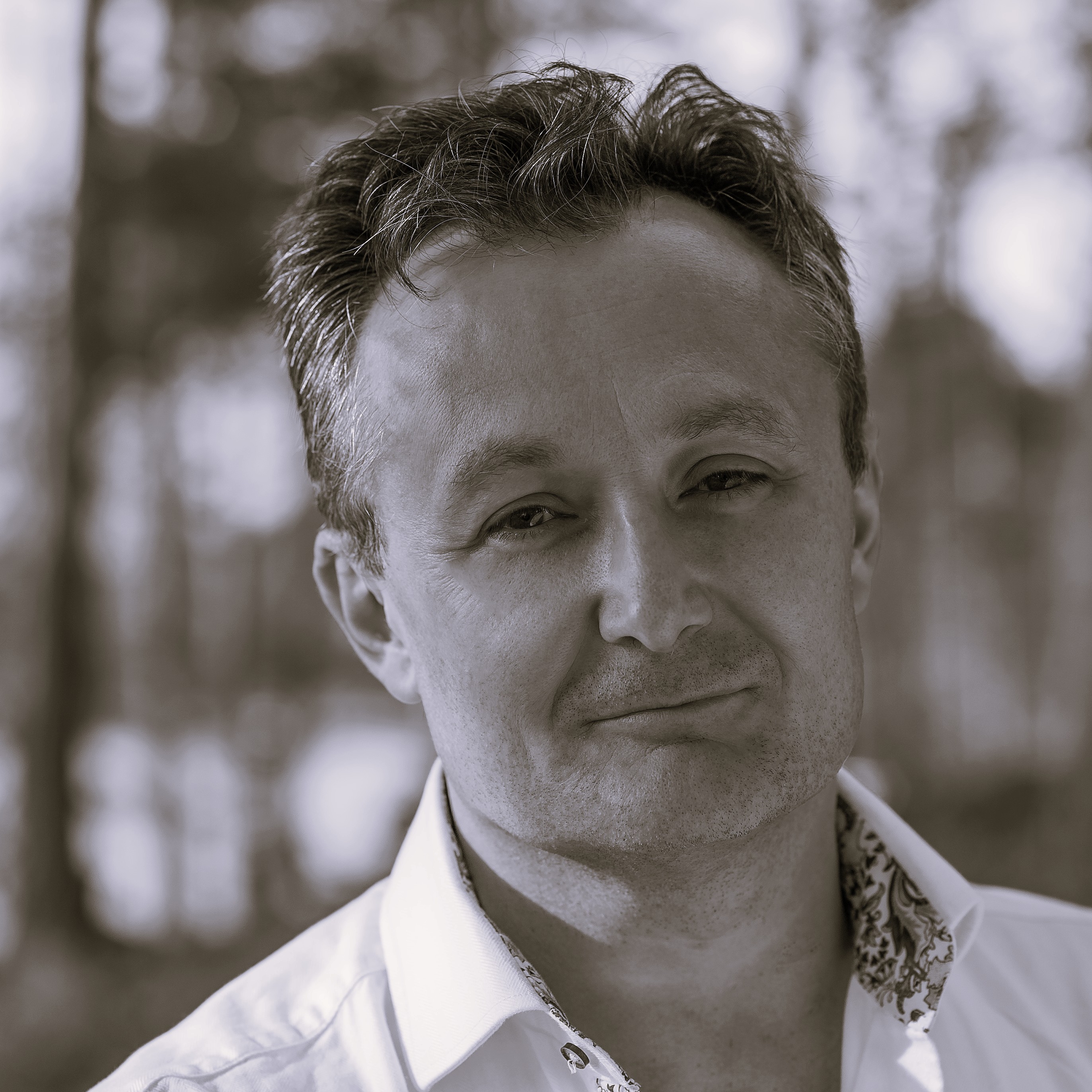
Andy Hall is an editorial photographer based in London specialising in reportage, with over 35 years experience; travelling all over the world on commission for numerous publications and organisations including the Guardian and the Observer and UNHCR. His work has featured in many exhibitions and he has collaborated on a number of book projects. His work on the Sahel region of Africa was screened at the Visa Pour’Image Festival in 2012 and his street photography has earned him accolades, including Finalist in the Brussels Street Photography Festival in 2019 and 2024, and Finalist in the Lensculture Street Awards 2021.
Discover more from Ars Notoria
Subscribe to get the latest posts sent to your email.

You must be logged in to post a comment.