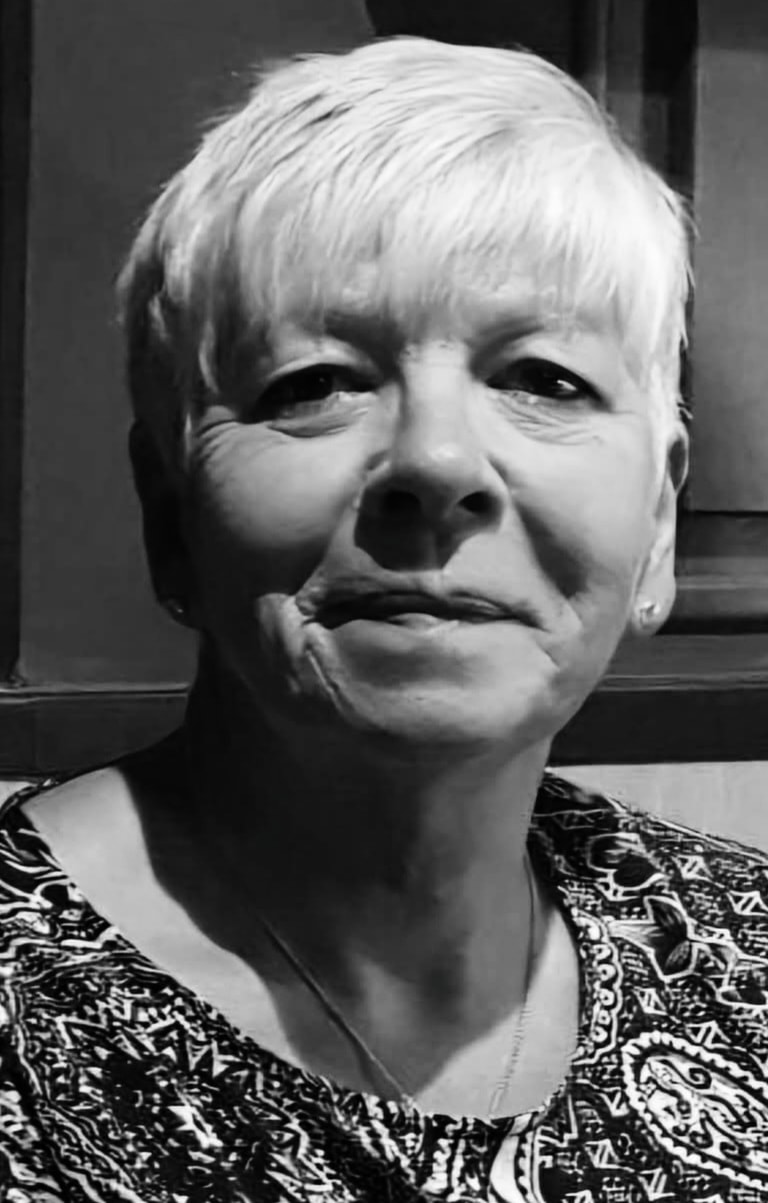
Photograph David Yip
by Margaret Yip
The 1980s and Thatcher years were not good for Barrow-in-Furness; it remains one of the North’s most deprived areas. Both miners and shipyard workers went on strike during this time. No social housing was being built to replace the rows of dilapidated terraced houses and flats, whose back streets were used by fly-tippers. The council’s decision to collect unwanted electricals, beds, sofas, etc.—by charging a fee few could afford and by appointment only—saw a huge decline around the town centre. Between 1946 and 1981, five million council houses were built. Over the last 45 years, only a quarter of a million have been built.
Despite Thatcher’s promise in 1979 that only recently nationalised companies like Aerospace would be privatised, once she won the 1983 General Election, the sell-off of British-owned companies began in earnest. British Telecom, British Airways, British Gas, British Steel, British Electricity, and British Coal were all sold off. Later, British Waterways, Jaguar, Rover, Rolls Royce, the Railways, and the Royal Mail would follow, along with North Sea oil.
Many children lived below the poverty line. My family, on the other hand, were doing better. Like me, they would turn their hands to any jobs available: decorating, gardening, cooking, food deliveries, or hospitality jobs, whilst doing college courses to gain qualifications.
It is 1988. After gaining experience working in a local Barrow hotel, Suzanne is the first to leave home to run her own pub—The Crown in Manchester. Linda, too, has gained qualifications and obtains an office job at Windscale, the nuclear plant up on the west coast. Martin, my eldest son, has been working full-time in a candle factory in Grange-over-Sands since leaving school. David is still chefing and attending Kendal catering college. In 1990, Diane leaves school and goes into further education, gaining distinction qualifications with a placement at the local Magistrate Courts.
I “adopt” the two Dans—two neighbour lads, both called Dan, who knock on my door most days when I get home from work. They ask if they can help me sweep and weed the street or run errands, all for a little bit of pocket money. Today, they are lovely married men and tell me I made them realise when they were young that if you worked hard, you could earn money. I am still in touch with some of the neighbours from our grove. Some have moved away, some married, and some have since passed away. But my family and I often look back on our time there with happy memories of a great community.
My eldest son, Martin, marries his childhood sweetheart from our grove in 1990. They marry in St George’s Church, where he went to the neighbouring parish school. Built in 1859, St George’s is the oldest Anglican church in Barrow. Reverend Gillespie officiated. The reception was held in a country hotel on Abbey Road, now demolished. My mother was still alive then and enjoyed the festivities.
Martin goes on to leave the candle factory and becomes a train driver for Northern Rail. My daughter-in-law is a conductor for the same company. They have four children, all adults—their eldest son is also a train driver. They have two grandchildren.
Suzanne marries in 1992 and has one daughter, Catherine, who is a solicitor. She has a son, Henry, aged two. Linda marries in October the same year and has a son and a daughter; they all live in Qatar as professionals. David manages a lovely pub in the Lake District. Diane is a commercial manager for the Civil Service.
Seventy-six years have raced by; life has been a roller coaster of ups and downs. Much has changed since the 1950s, when politicians had gravitas and responsibility and could be held to account. The UK has gone from near bankruptcy after two world wars to the sixth richest country in the world—but what do they do with it all? The NHS is in ruins, our roads are full of potholes, schools are in dangerous conditions, and the welfare state is in crisis. Most politicians today have no gravitas and no honesty. They revel in power and line their pockets from billionaire donors.
Today, the majority of the NHS and its different departments are between 23% and 80% privatised—in some cases, higher. Privatisation fills the pockets of private shareholders and their CEOs for basic maintenance in return. The results are long queues in hospitals and a long list of NHS scandals: the Stafford Hospital scandal, the infected blood scandal, maternity scandals, the Alder Hey scandal, and many other issues, including surgical errors and misdiagnosis.
All these utilities and services need to be paid for by millions of ordinary people earning the minimum wage, claiming benefits, or living on a small state pension—all to keep greedy billionaires in clover. Poisoned waterways, rivers, lakes, and seas are pumped with sewage to evade maintenance costs. We have ineffectual transport systems. Our utility bills are the highest in Europe, if not the world.
Poverty and homelessness are ignored. Higher education means a lifetime of debt, and training and help for those wanting employment is non-existent. Yet every year, taxes, rates, VAT, utilities, food, etc., all rise in price. Wages are taxed at source; then, almost every penny we are allowed to keep to survive is taxed again when spent!
The happy days of my childhood are long gone. As a family, we enjoyed church outings with cream teas. When the electricity or gas man came to empty the meters, piles of shillings were counted on the kitchen table. They took some but gave some back to my mum. Those were the days when state-owned utility providers gave something back to their customers, instead of feeding billionaire coffers. Even the rag-and-bone man who trundled up our road gave something in return for a bundle of rags—a balloon, a lollipop, sometimes a sixpence (two and a half pence today). That bought us a bag of chips with mushy peas. The simple things in life that we all loved.
My parents had their ups and downs; they taught me how to deal with mine, and I have taught my children how to deal with theirs. My parents’ ethos was fairness and making the best of what you have: sharing and caring, striving for a better world for our children, voting for peace instead of war, and realising no man is an island—we are all responsible for this planet.
The years have sped by, but I have enjoyed almost all of them. We have laughed, loved, and lost.
We, as a family, have been blessed with love, good health, happiness, and great friends and neighbours. Anything else is a bonus.
I wish to extend my gratitude to Philip Hall, Ars Notoria, and all those who contributed to the remarkable opportunity of recording my memoir
Margaret Yip
Discover more from Ars Notoria
Subscribe to get the latest posts sent to your email.


