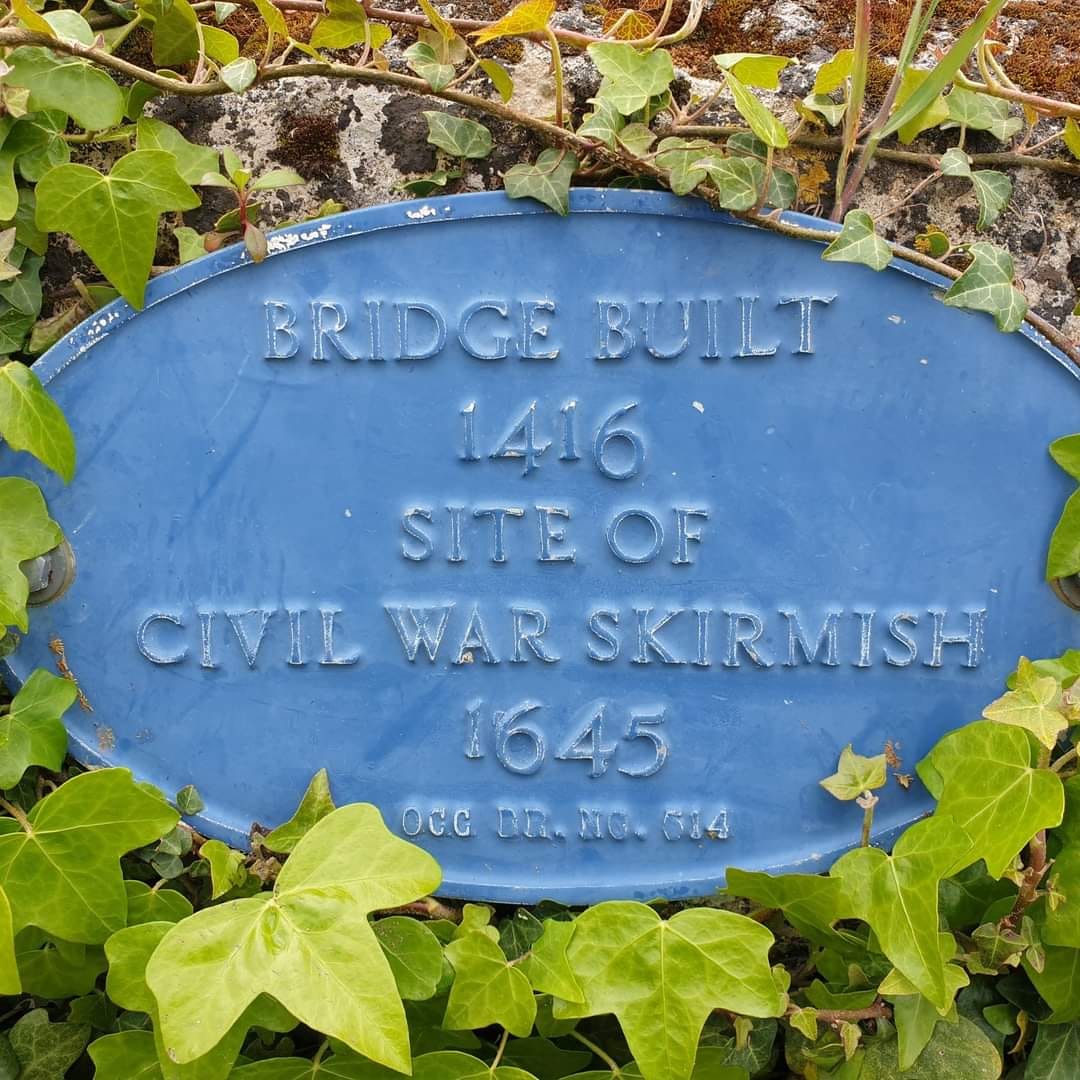
Photograph Phil Hall
A DISCUSSION DOCUMENT FOR A HUMANE SOCIALIST BRITAIN (2025-2040)
Great Britain stands at a historical precipice, facing three interlocking crises that demand radical yet grounded change. This document is not a break from our history, but a conscious attempt to revive, complete, and reimagine a great, humane tradition—the progressive legacy of British socialism and reform. We stand on the shoulders of the Diggers and Levellers who fought for the commons, the religious dreamers who dreamed of societies governed by love and reason, the Chartists who demanded democracy, the Suffragettes who fought for equality, the architects of the NHS and the welfare state, the strugglers for LGBTQ+ rights, CND and the peace movement activists against the war in Iraq and the genocide in Palestine, and most importantly every trade unionist and community organiser who has ever argued that society must serve the many, not the few.
Humane Socialism draws inspiration from the ethical socialism of R.H. Tawney, the municipal radicalism of Red Clydeside, and the anti-colonial internationalism of later waves of British leftism. ‘a rat race is for rats. We’re not rats. We’re human beings.’ said the trade unionist, Jimmy Reid. Humane Socialism also draws inspiration from the creativity unleashed in 1968 and the freedom to experiment with different ways of living that emerged during that time. It recoginses the profound contributions made to in all areas of society of the people from every trade and profession and occupation who have helped to build and sustain Great Britain, and especially the contribution of generations of women who worked unpaid at home caring for their families.
In many ways, this discussion document is inspired by the idea of completing the unfinished English Revolution of the 17th century. We are not inspired by its sectarianism, but by its radical democratic and egalitarian spirit. Can we share in a dream of finally establishing a true commonwealth based on popular sovereignty, social justice, and the common good, nearly four hundred years after the Putney Debates first raised the possibility.
Our task is to learn from both the triumphs and the shortcomings of our past in order to create a shared vision of a realistic, lasting, and worthwhile way forward for British society. This is not a plan, but a vision to be developed, debated, and shaped. This document is offered in the spirit of open-ended, practical utopianism: a concrete set of proposals continue our journey from being a failing post imperial state to being a flourishing commonwealth.
A New Vision

Photograph Phil Hall
Our national identity, forged through imperial extraction, leaves us rootless in a post-imperial world. The mythology of innocent patriotism collapses under scrutiny, creating a void that we must fill not by retreating into nationalism, but by fully embracing the diverse, post-colonial society that is the natural legacy of our history.
As Oscar Wilde observed, under capitalism we learn “The price of everything and the value of nothing.” This Midas Touch Capitalism systematically commodifies our existence, water, soil, human attention, genetic code, and attempts to turn life itself into profit for the few who are taught to regard the rest of us as peons and plebs. British capitalism represents not merely an oncoming economic failure, but ontological violence: it robs us of what we create, sells it back to us, and devalues our very being and worth.
The state has always been the ultimate guarantor of security for the propertied class, a truth laid bare by the coordinated political and media offensive against even the mild social democracy of the Corbyn project. We learned a hard lesson: genuine democracy in Britain requires more than casting a ballot; it demands mass mobilisation and a clear-sighted understanding of the forces arrayed against fundamental change.
Humane Socialism emerges as our alternative, explicitly rejecting both authoritarianism and the sham, shopfront social democracy embraced by parties like New Labour and New New Labour. They adopted Thatcherism, and through private-public partnerships eroded the basis of British Social Democracy. The privatisation of water is a case in point. Where once people invoked the ‘tragedy of the commons’ to explain petty vandalism and poor service, we now face the spoilage of private enclosure: monopolistic companies, with impunity and through veiled corruption, skimming the public purse and polluting our rivers with sewage for shareholder profit.
Our vision places democracy, human rights, and compassion at the centre of social responsibility. It is guided by Angela Davis’s mother’s wisdom that “just because things are this way now doesn’t mean that they should be this way.”. It is rooted in the African philosophy of Ubuntu which states “I am because we are.”, and in the Marxist / communist principle, “From each according to his ability, to each according to his needs.”. We want to build a community where we are no longer passive worker-drones, but active, free thinking members of a powerful, participative commonwealth where rights and responsibilities cannot be separated.
We explicitly reject imperialism, the global arms trade, and systems of wealth extraction. We stand for the self-determination of all nations, working in concert with European partners and the UN for the global good. Our solidarity is with the Palestinian people and all the people of Israel/Palestine who oppose a discriminatory Apartheid state. Great Britain will pursue a non-aligned path, building partnerships with similar Humane Socialist states worldwide and foster international development not as aid, but as mutual development and liberation inspired by the altruism of countries like Cuba.
Care, Inclusion, and Universal Dignity

Photo by Sarah Chai on Pexels.com
A Humane Socialist Britain is not merely an economic project; it is a civilisational commitment to care, respect, and universal dignity. Our principle of Ubuntu must be made real in every aspect of life. This requires an firm commitment to diversity, inclusion, and tolerance, actively challenging discrimination in all its forms: racism, sexism, homophobia, transphobia, ableism, and religious prejudice. This will be embedded not just in law, but in culture: through education, through an independent Citizens’ Media Trust that represents our pluralism, and through a national ethos that celebrates difference as a source of collective strength.
Concrete provisions
Universal Civic Education & Good Citizen Training: Integrated into the education system and the Universal Civic Service, fostering not just skills, but the ethical foundations of empathy, ecological stewardship, democratic participation, and community responsibility.
The Right to Rest and Recuperation: A system of free holiday vouchers for those on low incomes, carers, and all who need them, ensuring access to leisure, nature, and cultural experiences is a universal right, not a market commodity.
Enhanced Pensioner Sovereignty: A substantial increase in the state pension, pegged to median earnings, free social care, and a nationwide network of community centres to combat isolation, recognising the contribution and wisdom of our elders.
A Comprehensive Framework for Disability Justice: Moving beyond basic accessibility to a society designed for full participation. This includes personalised support packages, inclusive design mandates for all new infrastructure and digital services, a right to personal assistance, and the active promotion of disabled people into all levels of leadership and public life.
From Alienable Right to Licensed Stewardship

Photo by ELEVATE on Pexels.com
This inseparable bond between rights and duties must be applied most fundamentally to the cornerstone of capitalist power: the concept of property itself. The right to property is not inalienable. Enforcement of the duties of ownership is the true foundation of a good society.
We must confront the fantasy of the ultra-rich, who imagine themselves as stateless, duty-free entities, roaming the world with impunity. They forget they are allowed to own what they own solely by our collective grace. No wealth is created outside society; all accumulation is a social act and is therefore subject to social regulation. When a person or corporation amasses vast wealth, it is invariably done by skimming the value of other people’s labour, either now or inherited from forebears who did the same through force or subterfuge. From the aristocrat stealing common land to the colonialist conquering territory, from the developer bribing officials to the modern corporation extracting superprofits, the history of ownership is a history of violent imposition by a minority. Therefore, the only legitimate source of property rights is a properly constituted, uncorrupted democratic state.
This principle, that property is a conditional grant from the democratic collective, is already embedded, though neutered, in law. The crisis stems from the corruptly narrow definition of “public interest,” which provides legalistic workarounds for corporations to pollute rivers and hide profits offshore. To build a humane society, we must reformulate property law from the ground up. This means a nationalisation of all the key monopolies and essential industries with a modern effective restructuring, and the re-conceptualisation of all ownership as a licensed stewardship.
Pierre-Joseph Proudhon was only half-right; property is not merely theft. Ownership does holds social value, the value of good husbandry, of care, of the goodwill created when an owner tends their charge responsibly. This value is real and worthwhile. But it is a value bestowed by society and must be governed by it. Ultimately, all property is on loan. The only permanent owner, in the people’s name, is the democratic state. The highway, the coastline, the land itself. These are a collective inheritance and must be held in trust, not privately enclosed.
Therefore, we must limit the right to own property and expand, absolutely, the duties attached to it. Property ownership must be treated like any other civil right, such as driving a car, which comes with non-negotiable licenses, codes, and responsibilities. This is not too far from current practice in social democracies. But Parliament must define these duties based on immutable principles of social good, not use them as bargaining chips for investors. Company ownership should function as a renewable license, revocable for malfeasance. If a company pollutes a river, makes windfall profits while providing poor service, bribes, or corrupts the political process, its property should revert immediately and permanently to public ownership. This licensing framework should apply from the largest estate to the portfolio of financial assets. The goal is to end the era of the private enclosure and its attendant spoilage, and inaugurate an era of accountable stewardship.
Critically, this new framework is designed not to crush entrepreneurial spirit, but to channel it toward the common good. Small and medium-sized enterprises (SMEs), cooperatives, and family businesses, great engines of community innovation and employment, will be actively supported and encouraged through preferential procurement, patient public investment, two-year tax grace periods for start-ups, and access to a People’s Credit Union Network. Their ownership model is also close to the ideal of the kind of stewardship we seek to foster.
Infrastructure, Specialisation and Connectivity

Photograph Phil Hall
A sustainable, high-tech nation cannot be a patchwork of inefficient duplication. A high tech nation at the service of its citizenry requires a rational, planned distribution of production and population, connected by infrastructure that serves people and planet, not private profit. This means a strategic rationalisation of production to eliminate the colossal waste of competitive redundancy, replacing it with intelligent, democratically-planned specialisation, perhaps using robust, open source Artificial Intelligence. Regions will develop complementary economic identities; a green hydrogen cluster here, a centre for photonics and precision engineering there, a regional breadbasket elsewhere. You do not need a nuclear power plant in every county; you need a resilient, smart, publicly-owned grid that distributes clean energy from optimal locations.
To bind this rationalised economy into a cohesive, accessible whole requires a transport and communications revolution. We will need to set off embark on a century-long project to replace the dominance of the private car and the decaying road network with a restored, expanded, and free-to-use public rail system, symbolically and practically reversing the vandalism of the Beeching cuts. This will be integrated with a national cycle network and subsidised electric micro-mobility. Simultaneously, we will treat digital connectivity as a universal human right, rolling out a public, full-fibre and satellite broadband network to ensure every community, rural or urban, has equal access to the digital commons.
Distributed Power and Universal Service

Photo by TruShotz on Pexels.com
A nation of such complexity and scale cannot be micromanaged from the centre. Real democracy and effective administration demand radical devolution and regional autonomy. In addition to full autonomy for Scotland, Wales, Northern Ireland and Cornwall, England will be divided into democratically constituted regions like as the North, the Midlands, the South West, and London, each with its own elected assembly and executive, wielding significant powers over economic development, transport, housing, and cultural policy. Major cities will become self-governing metropolises with the powers of a city-state, able to plan their housing, transit, and green spaces holistically. This distributed model replaces the over-centralised, extractive power of Whitehall with a union of empowered communities.
To safeguard this new democracy and unite the nation in common purpose, our first act upon election through mass mobilisation must be to establish The People’s Commonwealth Militia and a Universal Civic Service. Following the Swiss model, all citizens aged 18-30 would serve in rotating military, civil defence, ecological restoration, social care, or international aid capacities. This dismantles the professional military as a potential tool of counter-revolution and places ultimate defence with the people, creating a permanent democratic safeguard. Alongside this, a century-defining project of Universal Civil Defence would construct climate-resilient, nuclear-safe shelters for every resident, a monumental declaration that every life holds equal, infinite value.
Enabling Humane Socialism’s Core Missions

Sticky Toffee Pudding. Photograph Phil Hall
Reindustrialisation & Economic Democracy: A mission for 25% of GDP from advanced, sustainable manufacturing within a decade, led by public mission companies like BritChip and GB Energy, governed by a “Magna Carta for Business” mandating worker representation and ecological responsibility.
Food Sovereignty through Regeneration: A target of over 80% food self-sufficiency by 2040, achieved by breaking up large estates for community land trusts and cooperatives, and launching an agroecological revolution supported by a “Land Army” within the Civic Service.
Resilience and Non-Alignment: Building a publicly-owned renewable grid via GB Energy, a sovereign British Space Programme for earth observation, and a Foreign Policy of Active Non-Aggression that suspends ties with states violating international law.
Education for Life, Not Labour Alone: Providing free education at all levels and a £50,000 Lifelong Learning Maintenance Account for every adult. Pedagogical transformation will move from hierarchical instruction to interdisciplinary, seminar-based learning focused on complex systems. We will ignite a Vocational & Technical Renaissance. Critically, our approach to knowledge will be collaborative and open. Open-source principles will be foundational in publicly-funded research and software. We will aim to involve as many people as possible in research and development (R&D) through citizen science initiatives, community innovation hubs, and by integrating R&D roles across the Universal Civic Service, democratising the process of discovery and invention.
Decommodification of Life’s Essentials: Establishing Universal Basic Services (housing, healthcare, transport, utilities) as fundamental rights, launching a Great Housing Build of public homes, and implementing a Universal Basic Income.
Architecture of a Deliberative State

Site of the Putney Debates. Photograph Phil Hall
To embed this transformation and prevent a new oligarchy, we propose a hybrid system inspired by the Putney Debates, separating popular will from public judgment.
A Foundational Citizens’ Assembly (FCA) of 500 citizens chosen by lot would draft and ratify a new constitutional Charter, defining the powers of the regions and the centre. Three permanent Standing Deliberative Chambers (Ecological; Social & Economic; Technological & Ethical) would provide binding, supermajority judgments on major national policy areas. Crucially, this system would be grounded in the Regional and City Assemblies, democratically elected and with sortition-based citizen panels, that hold real power over local planning, budgets, and the implementation of national missions. Anti-oligarchic safeguards like constant rotation, complete transparency, and the ultimate (probably never-used) right of the civic service to convene an emergency FCA, would ensure power remains diffuse and accountable.
The Path is Made by Walking

Photograph Phil Hall
This project is a conscious moral reckoning. We earn our place through stewardship: by becoming the Breadbasket Nation we atone for imperial ecocide; by building the Caring Nation we repair internal hierarchies; through Universal Duty we replace entitled consumption.
By 2040, success looks like a union of, self-governing regions connected by fast, quiet trains; rewilded rivers; cities planned by their citizens; and a foreign policy that exports democratic designs, not weapons. We will have moved from a nation of alienated consumers to a Commonwealth of Citizen-Stewards.
The first steps are clear: mandate a Citizens’ Assembly on Land Use and Constitutional Devolution; launch Community Land Trust and regional development funds; establish a People’s Media Trust; draft the Charter through popular consultation.
This journey, from spiritual homelessness to belonging, from ecological bankruptcy to abundance, from over-centralised captivity to distributed freedom, is our historical task. The wizards behind the curtain are powerful, but they cannot stop people from thinking and organising. As the false “end of history” collapses under crisis, the moment arrives to dream and think and gather and act.
This shared vision for discussion seeks the completion a revolution begun not in our time, but in the dreams of generations past. It is the logical culmination of the lineage of British liberation: from Watt Tyler’s rebels and the Diggers who sowed the common land, from the Leveller apprentices of 1647 and the Chartists who demanded a voice, from the radical religious dreamers of societies governed by love to the trade unionists, the miners, railway workers, and Welsh communities, who fought for a decent living, the foundation of any future humane socialist society. A Humane Socialist Great Britain honours of Bevan, Benn, Pankhurst, and artists like Shelley, Blake and Wollstonecraft, who dared to imagine a world of beauty and justice. Their struggles against enclosure, for democracy and dignity, are the bedrock of our commonwealth.
Our proposal builds on that legacy with clear, modern pillars: to end the spoilage of private enclosure by reconceiving property as a licensed stewardship from the people; to distribute power through a Humane Socialist Democracy of citizens’ assemblies; to build an economy of care via Universal Basic Services and public missions; to ensure security through solidarity in a People’s Militia and Civic Service; and to found it all on a culture of Ubuntu, guaranteeing inclusion, dignity, and access for all.
This vision up for discussion is not really all that radical, but a necessary articulated synthesis of some of our deepest collective aspirations for a society, an expression of shared compassion and fierce desire for a shared prosperity and well being. Before we act, we must read, reflect, dream, and discuss in a spirit of respect and deep listening. As one of the the the late leader of the liberation struggle in Mozambique, Marcelino dos Santos said in one of his poems: ‘it is not what I want or you want, but what we want.‘.
We dare to dream. We prepare to act. We walk together.
Discover more from Ars Notoria
Subscribe to get the latest posts sent to your email.

You must be logged in to post a comment.