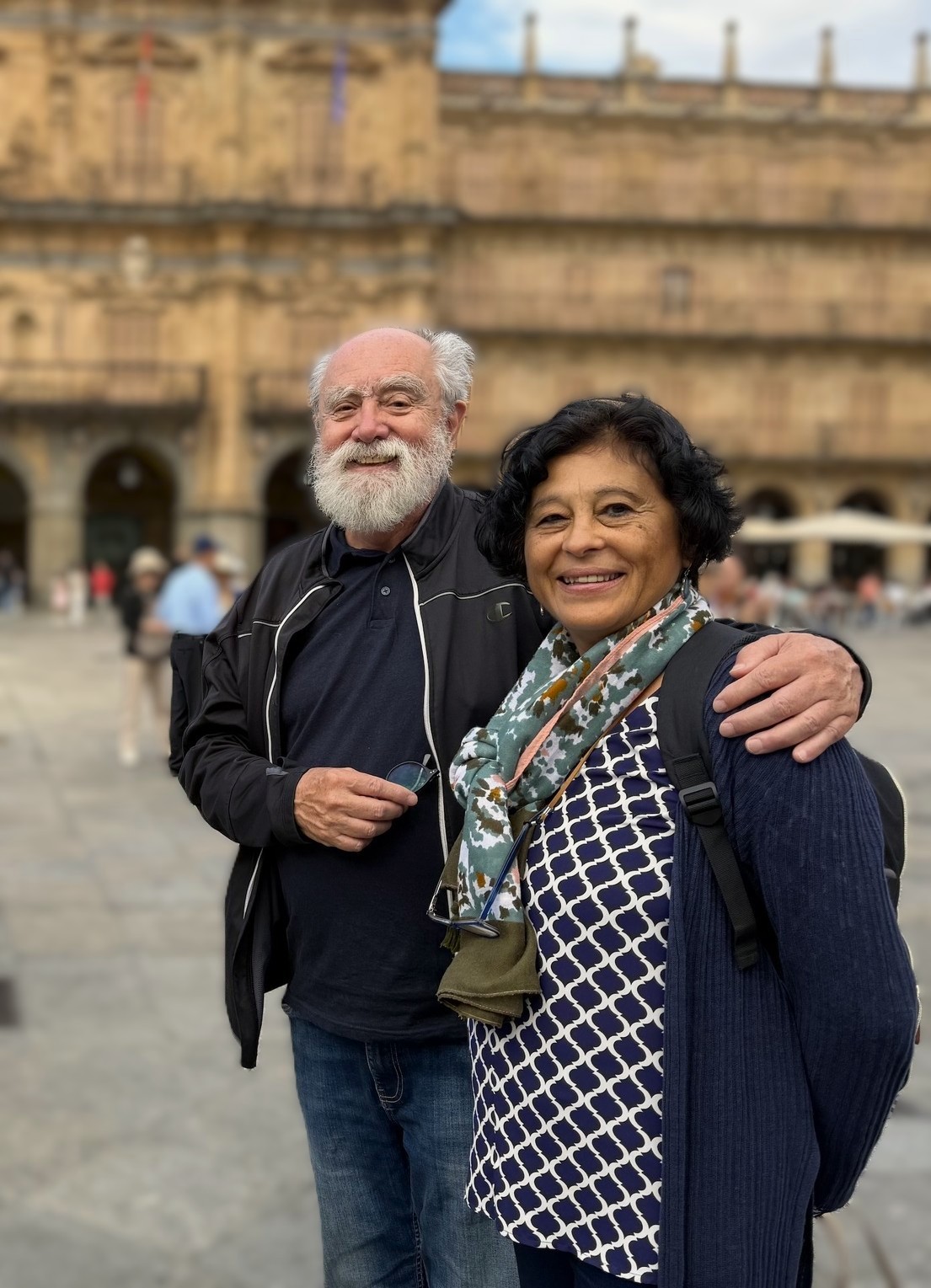
Gustavo and Priscilla Gac-Artigas. Credit Priscilla Gac-Artigas
Born in Santiago de Chile in 1944, Gustavo Gac-Artigas is a Chilean poet, novelist, playwright, and former political prisoner whose writing has long engaged with questions of memory, exile, testimony, and the ethical responsibilities involved in using language. Following the 1973 military coup, Gac-Artigas was imprisoned and tortured before being forced into exile. His literary work, spanning poetry, fiction, theatre, and essay writing, emerges from lived experience but he consistently transcends the personal to speak from a collective, humanist perspective. His writing has been described as testimonial, yet deeply lyrical, combining historical consciousness with powerful ethical and imaginative force.
Gustavo Gac-Artigas has published extensively in Latin America, Europe, and the United States, and his work has been translated into English, French, Italian, and Romanian. In recent years, his poetry has received international recognition and has been featured in journals, anthologies, festivals, and academic contexts concerned with memory, resistance, and the role of the reader in constructing meaning. In 2023, he was honoured at the XVII Hispanic/Latino International Book Fair of Queens, New York.
The year 2025 marked a significant moment in his professional life. Among the milestones worth highlighting: in August, he received the highest distinction awarded by the Academia Tomitana and Academia Universalis Poetarum, Le Coq (Cocoșul)—a reproduction of a sculpture by Brâncuși—in recognition of his literary career and international stature; between October and November, he undertook an extensive tour in Spain to promote one of his poetry collections published by Valparaíso Ediciones and to participate in the XXVIII Encuentro de Poetas Iberoamericanos in Salamanca directed by Peruvian poet Alfredo Pérez-Alencart. Later that same year, americanpoet.org featured him on its portal under “Gustavo Gac-Artigas Poetry | Prominent American Poets.”
“Gustavo Gac-Artigas stands as one of the most compelling poetic voices to emerge from Latin America’s turbulent political history. His life has been defined by creativity, struggle, displacement, and an unwavering belief in the power of art. His poetry is not merely a form of expression; it is a testimony—an archive of memory, resistance, and humanity. Ultimately, Gustavo Gac-Artigas’ literary legacy lies in his courage to transform suffering into beauty. His life teaches us that exile cannot erase identity, nor can oppression extinguish creativity. Through his poetry, he continues to remind us that art has the power to heal, to resist, and to keep the truth alive.”
— americanpoet.org, December 2025

The sepulchre of Victor Jara. Photograph Lion Hirth
for years i wrote about my people
(Translation by Priscilla Gac-Artigas)
for years i wrote about my people
my people
those from below
the humiliated for existing without asking permission
the homeless
the roofless
those who wore out the stars from gazing at them so long
those from below
my people
wanderers with no path
feet shod in worn-out ojotas
las mías—the women of my people
those raped in their own rooms
those raped on the road toward a better future
a better future?
simply a present in which to exist
las mías
denied even the right to gaze at the stars
my people
those who died
without a single tear shed for them
my people
flesh for mass graves
flesh for wild beasts
flesh for oblivion
for years i wrote about my people
today i ask myself
did i ever give my people a face?
a face to the women of my people?
a single face
one that might allow them to exist
to exist
and not disappear into the masses
durante años escribí sobre los míos
durante años escribí sobre los míos
los míos
los de abajo
los humillados por existir sin pedir permiso
los sin casa
los sintecho
aquellos que gastaron las estrellas de tanto mirarlas
los de abajo
los míos caminantes sin camino
calzados de cansadas ojotas
las mías
las violadas en sus aposentos
las violadas en el camino hacia un mejor futuro
¿mejor futuro?
simplemente un existir en el presente
las mías
que hasta el derecho a mirar las estrellas les negaron
los míos
aquellos que murieron
sin que una lágrima por ellos se derramara
los míos
carne de fosas comunes carne de fieras salvajes
carne del olvido
durante años escribí sobre los míos
hoy me pregunto
¿alguna vez puse un rostro a los míos?
¿a las mías?
un solo rostro
uno que les permitiera existir
existir
y no desaparecer en la masa

“the other” is me. Photo by Greta Hoffman on Pexels.com
i had to be correct
(Translation by Priscilla Gac-Artigas)
i had to be correct
politically correct
so they would let me integrate into society
not be myself
just integrate
which is not the same
they pointed out “the other”
they warned me of crucifixion
of ostracism
of indifference
of knives in the back
of scandal
and public scorn
of silence—
that deafening silence that surrounds me
the imposed laws demand i be politically correct
and yet i want to be incorrect
i rebel against correctness
i feel that when they say
respect “the other” it is a humanitarian handout
it cements a divided society
it forces me to accept as normal
that “the other” is me
tenía que ser correcto
tenía que ser correcto
políticamente correcto
para que me dejaran integrarme a la sociedad
no ser yo
integrarme
lo que no es lo mismo
me señalaron a “el otro”
me advirtieron de la crucifixión del ostracismo
de la indiferencia
de las puñaladas en la espalda
del escándalo
y el escarnio público
del silencio
ese silencio atronador que me rodea
las leyes impuestas me exigen ser
políticamente correcto
y sin embargo quiero ser incorrecto
me rebelo contra la corrección
siento que cuando dicen
respetar a “el otro” es una limosna humanitaria
es cimentar una sociedad dividida
es hacerme aceptar que es normal
que “el otro” sea yo

Students at the Blue Quills residential school in Alberta. Mass graves of indigenous children separated from their parents have been discovered in Canada. From the Sister Annette Potvin fonds (1940)
prayer for someone unknown
(Translation by Priscilla Gac-Artigas)
oh lord
there are no words left
there are no tears left
there is shame
there is helplessness
there is indignation
there is watching the crime be justified
the justification of brutality
the boasting of the fear
that runs through the streets
the homes
the schools
the fear of a child
of a girl
of an old man
of a teenager
all of them asking
why
the cold cannot freeze the scene
once again
once again
screams
the circle of death
the circle of agents concealing
the crime
the kicks
the brutality
shame
for those who still remain silent
and for the guilty silence of those responsible
they stained the country
they isolated human decency
if there ever was any
shame
for having once been afraid
shame
for having allowed to surface
the scum of humanity
for aligning themselves
with the scum of humanity
it is hard to take pride
it is hard to smile
blood spatters
the blood of the innocent
spatters
blood drapes its mantle
over the conscience of the country
“never again”
it is repeated
thinking that one day
that one day
peace will reign
the peace of human beings
and not the peace of the dead
that one day we will have an answer
to the question of the girl
of the child
of the old man
of the teenager
of the last human being
today i am minnesotan
tomorrow…
tomorrow…
pray for me
pray for us
oración por un desconocido
oh señor
no quedan palabras
no quedan lágrimas
queda la vergüenza
queda la impotencia
queda la indignación
queda ver justificar el crimen
justificar la bestialidad
alardear del miedo
que recorre las calles
los hogares
las escuelas
el miedo de un niño
de una niña
de un anciano
de un adolescente
todos preguntándose
por qué
el frío no logra congelar la escena
una vez más
una vez más
gritos
el círculo de la muerte
el círculo de agentes ocultando
el crimen
las patadas
la bestialidad
vergüenza
por aquellos que aún guardan silencio
y por el silencio culpable de los responsables
ensuciaron el país
aislaron la bondad
si es que alguna vez la hubo
vergüenza
por lo que alguna vez se tuvo miedo
vergüenza
por lo que permitieron aflorar
la escoria de la humanidad
por lo que se alinean
con la escoria de la humanidad
cuesta estar orgulloso
cuesta sonreír
la sangre salpica
la sangre de la inocente
salpica
la sangre cubre con su manto
la conciencia del país
nunca más
se repite
pensando que algún día
que algún día
reinará la paz
la del ser humano
y no la paz de los muertos
que algún día tendremos la respuesta
a la pregunta de la niña
del niño
del anciano
del adolescente
del último ser humano
hoy soy minesotano
mañana…
mañana…
ruega por mí
ruega por nosotros

Photo by LADY LUCK on Pexels.com
THE NEW GAZA
(Translation by Priscilla Gac-Artigas)
a dreamed-of city
tourist apartments
a strip of leisure
of repose
of luxury that insults
the new Gaza
built on the blood
of Palestinian girls
of Palestinian boys
on humanity’s disgrace
the new Gaza
every window will be a blindfold
to hide the crime
at sea
the sound of the waves
will drown out the cry of pain
of a girl
of a boy
as they die in Gaza
industries will be built
the surviving skeletons
will be brought there to die
a millionaire will laugh
in the new gaza
in this new world
that world which is not my world
built on the dead
who “are” my dead
in this new
old world
LA NUEVA GAZA
una ciudad soñada
departamentos turísticos
franja del descanso
del reposo
del lujo que insulta
la nueva Gaza
construida sobre la sangre
de las niñas palestinas
de los niños palestinos
sobre la vergüenza de la humanidad
la nueva Gaza
cada ventana será una venda
para ocultar el horror
en el mar
el ruido de las olas
tapará el grito de dolor
de una niña
de un niño
al morir en Gaza
se construirán industrias
los esqueletos sobrevivientes
vendrán a morir en ellas
un millonario reirá
en la nueva gaza
en este nuevo mundo
ese mundo que no es mi mundo
sobre los muertos
que sí son mis muertos
en este nuevo
viejo mundo

Renee Nicole Good. A few seconds later she was shot in the face by an ICE agent calling her a ‘fucking bitch’
in memoriam
(Translation by Priscilla Gac-Artigas)
there are days when i am ashamed of being a man
i once wrote
there are days when i am ashamed
that time seems to stand still
in infamy
in fear
in pain
in arrogance
there are days when the pack is unleashed
to hunt brown children
oh what shall we do
oh what shall we do
and woe to the one
to the one
who tries to stop the hunt
ice bullets are guided by ideology
beyond nationality
beyond skin color
beyond human reason
they are guided by rage
hatred
impunity
contempt for the other human being
oh what shall we do
oh what shall we do
the list keeps growing
the mantle of power
of lies
protects hatred
the murderous hand
there are days when i am ashamed of being a man
today is one of them
in memoriam of renee nicole good
in memoriam?
NO!
a cry
so that never again
never again
we remain silent before the beasts
so that fear does not invade us
so that hatred does not rule us
we will not be silent
we will face the jackal
that is what we will do
that is what we will do
in memoriam
hay días en que me avergüenzo de ser hombre
escribí alguna vez
hay días en que me avergüenzo de que el tiempo pareciera detenerse en la infamia
en el miedo
en el dolor
en la prepotencia
hay días en que la jauría fue soltada para cazar niños morenos
ay qué haremos
ay qué haremos
y pobre de aquel,
de aquella
que intente detener la cacería
las balas de ice las dirige la ideología
más allá de la nacionalidad
más allá del color de la piel
más allá de la razón humana
las dirige la rabia
el odio
la impunidad
el desprecio por el otro ser humano
ay qué haremos
ay qué haremos
la lista crece
el manto del poder
de la mentira
protege al odio
a la mano asesina
hay días en que me avergüenzo de ser hombre
hoy es uno de ellos
in memoriam de renee nicole good
¿in memoriam?
¡NO!
en grito
para que nunca más
nunca más
callemos frente a las bestias
para que el miedo no nos invada
para que el odio no nos gobierne
no callaremos
enfrentaremos al chacal
eso haremos
eso haremos
Priscilla Gac-Artigas, the translator of Gustavo Gac-Artigas is a PhD Fulbright Scholar, Professor Emerita of World Languages at Monmouth University, NJ, Member of the North American Academy of the Spanish Language (ANLE), Corresponding Member of the Royal Spanish Academy (RAE), Member of Academia Tomitana & Academia Universalis Poetarum, Constanza, Cultural Ambassador of Fondation Européenne & the Académie Internationale Mihai Eminescu.
Discover more from Ars Notoria
Subscribe to get the latest posts sent to your email.


You must be logged in to post a comment.