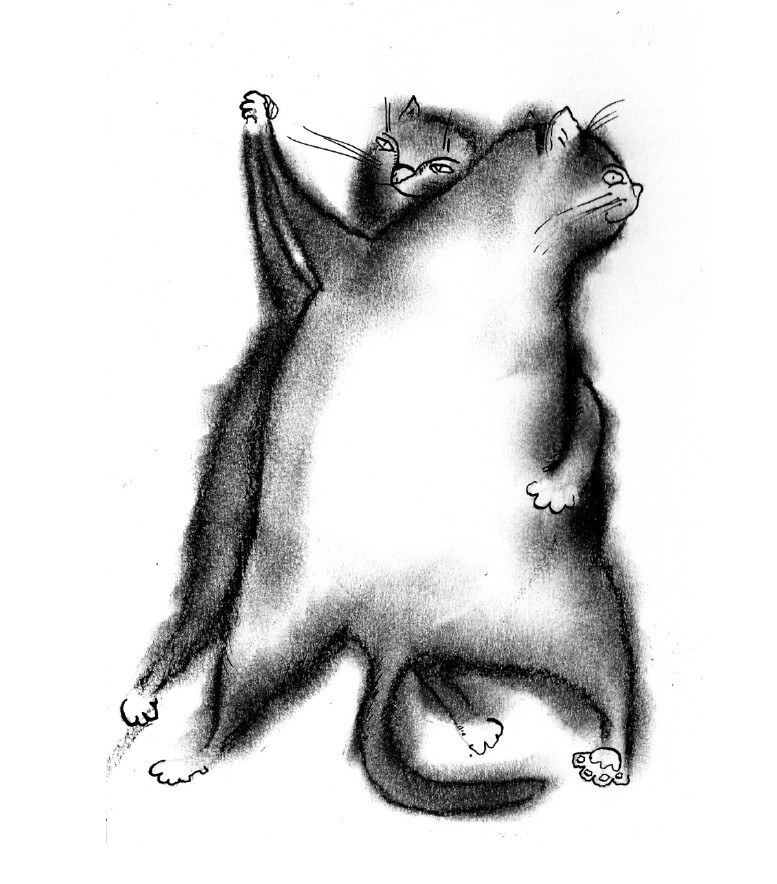
Illustration ©Sebastian Kudas
Ewa Lipska (b. 1945) is one of Poland’s most eminent poets, a defining voice of the Polish New Wave (Generation of ’68) since her debut in 1967. Her work, translated into over a dozen languages including English, has earned her international stature and numerous awards, among them the Silesius Poetry Prize (2019) and the Warsaw Literary Award (2020). A novelist and former head of the Polish Cultural Institute in Vienna, she continues to publish widely; her recent collections include The Geldberg Variations (2023) and Love in Safe Mode (2019).
For over half a century, Lipska has trained a sharp, unsettling eye on the human condition. Her method is one of calculated disruption: to be a kind of witness. She weaves the ordinary only to confront us with new and jarring associations, pushing us beyond everyday certainties into a more complex emotional reception.
Hubris decided that the near impossible was required and was attempted, and as a result, a lucky thirteen poems by Ewa Lipska were rendered into English – hopefully of a similar cloth of size, sensibility and ambition, not to mention the melodies associated with the oldest form of storytelling: rhyme. Here I have the pleasure of presenting two of the Furteen Tales as a foretaste.
We reproduce the accompanying illustrations by Sebastian Kudas, aka ‘The Cat’s Whiskers’.
Richard J. Reisner
FOR WHEN A CAT IS ALL LOST IN LOVE
For when a Cat is all lost in love,
all ocean-emoji on way above,
psy-turvy galloping galaxy,
there’s no world but cat-ecstasy.
For when all a Cat is lost in love,
penning songs of praise high above,
he banks for his beloved, for all me,
myriads of mice un-versed, un-rhyme.
For when a Cat is all lost in love,
he paws missives way above
for his lady lounging to and fro,
in hammock in dreams all cats know.
For when all a Cat is lost in love,
he sends heart-agrams in a glove,
all ocean-emoji on cooing dove,
penning songs of praise high above.
For when a Cat is all lost in love …
BO KIEDY KOT JEST ZAKOCHANY
Bo kiedy Kot jest zakochany,
wypija uczuć oceany.
Pijany fruwa po kosmosie
i cały świat ma w kocim nosie.
Bo kiedy Kot jest zakochany,
układa pieśni i peany.
Zbiera dla pani swego serca
myszy ukryte w białych wierszach.
Bo kiedy Kot jest zakochany,
to wydrapuje epigramy
dla damy, która na kotarze
kołysze się w obłokach marzeń.
Bo kiedy Kot jest zakochany,
miłosne pisze telegramy,
wypija uczuć oceany,
układa pieśni i peany.
Bo kiedy Kot jest zakochany…

Illustration ©Sebastian Kudas
A CAT OF ALL NATIONS
One feline fellow of Kot
is his Majesty’s English Cat.
A very cordial kind-a-lot.
The German Katze,
chest-puff of medals,
a jingle jangle master.
The Italian Gatto
loves Sicily-summer donato
and violin concerts by Vivaldi,
his shaggy ego largely untidy.
The Russian Koszka,
choc-bitter-sweet,
has the Kremlin’s Oscar.
The French Le Chat,
Je pense, donc je suis –
as you can see
sighs to René Descartes.
The Kotka from Bulgaria,
as word has it in Hilaria,
is a lover of Orthodox choirs
and tomcats from abroad she fires.
The Greek Gata,
midst ancient ruins and schemata,
has alas no pillar nor post,
living life perilous more than most.
Not to forget the Katt from Sweden,
then Gato of Spain, some say is Eden,
and cried Neko eureka from Kyoto –
eyes down side down blotto.
Our Cat is a Cat of All Nations,
head to tail in silk sensations,
but has no time for poli-cats that lie
or racists or those that pretend on-high.
KOT WSZECHŚWIATOWY
Kolegą Kota
jest angielski Cat.
Też miły skrzat.
Niemiecki Katze
z piersią pełną
odznaczeń.
Włoski Gatto
kochający sycylijskie lato,
koncerty skrzypcowe Vivaldiego
i swoje własne ego.
Rosyjski Koszka,
czyli kremlowska gorzka.
Francuski Le Chat,
którego wzrusza
filozofia René Kartezjusza.
Bułgarski Kotka,
jak głosi plotka,
miłośnik cerkiewnych chórów
i cudzoziemskich kocurów.
Grecki Gata,
wokół którego
starożytna poświata,
ale bezdomny los,
życie pod włos.
I jeszcze szwedzki Katt,
hiszpański Gato,
japoński Neko
ze skośnooką eureką.
Nasz Kot wszechświatowy
od ogona do głowy.
Ale nie lubi kocich blagierów,
ksenofobów i politykierów.
Richard J. Reisner is a Polish-Australian poet of Jewish extraction, whose personal history is in part interwoven with his literary vocation, a legacy that informs his work. His parents, as others, found themselves captive in the Warsaw Ghetto and managed to escape, using Aryan IDs. Towards the end of the Ghetto Uprising his father, fluent in German, worked in the Nazi-controlled field hospital outside Warsaw, in charge of materials provisions. After a period in Melbourne, where Richard worked in the Spielberg Interview Documentation project at the Holocaust Museum and organised literary evenings, he returned to Poland on a translation grant.
As a translator and scholar, Reisner has built an extensive body of work. He has edited significant bilingual anthologies, such as The City of Home, an English-Polish collection of Australian poetry co-edited with Thomas Shapcott. His translations into English encompass major Polish literary figures, including Ewa Lipska, Zbigniew Herbert, Tadeusz Różewicz, and Czesław Miłosz’s cycle Swiat. Poema naiwne (The World). His collaborative projects are wide-ranging, from theatre translations to the multilingual Songs on Canvas project based on Marek Grechuta’s interpretations of paintings, and more recent work translating Russian poets like Regina Derieva.
Reisner is currently completing several major projects: a Polish translation of selected works by Australian poet Les Murray (A Grinful of Dynamite), an English translation of aphorisms by Ludmila Petrushevskaya, and a volume of his own poetry titled Letters to the World.
Discover more from Ars Notoria
Subscribe to get the latest posts sent to your email.
You must be logged in to post a comment.