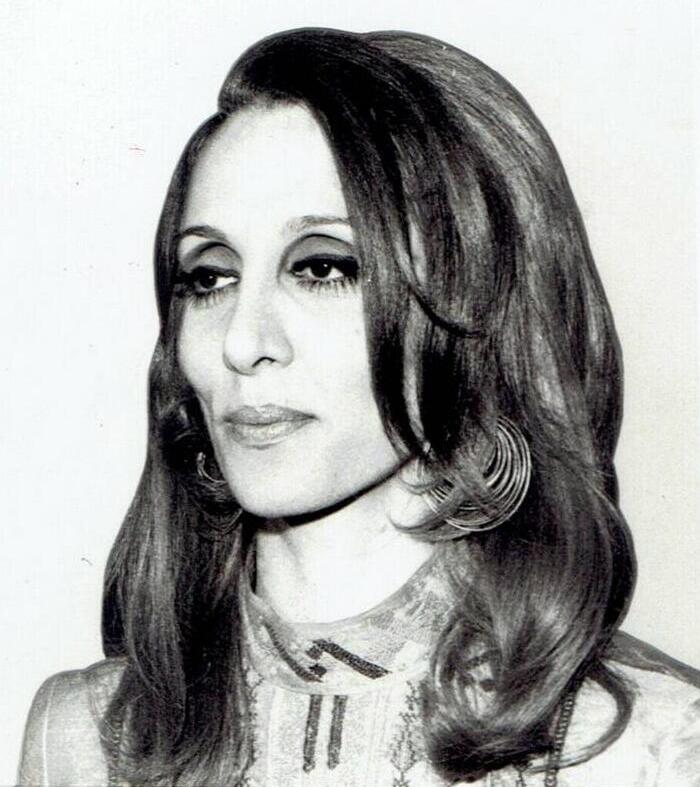
Publicity photo of Fairuz, circa 1971. Publicity photo, photographer unknown
by Phil Hall
Israel has long suffered from a severe case of Lebanon envy, a condition that explains its relentless pattern of invasion and attempts at occupation. The Israelis, predominantly Ashkenazi Jews with little original genetic connection to the Levant, have spent decades appropriating Palestinian and Lebanese history, cuisine, artefacts, buildings and land.
While most Israeli Jews qualify to live there with a quarter of their grandparents heritage in support of their Jewish identity (sometimes falsified) their connection to the ancient and modern history of the Middle East is colonial and relatively recent, and, in terms of deeper time, for the majority of European migrants, tenuous at best. Belief in God for a Zionist seems neither here nor there; the fact is, these Europeans have very little relation to this the Levant’s deep past, however much they may assert they do. However much they twist the arm of the curators of the British Museum.

People speak in astonishment of great achievements of small countries, of islands like the British archipelago. But Lebanon is an even greater miracle: a small country saturated with beauty, with thousands of years of civilisation. The landscape is intensely dramatic, with mountains rising up to meet the sea, orange groves and olive terraces stretching across the hills. The ruins come from every age—traces of Phoenician script the origen of all European scripts, are carved into stone, the largest Roman temple ever built, the temple of Baalbek, was constructed with stones so immense that idiot Americans imagine they were built by aliens. Here, in Lebanon, lie the caves where the first Christians sheltered. Lebanon is layered with human history, layered over by inhabitants of different cultures and faiths.
Lebanon is famous for the coffee houses of Hamra, for its mountain villages, its fashion and style. Lebanon is famous for its delicious food: baba ghanoush, kibbeh, Foul, Tabouleh, Fattoush—the list is long—and for its long, scented afternoons. Lebanon was a confluence of faiths: Sunni, Maronite, Druze, Christians, all living in relative harmony before the Zionists and the Americans started making trouble. And Beirut is so mourned, the name Beirut is a sigh in a song sung by Fairuz. Beirut was the Paris of the East, a phoenix. Beirut has a chic that refused to fade despite the artificial divisions created inside it by predatory colonial and sub-colonial powers. To know Lebanon, I have been told, is to love it deeply.

View of Beirut. Photo by Jo Kassis on Pexels.com
Recently the well known journalist and writer Adel Darwish published a book filled with longing and desire for an older Levant. Lawrence Durrell, too, wrote of Alexandria before and after the Second World War, conjuring up deep flavours of multilingualism and tolerance and an unbearable sense of loss. Beirut and Alexandria were joyous, eclectic, alive, places where love flourished easily.
To draw parallels between Damascus, Alexandria, Beirut and Jerusalem is not far-fetched. These cities were epicentres of human culture, places of intermingling and physical, cultural and spiritual delight before the horny handed Americans and Europeans damaged them.
A friend of mine, a romantic, once travelled to Beirut to meet his lover. She was the mistress of a Lebanese gangster. He was one of those people for whom love knows no obstacle. He remarked how, despite the Israeli incursion that started as he arrived, Beirut still had a party atmosphere. It was defiantly partying. The city’s people enjoyed their beautiful streets in between bombardments by Israel, speaking in their gorgeous French and Arabic, living always with flair.

Lebanese Riviera. Photograph Nate Hovee on Pexels.com
Also, the Lebanese are famous worldwide for their business acumen. In Mexico, Carlos Slim, once one of the richest men in the world, is of Lebanese descent. They are renowned, too, for their beauty and their music. Salma Hayek is Mexican Lebanese. Across the Middle East, North Africa and even among the cognoscenti of Europe and the world, people wake to the voice of Fairuz, the singer, as they sip their morning coffee, preferably Lebanese coffee, this my friend Naeem told me.
Lebanon is a place every one of us would have wanted to visit in peacetime. A place of dreams: mountain sides, cedar forests and stories. A place where people are genuinely sophisticated, cosmopolitan and deeply rooted; flowing in and out, connected like every other Arab country to the Bedouin and the nomadic of the desert and to Palestine and Syria and the rest of the true Levant.
The Zionists secretly dream of having their own Lebanon, of being sophisticated and beautiful and cultured, they dreamed of being truly and finally rooted in Palestine, and being a part of the tolerant and pleasure loving socially literate Semitic world, and of abandoning their borscht-eating Slavic roots.
Lebanon was once a joyous intersection of faiths, a place of coffee, music, beauty, architecture, sea vistas and cedar, none of these has Israel ever truly possessed, except as a sad tribute act. Though the people of this Israel we see now committing atrocities have had many opportunities to integrate into a secular Palestine and achieve their concealed desire.
And when the envy grows too strong, when the longing becomes unbearable, that is when Israel turns on Beirut. The Zionists encourage the city to consume itself in civil war, as they did in the time of Sabra and Shatila, and demonise Lebanon’s defenders and invade it, over and over and over again.
Discover more from Ars Notoria
Subscribe to get the latest posts sent to your email.
You must be logged in to post a comment.