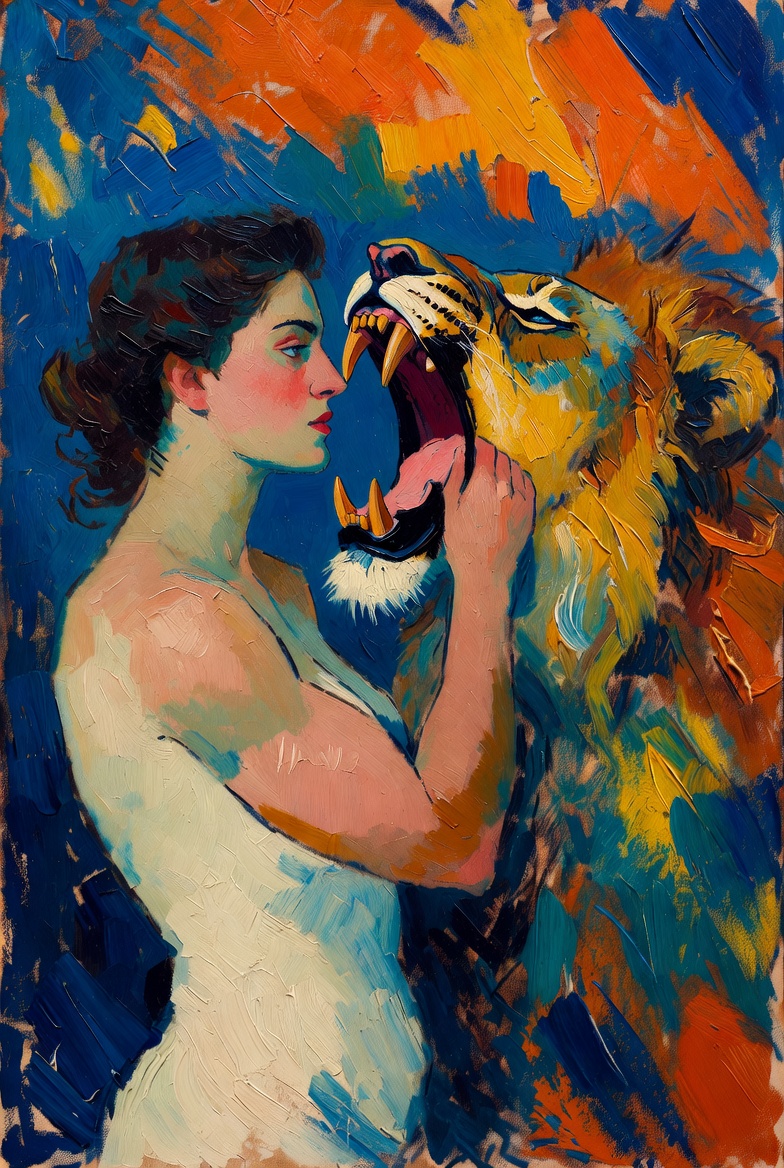
Courage. Prompted by Phil Hall X
by Phil Hall
I have always loved the Tarot since the age of 17, when I bought a pack in a Brighton New Age shop in 1977, and I can throw a pretty good set of cards. After use comes understanding. The set I used to scry the future of the word is by Amanda Hall. I take the shared surname as a comforting sign. I like the pictures and the back of the cards, but the words detract from the images because they restrict the meanings.
As I throw these cards, I get a little chill, because they speak to me from my unconscious, from the same place dreams come from. The cards speak about what’s on my mind more than about what I think I am asking them when I cast them. There are a few unmistakable cards that repeat, or that respond directly to a question. You get that electric feeling because you see that the cards conjure something alive. The penny drops, spins and flips; chance has its language. Like astrology, things seem to work and meaning flows from them, though you would think it wouldn’t. Rationalising the experience is neither here nor there; to use the Tarot is to open a sizeable conduit to your soul. This is not for everyone.
Why Westerners Should Understand the Tarot
I recommend you all buy a pack of Tarot cards, especially those of you who are not artists. Human beings live double lives. In the night they dream and in the day they think. It’s difficult for them to think what they dream, and the Tarot is a bridge to the unconscious. I taught the beginnings of the Tarot to two colleagues last week. It’s far superior to the I Ching for westerners; I think William Grey would have agreed. I’ll explain, to those of you who don’t already know, why it is important to learn how to do the Tarot. At the moment my readings are almost infallible – if I say so myself. The proof is in the pudding. I’m the pudding.
Human beings have divided minds. We have what I call uni-hemispheric minds. What I mean by that is that our brains and minds are not fully integrated. We can’t easily dream awake or think asleep. Let’s forget the reasons why for the moment, but they relate to many conversations I have had with a senior researcher into schizophrenia. Jungian psychology calls this process of integration of the unconscious with the conscious “individuation.” Perhaps you can understand individuation better if you have a pet. A pet is like a baby or a toddler. They live in an undifferentiated, unified world where every colour and smell and image is imbued with meaning. It’s like living in paradise, in a way. The world is illuminated. But when a pet comes to live in a human family, it has to learn to think. You can see the animal change its mind in order to fit in. We say it becomes more human. In a way, it individuates. Animals like these are special. They cross the bridge.
The Tarot is a method whereby people can integrate the two sides of their awareness utilising deeply rooted imagery. The first action is to plant the imagery and allow it to grow inside you. Werner Herzog, the filmmaker, thought it essential to create unforgettable imagery in his films to open up human consciousness. In a way he was influenced by Wilhelm Reich and Jung, who said that it was something pent up in the collective German psyche that led to fascism. To make people aware of the workings of their unconscious by giving them a filmic language allows people to understand what they are feeling and possibly why, and means they can’t be manipulated so easily by button-pushing charlatans.
First, you have to establish a meaningful way of thinking about the imagery in the cards. Behind the cards are the thoughts and imaginings of many whole and intelligent human beings, and you can feel it, so there will be an element of sharing involved. You don’t have to do all the visualisation. Someone has done a lot of it for you. Now, to establish this relationship with the images in the cards simply requires a powerful imagination. If you are an artist of some kind, you will have developed this already. However, although the bias is towards a visual imagination, you can imagine other cues too: the smell of earth, the sound of a song or a river.
To really get a useful relationship going with the imagery may take years, or decades. It will work right off, and seem rather spooky when it does, but what is happening is simply that you are casting your unconscious mind onto a mirror. Imagine you look out into the blackness of night. Perhaps you think you see the shape of a person or animal or landscape. This is a form of projection. Even if you look at a blank piece of paper for a while, you will see the suggestions of a picture, so strongly sometimes that you can easily trace it. These are the projections of your unconscious mind, which, because you ignore it and are divided from it, seem somehow magical. They are not.
A black obsidian mirror, a pool of water, coffee grounds, entrails in the dust, a globe, the flight of swifts, the rustling whispering trees—all these things serve the same purpose. What you see is what you cast. I think it was in The Matrix that the oracle says to Neo: “You have already made your choice,” and your unconscious will influence the way you cast to help the divination along. What you are really doing when you are learning the Tarot and internalising its imagery is giving your unconscious a language in which it can speak to you, which is what it wants to do. Your dreams are nothing if not your unconscious trying to have a conversation with your consciousness.
So if you learn a layered and useful language of the unconscious, then you help integrate your awareness and become whole. Don’t forget that paradise, in a way, is to be united with the world around you, and this is the job of the unconscious; and if you develop it, then you may even be happier. Certainly, if you cultivate this ability, you will get a taste of what it will be like to be human in a few hundred thousand years’ time. And that’s a wonderful opportunity. Of course, memory itself is a kind of pack of cards—a series of meaningful images that you can shuffle through and contemplate. There is no magic here. Move right along.
And yet there may be elements that seem magical. Because, to the extent that the unconscious is plugged into a wider reality, to the extent that a greater collective unconscious may exist, well, we might be plugged into something much greater than our surroundings and our present in a much more immediate way than we are through our intellect. Let me give you an example. A colleague of mine is a very impressive woman. She understands animals perfectly. She is connected to them. She is a hard-bitten realist. She was a top athlete and can fly helicopters and rides motorbikes very fast. Now this colleague complains that she is too sensitive. So, for example, the ability that allows her to connect with animals also allows her to time slip. Jacobus Gerhardus Schwartz my estranged friend (we had an argument over Israel) and the greatest magician alive, has also done this.
So when my friend, Heather, walked through Durham, she saw Durham in the past, sometimes as clearly as she sees the present, and the people in the past see her. She is afraid, she says, that she may get stuck there and that the present will fade. “It’s like a double exposure on a slide. I can choose which reality to focus on,” she says. This is because my friend occasionally has involuntary, complete access to her unconscious. She plugs into the past, she plugs into the thoughts of animals. And yet even she can benefit from learning the Tarot, because it would help her structure and interpret and manage these experiences more effectively.
The Reading: Future of the World

Tarot Reading. Phil Hall
I threw the Tarot for the future of the world in 2020 during COVID:
”Results coming now. They are spot on. Good news. Some extremely precise predictions. My unconscious, in conversation with the cosmos through this inordinately complex conjuncture in space and time, dishes out the result. I think I deserve the name of Baba Phil, don’t you? (By the way, baba means dribble in Spanish.)
The situation couldn’t be worse, according to the reading. Humanity is literally up shit creek without a paddle, and this is mainly because of the imbalance between the head and the heart. It comes from an overconfidence of the technical and intellectual over the practical, the heart (compassion and the spirit of we feeling—SOWF), and a lack of insight. The embodiment of this unfeeling, sociopathic confidence in the abstract and the technical is exemplified by the nerdish sociopaths who run the tech companies and who infest the security state apparatus of the USA. These are, generally speaking, younger people, Gen X and below, led by mafia-like ‘Dons’ whose notions of the world have been distorted by the false and uninterrogated stories they tell themselves about the past: the ‘Narrative’ they fight for. Essentially, these people are anti-intellectuals and materialists with little or no respect for the humanities unless the humanities can come up with new ways of torture and behavioural control and influencing. For example, the discipline of anthropology has been completely perverted by US intelligence agencies into a way of manipulating societies without ever having to understand the culture or the people or even speak the language properly.
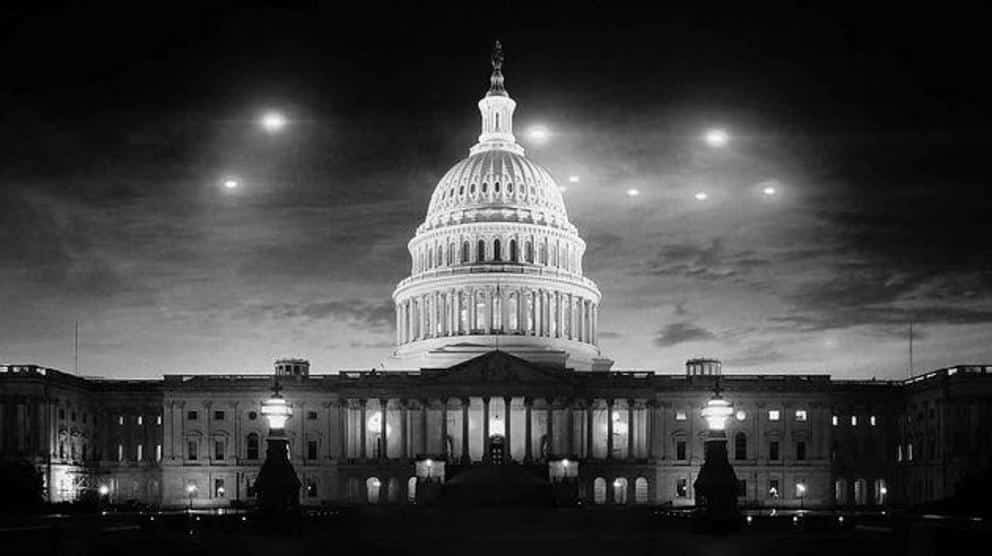
The background to the reading is literally ‘Judgement Day’. Enough said. The person doing the reading is a hermit, protecting the light of his lamp. That’s me. Like the figure in the Tarkovsky film shielding a candle flame as he walks across an empty swimming pool with the wind blowing. The outcome of the reading is that the beast that is out of control can be tamed with strength. This strength is balanced. It is emotional, intuitive, practical and intellectual. It will require enormous strength and effort to solve the situation. There is a woman controlling the beast, which implies that this strength is not military, but related to Gaia and the human. Related to society becoming active, probably led by women and the female in humans. The female symbolic here of humanity and not its oppressors and the people who prey on humanity. An example of someone awakening the conscience of the world is Clare Daley.
The specific sequence of events in the cards is shocking. Again, it starts with extreme oppression and sadness. War, death, fear and killing. BUT… What follows is this. Humanity’s conscience is awakened. The Queen of Cups. This awakening conscience finds an echo in the good leadership of the world: South Africa, BRICs expanding. And this leads to PRACTICAL solutions to our problems. It leads to humanity tackling the real problems that face it, and the lion turns into a black pussycat. The cards can be read in a deeper way. But this is enough. Don’t howl at the Moon.”
On the Moon and Tawhid
I’ve always wondered why the moon is used as a negative symbol in the Tarot, but now understand clearly. First you need to understand the meaning of Tawhid. This is the most important idea from the Muslims and from the Jews before them. Christianity fails the test completely. The central idea is that there is the creator and then there is the creation. There is a complete distinction that has to be made between the two. A giant, qualitatively different step between the maker and what is made. Seen in this light, Christianity and Buddhism are the religions of narcissists. Sufism is deeply questionable too, with its ideas of spiritual pecking orders, with its presumption that you can cosy up to the supreme being.
Why? Because in no way is the creator like the created. Not even the most perfect being can ever resemble, in any way, the creator. It would be like comparing a four-dimensional space with a two-dimensional one. The created is two-dimensional and—see if you can get this—it is motionless. For the creator, all reality is like a book. It’s written. And so, to see all creation in this respect, you must not imagine, as the pagans did, that any human, object, person, landscape, animal, plant, or thing is the source of the divine, though it may be a repository of the divine. The fundamentalist Sunni tradition is correct in its fear of saints and shrines. Nothing is sacred, except what is sacred, and that is only the one God: Tawhid, you see.
So the symbol in the Tarot card is the moon. But what the moon means is this: Do not get entrapped by reflected glory. Do not be overwhelmed with love for what is created. Nature is not the source of the divine. When you worship the moon—and the moon is also the symbol for a woman—you blaspheme. When your religion is love, you blaspheme. The intense search for romantic love comes in the absence of faith. Intense, Wagnerian, romantic love is destructive. The alternative to Tawhid is frightening. It is to see only the shattered fragments of reality.
My mother-in-law used to quote a saying to me: “El que no conoce a Dios, dondequiera se anda hincando.” That is a summary of the post-religious view. The idea developed by Joseph Campbell, who is so strangely ignored by the talking heads on Radio 4 and 3. The post-religious view is, simply, that we make a patchwork quilt of meaning out of our lives from all the shiny fragments we find on the way. Pretty accurate, huh? That’s what we do. The idea now is for us all to create our own Heath Robinson (Rube Goldberg) spiritual machines to make pancakes of meaning with syrup on top. Except that not all of us are artists who can do this. Not all of us do very well at this tiresome and unnecessary job of religious reconstruction. There’s a synagogue, a mosque across the road—even a cathedral will do. Why bother putting up your little shack? God is one. Nothing is lost. There’s no need to howl at the moon.
At least, this is what crosses my mind when I see the Tarot card of the moon.
Phil’s Tarot Ladder
Here is my view of the meaning of the major arcana. I started using the Tarot when I was 17, then picked it up occasionally to do readings afterwards. My readings, when I occasionally do them, are for myself, as a form of meditation.
0. THE FOOL

Prompted by Phil Hall X
Protected by God and his guardian angels. The object of the Fool is to get into scrapes and come out unharmed. He teaches others lessons but does not learn himself. Jacques Tati and Charlie Chaplin, morphing into Bugs Bunny. The Magician in disguise.
1. THE MAGICIAN

Prompted by Phil Hall X
Steward of the immortal soul. The guardian of the divine spark, aligned with the cosmos. Potential in every human being. A moral being with powers. Inspired and inspiring. Shakespeare’s Prospero casts aside his wand in the end. A version of the Hierophant, emboldened. Enormous power that can only be exercised properly in grace.
2. THE HIGH PRIESTESS

Prompted by Phil Hall X
A Jungian character. The female soul of the male principle. The holiest of holy mysteries. The door to truth. Isis and Demeter. The black stone of the Kaaba. Fertility. All that a man cannot be; the doorway to life. Something loved without understanding what it is. The vastness of Egyptian night.
3. THE EMPRESS

Prompted by Phil Hall X
The beloved , powerful, wife, mother. The ruler of one’s heart. The nurturer is practical, emotional, insightful. The matriarchy. The mother. Equality and feminism. Sits on her throne in a beautiful house. Food, flourishing, abundance.
4. THE EMPEROR

Prompted by Phil Hall X
The counterpart to the Empress. The father to her mother, the husband to her wife. The offspring of the old and great in his/her prime. Power to build, make, unmake, destroy, create, provide, protect, command. Together they please each other.
5. THE HIEROPHANT

Prompted by Phil Hall X
Crises we have in our lives. The crisis of the bullied child. The crisis of the twenty-year-old who doesn’t know what to do. The crisis of the forty-year-old in the wrong career with many responsibilities. The person with no time to think because they have to work every day. A distant gaze. Abdication of worldly responsibility and a turning inward. Study, universities, acquiring skills. A long alchemical process of internalization. Working with what is within. Recurring to religion, spirituality, art for inspiration.
6. THE LOVERS

Prompted by Phil Hall X
Love. All kinds of love. Agape; selfless love. Connection with everybody. The bonds that hold everyone together. The bond that holds you to the Earth. The bond with the moon, stars, sun, cosmos. An approaching moment of conjunction. Duality made into singularity. Beautiful, open, vulnerable, equal — almost like twins. What is conjoined produces something even more beautiful. The energy generated is sunlike.
7. THE CHARIOT

Prompted by Phil Hall X
Confident action. Action in progress — slower, faster, sometimes out of control, sometimes completely in control. Mistakes and course corrections. Going toward the sun. Travelling, flying, sailing, moving in two dimensions, three, maybe more. Progress, real progress. Covers different terrains. muddy wheels stuck, clattering over stones, rolling over grass. Can hold several people together. Pulled by great horses — energy well fed, well watered, well looked after. Takes us forward.
8. STRENGTH

Prompted by Phil Hall X
Many kinds of strength. The Tarot image: a woman taming a lion, holding its mouth. Strength of childbirth. Strength of days and nights of hard work , mental and physical. Strength of the soldier. courage, facing, fighting, struggling. Strength in forbearance of physical and mental pain. Strength in determination of the will and in seeing things through. Strength of acceptance. Strength obtained by drinking potions, eating good food, exercising. Strength of flexibility. Strength of skill developed gradually. Strength can be used well or misused.
9. THE HERMIT

Prompted by Phil Hall X
The cocoon that people must go into to change and become new kinds of people. Wears the uniform of a hermit. Lives alone and in that loneliness meets himself — whom he doesn’t recognize (and rightly so, because it isn’t him). The hermit is perhaps pregnant. The hermit is protecting a life. Something precious — from Yeats: “tread softly because you tread on my dreams.” The hermit hides his dreams. The beginning artist, poet, king, racing driver, sailor, dancer, guitarist, ordinary man with big houses. The light shines in the insides of the imagination.
10. WHEEL OF FORTUNE

Prompted by Phil Hall X
The lottery of life. The more life there is, the more fortune strengthens and misfortune — more unpredictable, more alive, more complex. The wheel of fortune is the world itself as a system, wheeling around and around. Teaches humility and quietism. A fun fair ride — screams and shouts, ups and downs. The right way to treat it is with the tolerance of understanding. A stage of life that is rocky — all sorts of things happen, wonderful and terrible. A sane man treats success and failure the same — as imposters. Sometimes mechanical and controlled — the casino of capitalism. The street is the real wheel of fortune — to live, to travel, to ride a bicycle — because when you travel you meet Fortuna.
11. JUSTICE

Prompted by Phil Hall X
Distinguish between Fortune and Justice. If someone causes you to be in an accident — is that justice/retribution for something you’ve done, or just the wheel of fortune? What happens to us could be a form of cosmic justice or simply randomness. Justice is something human beings have instincts and intuitions about — right and wrong. Look within — very often you find an answer, especially when you have no bias, prejudice, or anger. Seek wisdom — wisdom and justice are close companions. Justice splits things in two like Solomon. Justice is a sheathed sword — it must be used when unsheathed.
12. THE HANGED MAN

Prompted by Phil Hall X
About human honesty and truth. Suffering — in this life we suffer in many ways. The Hanged Man is immune because he excels at suffering. Sorrow, loss of love, loss of respect — all means nothing to the Hanged Man, who lets it drop from him in hanging. Unlike the Hermit — the Hanged Man has let illusions fall from him. The grown-up. Zeus hanging from a tree, looking at runes in the ground below, understanding something about the world and the cosmos. In letting go, sweeps up wisdom — which replaces what is gone before.
13. DEATH

Prompted by Phil Hall X
Something to be embraced (not necessarily physical death, but when it comes, we should). Death is the final end of something so that something new can begin. If the Hanged Man has strength and nurture and light and immunity to Fortune and a sheathed Justice — then in life, if we’re lucky, we meet death because death leads immediately to full rebirth. Death is the loss of the trivial, the personal, the eccentric, the irrelevant. The Hagakure — the way to see the world almost in a god-like way. The ability to completely detach from any idiotic or unworthy situation and move through it, over it, under it, by it, into another situation more worthy. Can be an inversion of what is in front of you, or complete transformation.
14. TEMPERANCE

Prompted by Phil Hall X
Patience. Gestation. The importance of faith — even in dark moments, even in the face of a madman threatening nuclear war. Faith that grandchildren will be able to grow up. Faith that by planting something, it will emerge as flower or fruit. Doing something now — delayed gratification. In friendships — tolerance of other people’s behaviour. Understanding of criminality. A lack of enthusiasm in the face of enormous excitement. Appreciation of what seems unbeautiful, and mild response to what is very beautiful. Balance and moderation — a way of life. Temperance is the way we should all live until we die.
15. THE DEVIL

Prompted by Phil Hall X
Intelligence. A binge. Not necessarily the opposite of Temperance — but the full experience of something to the limits of its possibilities. Being a man and a woman. Being an ascetic or a sybarite. Filling out the corners. Usually obsession taken to the nth degree — intoxication, addiction, distortion. Rooted materiality of the human. The machines. Marketing and overconsumption — destructive to environment, relationships, and self. The terrible twos of our adulthood. A way of defining our limits. A way to come back from the edge, having been to the edge. Without the Devil, you never go to the actual edge of things — and it is important to go to the edge and have a look over the cliff.
16. THE TOWER

Prompted by Phil Hall X
The new sphere. Ideas and thoughts built up powerfully over centuries and millennia. They seem to hold together in ways you do not understand. But the vitality of life exists in the face of divine reality. The lightning comes down and strikes the Tower. In doing so, reveals that even the mightiest of human structures (mental and physical) are not in alignment with the lightning. Everything needs to be rebuilt, brought down, examined, thought through — over and over again.
17. THE STAR

Prompted by Phil Hall X
Hope — beyond all expectation. Hope that can be seen when one’s eyes are opened. Hope that is far away, but still bright. Eventually, we as beings alive on this Earth do not live so trivially and full of self-regard — but to do something real and go somewhere real. Around life has meaning — and the Star guides us toward that meaning. We must move toward the Star.
18. THE MOON

Prompted by Phil Hall X
Artificial intelligence. Thinking that you know and understand when you don’t actually know and understand. Thinking that you love when you don’t actually love. The impossible beauty that you see in something you love — that comes from somewhere else. You love someone deeply — but people are all connected to a source. Do you love the daughter? The wife? The grandmother? The great-great-grandmother? Do you love the source? If you love the source, nothing is lost. The source is immortal. The stand-in for the source in our solar system is the Sun.
19. THE SUN

Prompted by Phil Hall X
The source of light that sustains. If it is not God, it is still God’s sun for everyone in the solar system.
20. JUDGMENT

Prompted by Phil Hall X
Our final encounter with reality. True wisdom and the ability to perceive reality. Achieved in the full illumination of the Sun. Enlightenment. The correct action — the Eightfold Path. The proof of the pudding. When we can finally judge. When the planet swims in view. And it is the world — the whole world appears before our eyes.
21. THE WORLD

Prompted by Phil Hall X
The world — that was always like the dark or torch lit cave in Plato’s analogy before, can only be revealed in the light of true judgment (Judgment) in the Sun. As Diogenes said: “Don’t come between me and the sun.” Dilmun, as it appeared to Gilgamesh. The dry earth to Noah. The new world to the Europeans. The caves, the unexplored, the mountains, seas, and jungles. The fullness of life itself — with everything in place, in Eden.

Phil Hall doing the Tarot. Photograph Carmen Hall
Born into an exiled ANC family, Phil Hall spent his childhood in East Africa and India before settling in the UK. After a global education in languages, politics, and economics, he lived and worked across Europe, the USSR, Mexico, and the Middle East. Returning to the UK during the pandemic, he co-founded Ars Notoria Magazine and AN Editions, a publishing venture dedicated to Humane Socialist literature.
Discover more from Ars Notoria
Subscribe to get the latest posts sent to your email.
You must be logged in to post a comment.