1819 was a miraculous year for English poetry. John Keats wrote six odes, the first five were written in the Spring, the sixth, in the Autumn.
These six poems (On a Grecian Urn, On Indolence, On Melancholy, to a Nightingale, to Pscyhe and To Autumn) have become a foundation stone of English Literature. Every schoolchild learns, or hears about, Keats’s Odes, and individual lines have entered the language and are quoted frequently.
“Beauty is truth, truth beauty,—that is all / Ye know on earth, and all ye need to know.” — Ode on a Grecian Urn
“Heard melodies are sweet, but those unheard / Are sweeter…” — Ode on a Grecian Urn
“Season of mists and mellow fruitfulness,” — To Autumn
“My heart aches, and a drowsy numbness pains / My sense…” — Ode to a Nightingale
“Thou wast not born for death, immortal Bird!” — Ode to a Nightingale
“Forlorn! the very word is like a bell / To toll me back from thee to my sole self!” — Ode to a Nightingale
“Where are the songs of Spring? Ay, where are they? / Think not of them, thou hast thy music too,” — To Autumn
Rather than starting a popular explosion of Odes, poets largely didn’t follow Keats’s example. Odes are difficult to conceive of, as there is no standard form. Indeed, an Ode can just about take any form. Keats himself employed a 10-line stanza of ABABCDECDE, but it is not fixed at all. And the Classical Ode of Greece and Rome had a very varied structure from poet to poet. A classical Ode had three parts – The strophe, the antistrophe and the epode but writers employed their own approach, and were often irregular in rhyme and line length. Structual regularity further breaks down in the modern era.

John Keats, Posthumous portrait by William Hilton, c. 1822, National Portrait Gallery, (Non Commercial Use)
The final result today is that the poet can choose their own metre and structure. This apparent formlessness has coalesced around only a couple of pretty vague requirements. Odes were, most people agreed, longish poems, maybe ten or so stanzas, and they were more often than not on one general theme. Beyond that, everything was free.
As a practising poet and a great fan of Johnny Keats’s work I have always fancied writing an Ode. But, and this is another problem in writing them, I never felt there was a theme that justified that treatment – I mean a long poem dividing into perhaps 10 sections. It was also intimidating having Keats’s list of themes there in the background. Writing an extended poem on indolence or melancholy, as he did, just wouldn’t really occur to the modern writer. Still less did I feel I could write anything on psyche or a grecian urn. And the nightingale…well that had been well and truly and magnificently done by Keats himself.
And then, one day, an idea floated into my head. An idea suggested to me by Keats himself in his self-written and humble epitaph:
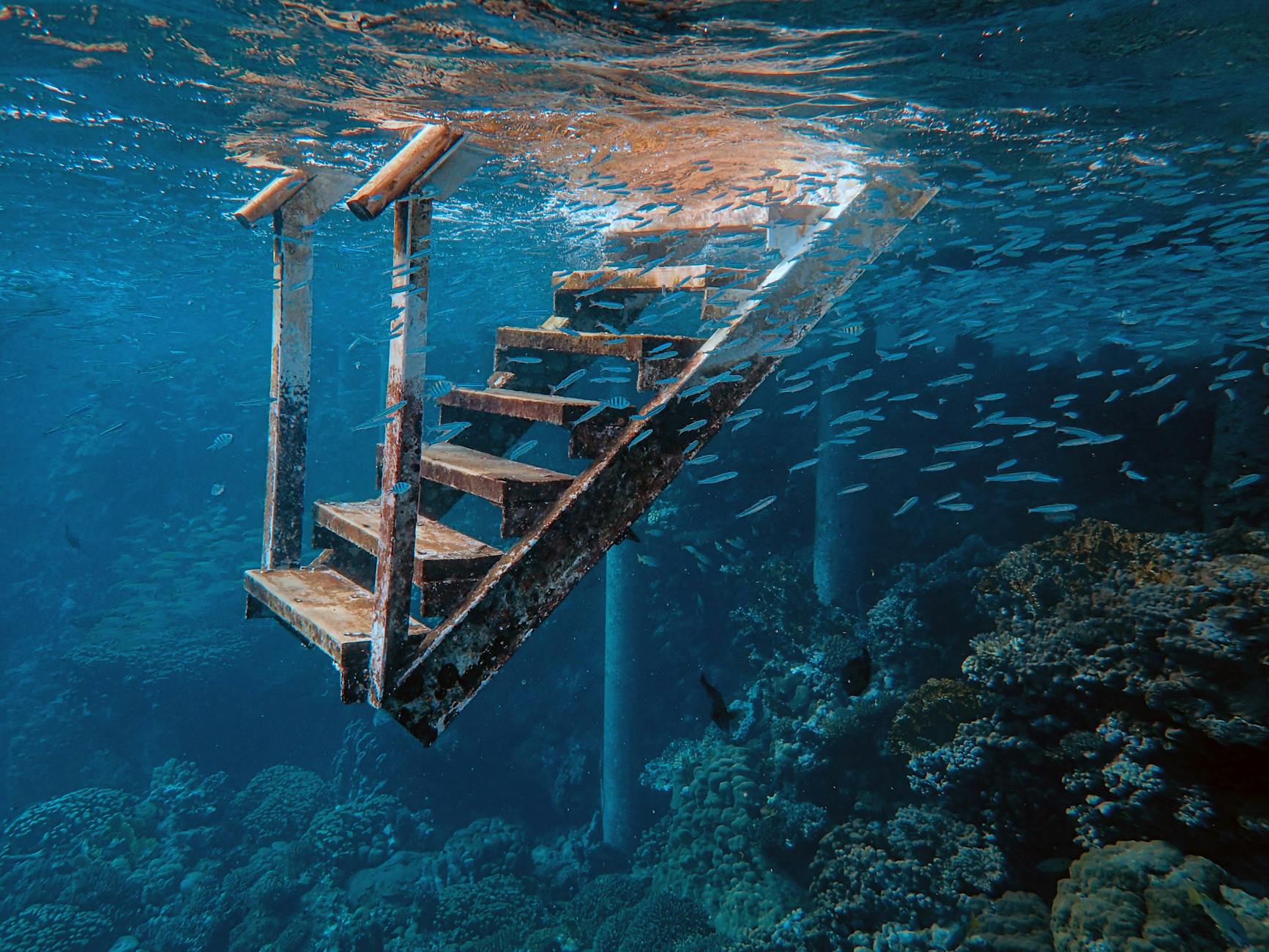
“Here lies one whose name is writ in water.”
There was a long, almighty struggle from then on. No other poem I have written caused as much difficulty and anguish. When I had it finished I couldn’t prevent myself from feeling worried about it and I knew there was something wrong, but couldn’t then identify what it was. I left it aside for about a year.
When I came back to it, I could immediately see the problem. I cut out about three stanzas and things were vastly improved. Suddenly the poem breathed.
For those interested in such things the final form has 14 stanzas. It has no rhyme scheme. It’s written in free verse, and takes its shape from the ever-changing form of its theme – water. Influences are easy to see. Keats of course, but also Walt Whitman and others.
Compared to Keats it is a poor thing. But it is my own.
On Water
I
A single liquid orb in roundness bound
The retina accepts the image upside-down
All colour, shape, all line, all forms in sight
Encompass liquidity, expressed within
An image of the world, sky, sea and earth.
Perpetual change condensed into
A floating film – an aqueous humour.
Everything is surface to the eye and
Even the bubbling runnels seem to laugh.
An inexhaustible tremulous display.
II
Depth changes the colours under the sheen,
Tiny waves, drawn by current, catch the wind
Like miniature sails. Skittering water finds a purpose
Reversing, turning upon its head.
I feel water’s deeps press down upon my form.
A drift slanting my lifeless body across the flow.
III
Black penned, disturbed with darkened water
Thick glass reflecting a surface sliding –
Flat, curved or reticulated descending slaughter
Defies the depth – colour is riding
Down darkened like an ink-dropper droplet sinks
Tells that death is foreshadowed, foretold
In the deep declivities of silt beneath
Everything has life and death in water
Our coming, our being, our sacraments
Our end. Holy water splashing on the coffin lid.
IV
I have bathed in the river, washed my head
Beneath the flow on the Isle Barbe
A refuge from normality.
Then taking the wine bottle by the neck
Re-visiting our moment on the prow of the Isle de la Cité
Plastic cap picked off to suck down a rasping
Vinegar. Vin de table splashing over my lips and chin
Hardly room for my feet above the flow
Of the Saône.
V
Turning within itself, current reaches
Up and plunges down.
VI
Boys diving off the pier at Clogherhead
Sporting, flirting with the savage rocks
That tear the flesh and break their legs beneath.
Not far away the sacred head ensconced
In Drogheda looks out from emptiness
Nothing sees or knows or wants to know
“I’d say he could have a woeful thairst on him,
And badly needs a slaking pint. Or two.
It’s mostly water, you know, like rain is.”
VII
We know the sadness and the sorrow,
We see the tears
As Jesus wept over Jerusalem
And when he learned of Lazarus’s death.
Compassion flowed
Vulnerable and humble.
VIII
Lacrimal glands seer our cheeks.
The proteins, lipids and mucins.
His too. Salty fluid evaporates on the skin.
Sodium electrolytes, chloride, potassium,
Calcium and magnesium.
IX
I have to wash before I go to Mass
Wash in the cool water of Vaulx-Milieu.
Dabble in a nearby lake.
Wash away my pettifogging imbecilities
My peccadillos which I have to ask be washed
Away by The Great Sinner who washed away
All our sins. Who took our sins before and
Ahead unto himself.
Abluted now in the cool after-rain descent.
I have washed clean my body, which is
Washed clean before I start.
X
I want to encompass the seas and make up
The fragile fluid entity.
I am the lapping waves
Slapping against the clinker-built hull
I am the endless lagoon of purple
Echoing the sky
The passage of purple clouds
Among the greenwood trees
I am a pen gliding over a
Smooth immaculate substrate
No tooth, no texture.
I am a brush loaded with watercolour colouring a ground
And filling the eye.
I am a sun-filled portion
Seen through my fingers.
I am the earth absorbing all
The angles of my back.
I am alive and I am dead
Uttering the endless breath
And laughing within the sight of water.
XI
Do I hear a lilting benediction
In the echoes in a park?
Do I feel a shiver in the cool evening air?
Can I sense my rest in you
Enveloping each other in the sun
Breathing deep in my ear?
Do I feel your heart’s murmur
Under my hand?
Do you hear
Do you hear
Do you hear my heart next to yours?
A complex of cross-rhythms – sometimes consonant
Sometimes arrhythmic.
Syncopated syncope.
I am a beating heart.
I am alive.
XII
And shall I drag my feet once more to Mass?
The water and the wine.
Witness once again the drama of the tabernacle?
I could not look inside – for Christ was there –
Too great, too big a thing to contemplate or see
Too full of meaning –
The whole world
Inside a cupboard.
The endless love.
Perfection.
Kept under lock and key
There permanently.
Too glorious to see.
Too glorious to know.
XIII
Either the Ancients did not understand.
Or understood too well.
Is it perhaps Pandora’s box?
Was Hope trapped inside and never released into the world
Or was Hope too released, when all else had ravaged the world.
Is this the essential sacrament?
The tabernacle contains Hope.
And I know
I know
I do not know
XIV
Everything dissolves in water or is reflected in it,
Everything is carried in water or floats on it.
Even for poets where these ten syllables are our epitaph
As they were his, self-written:
“Here lies one whose name was writ in water.”
Roger Murphy is a poet born in Dublin in 1955, raised in England from age one. Gifted at music, he chose instead to build his father’s publishing design business into an international venture. His lifelong passion for writing was formally honed when he earned a Creative Writing degree from Birkbeck College. He lives in Surrey with his wife, Patricia. he has published in Ars Notoria (The Art of the Noteworthy) and recently coordinated and participated in an event in the International Colloquium of Poetry and Philosophy.
Discover more from Ars Notoria
Subscribe to get the latest posts sent to your email.



Comment
Comments are closed.