Food is hand, heat, knife, pan, steam, argument, silence, mess, smell, timing, sharing. Photograph Arun Kapil
Syringes, powders, protein pots and the stubborn joy of the table
by Arun Kapil
I am a trolley-snooper. Kind of. There, I’ve said it. I do it in Lidl, Waitrose, Tesco, SuperValu, airport Boots, motorway service stations, anywhere everyday appetite shows itself in public. Some may look at cars. I look at baskets. A trolley can tell you a lot. Not everything, obviously. I am not standing there in aisle seven with a clipboard and a starched white coat, judging the nation through a bag of frozen chips. We all need our junk fix. We all have days when dinner is a packet, a microwave ping, an air fryer ding and a small prayer. But still, the trolley speaks.
The bleak ones are always the same colour: beige. White sliced Chorleywood bread. Ultra-processed ready meals. Frozen fake meat pretending to be health because it came wearing a green hat. Snacks that crackle in their packets before they crackle in the mouth. No rawness. No soil. No washing. No chopping board. No generosity. No soul. Just products queueing up to become intake.
The hopeful trolleys look alive. Meat, fish, eggs, lentils, chickpeas, potatoes, rice, leaves, carrots, parsnip, cabbage and cauliflower with dirt still clinging to them, herbs falling out of their plastic coffins, lemons, yoghurt. Brown bread, a bottle of wine, a pack of beer, a tub of ice cream because life is not a prison sentence. Joyous moderation. The trolley of someone who knows food is allowed to nourish and flirt at the same time.

Snacks that crackle in their packets before they crackle in the mouth. Photograph Caleb Oquendo on Pexels
That, I think, is where we are now. Somewhere between beige fear and colourful sanity.
Food is having one of its strange historical moments. The table is being tugged at from all sides. Medicine from one direction. Marketing from another. Soil from beneath. The algorithm from above. A thousand bright little products whispering: protein, collagen, gut health, fibre, electrolytes, satiety, metabolic support, complete nutrition, clean energy, longevity, balance, glow.
Glow. God help us.
And standing at the centre of this noisy new culture is the jab. Ozempic. Wegovy. Mounjaro. GLP-1. A phrase that sounded obscure five minutes ago and now sits in the middle of boardrooms, pharmacies, supermarkets, TikTok feeds, dinner conversations and private sanity.
Let’s be grown-up about this. I am not here to mock the syringe. For many people, these drugs are not vanity. They are medicine. Relief. A way out of the endless barking dog of appetite. If someone has lived for years with obesity, diabetes risk, shame, hunger, food noise, pain, exhaustion or metabolic disorder, who am I to stand there waving a wooden spoon like a village priest and declare the whole thing unnatural?
Science can be a mercy.
The question is not whether GLP-1 is real. It is real. The question is what happens next. Because the food industry smells a shift in appetite before most of us have even finished breakfast.
When people eat less, shop less, crave less and snack less, the system does not sit quietly and say, “How wonderful, the public may now have a healthier relationship with food.” No. The system sharpens its knives. It asks: if the eater has less appetite, what can we sell into the smaller space that remains?
And so the new language arrives. GLP-1 friendly. High protein. Fibre rich. Portion aligned. Nutrient dense. Complete. Convenient. Clinical. Smart. Future-facing. Food that sounds less like dinner and more like a HR-approved performance review.
This is where I start to get twitchy.
Not because function is bad. Function is ancient. Dahl is functional. Khichdi is functional. Yoghurt is functional. Ginger is functional. Lentils, beans, bitter leaves, fish, meat, milk, turmeric, cumin, black pepper, rice, ghee, pickles, fermented things, sour things, bitter things, fatty things, restorative things. Good cooking has always understood the body. The masaalchi did not need a wellness deck to know that food can warm, cool, settle, twist, excite, repair, comfort, sharpen, soothe and revive.

Dahl is functional. Khichdi is functional. Yoghurt is functional. Ginger is functional. Photograph Engin Akyurt on Pexels
What is new is not function. What is new is the sale of function stripped of culture. A bottle. A bar. A powder. A shake. A pouch. A subscription. A claim. A before-and-after photograph. A beautiful young person in a neutral kitchen holding something beige and saying, without blinking, that it has changed their life.
I haven’t tasted Huel. It does not call to me. It sits in my mind as the upgraded Pot Noodle of our age. Pot Noodle was honest in its own grubby way. It said: I am convenience, I am salt, I am student bedsit survival, I am a fork in a plastic pot at midnight. Huel says: I am convenience, but I have been to the gym, read the science, raised capital and now I am here to improve you.
That is a different beast.
The cleverness of it is seductive. Of course it is. I have always been a marketeer’s dream. As a child I would have believed almost anything if it came in a sachet and promised strength. Which brings me to my Mum, India and (GlaxoSmithKline’s) Build-Up.
Before family trips to India in the 1970s and early 80s, Mum would unpack sachets from their boxes to save suitcase space, popping them into Ziploc bags with the intense, practical love of a woman preparing for culinary uncertainty. India was family, heat, noise, relatives, kitchens, cows, dust, mangoes, steel tumblers, pressure cookers, raw milk, boiled water and a thousand things British caution did not quite know how to process.

I haven’t tasted Huel. It does not call to me. Photograph Mart Production on Pexels
The Build-Up sachets came with us like powdered insurance.
In India, they would be mixed with fresh raw milk from the family cow, or with jugs of boiled and cooled water. The result had a bizarre sweetness and a thick, oddly pleasant consistency. I drank it down because it was sweet, yes, but also because I believed in its health-giving properties with the total, shining faith of a small boy. Popeye had spinach. I had Build-Up.
I can still feel it. That chalky-sweet, wholly synthetic promise. The sense that complete nourishment might arrive in powder form, from elsewhere, with instructions.
So no, I am not pretending we have never wanted fortified shortcuts. We have. Humans have always wanted potions. Every generation has had its bottle, powder, tonic, cordial, malt drink, vitamins, pill, cod liver oil spoon, protein shake, breakfast cereal, slimming soup, meal replacement, miracle yoghurt, life-improving margarine. Its silver bullet.
The difference now is speed, scale and intimacy. The market no longer shouts at us from a poster. It whispers from the phone in our hand while we are tired, lonely, overworked, under-slept, badly fed, self-conscious and algorithmically understood. That is power. And power around food should always be treated with suspicion. Look back and you see that each generation ate according to the pressure acting on it.
The Silent Generation and early post-war Britain understood scarcity. Food was not content. Food was allocation, fairness, coupons, gardens, powdered egg, carrots, potatoes, milk, bread, meat when you could get it, waste nothing, stretch everything. Rationing was not joyful in the way a feast is joyful. But there was a brutal intelligence in it. The state had to think about nutrition because the country had to keep going. Food had to work.
The Baby Boomers were born into the aftershock: rationing, rebuilding, then the great bright arrival of abundance. Sugar came back. Brands multiplied. Convenience became modernity. White bread became softness. Pineapple rings became glamour. A freezer became progress. The tin opener became a tool of liberation.
Generation X, my crew, grew up in the crossfire. Brown bread not white. Weetabix not Coco Pops. Bemax sprinkled over cereal like sawdust for the righteous. Ski yoghurts sold as healthy, though the sugar content probably nudged them cheerfully into pudding territory. Salad supers. Chickpeas. Lentils. Dahls. Milk, meat, spice. Wash your hands before eating. Sit at the table. Three meals a day. No fizzy drinks. Sweets only on Saturday, when the ten pence pocket money had to be stretched into penny chews with the strategic patience of a military campaign. We were still close to rules. Regular meals. Stools at breakfast bars. Chairs at family tables. The idea that food shaped you, not just filled you.
Millennials turned wellness into identity. Then came the microwave, the jar, the takeaway, the world-food aisle, the supermarket curry, the school dinner, the celebrity chef, the low-fat years, the high-carb years, the no-carb years, the juice cleanse, the clean eating era, the protein era, the gut era, the collagen era, the microbiome era, the Huel era, the GLP-1 era.
Gen Z has turned food into sensation, signal and remix. And I do not say that sneeringly. Gen Z is often painted as if it has single-handedly murdered the Sunday roast while dancing on TikTok with a bubble tea in hand. Nonsense. They are simply eating under different weather.
They live in the age of grazing, snacking, gym language, air fryers, global sauces, spicy noodles, loaded fries, protein yoghurts, matcha, mocktails, spicy heat, fibre claims, mood foods, climate guilt, price anxiety and infinite visual stimulation. They are less tied to the old meal occasion and more alive to flavour moments. Not breakfast-lunch-dinner as scripture, but crunch, heat, sour, sweet, creamy, sticky, spicy, shareable, performable, immediate.
This is not necessarily decay. It is a new grammar.
The danger is not that young people want flavour. Good. Let them want flavour. The danger is that the grammar is increasingly being written by companies with better data than conscience. The ordinary, the everyday eater is not stupid. The ordinary eater is overmarketed. And while we are being sold smarter food, we should also ask a harder question: is our food itself becoming less nourishing?
This is where one must be careful. There is a difference between evidence and apocalypse. I do not want to become one of those chaps at the bar telling you carrots died in 1973 and only Himalayan salt can save your pancreas. But neither do I want to look away from soil.

Do not let anyone tell you a carrot is dead. Photograph Los Muertos Crew on Pexels
Soil is not dirt. Dirt is what you have a vacuum cleaner for. Soil is alive. Soil is memory, fungus, mineral, worm, rot, root, rain, time. Soil is civilisation under your fingernails. And we have treated too much of it like an exhausted factory floor. Intensive farming, erosion, monocropping, chemical dependency, tillage, depleted organic matter, water stress, pesticide residues, nutrient imbalance: these are not hippie campfire worries. They are policy worries. Food security worries. Flavour worries. Nutrition worries.
Do not let anyone tell you a carrot is dead. But do not let anyone tell you the soil beneath it is irrelevant either.
The cruel irony is this: just as the real foundations of nourishment become more complex, the market offers us simpler symbols. More protein. More fibre. More collagen. More gut health. More electrolytes. More fortified convenience. A powder for this. A bar for that. A shot for the other. A small bottle of something cloudy and expensive promising internal harmony by Tuesday.
I am not against any one of these things. Protein matters. Fibre matters. The gut matters. Sleep matters. God, sleep matters. My father used to say it. Sleep is everything. I understood him in that casual way sons understand fathers, which is to say not properly at all. Recently, after years of waking as if I had been dragged backwards through a hedge by a hungover mule, I regained something like normal sleep. The difference was not subtle. It was as if someone had plugged me back into the mains. I woke clear, charged, almost indecently alive. Dad was right. Wonderfully right.
So no, I am not anti-function. I am not anti-science. I am not anti-progress.

Every generation has had its miracle yoghurt. Its silver bullet. Photograph Fajri Nugroho Pexels
I am anti-forgetting.
Forgetting that food is not merely the delivery system for nutrients, that appetite is not merely a problem to be solved or the table is not an inefficient refuelling platform. Forgetting that culture enters the body through the mouth.
Food is how a family says: sit down. Food is how a country remembers rain. It is how migration keeps speaking after language gets tired. Food is how grief is carried to a neighbour, how children learn patience, greed, generosity, disgust, delight, discipline and rebellion. Food is hand, heat, knife, pan, steam, argument, silence, mess, smell, timing, sharing.
A powder can feed you. It cannot host you. That is the distinction. And the answer is not to retreat into nostalgia. Nostalgia is a dangerous spice. Use too much and everything tastes false. The post-war diet was not a golden age of pleasure. It was often plain, limited, repetitive, grey. The old days had hunger, class, bad teeth, overcooked cabbage and plenty of nonsense too. Our grandparents did not all live in some perfect broth of ancestral wisdom.
But there are things worth recovering.
Regular meals. Cooking skills. Brown bread. Lentils. Chickpeas. Bitter leaves. Meat raised and used with respect. Fish when it is right – spanking fresh. Rice. Yoghurt. Milk. Eggs. Fruit. The odd treat. The understanding that sweets taste better on Saturday when they are not eaten all week. The confidence to look at a trend and laugh. The power to turn off the phone and turn on the hob.
That, to me, is sane food.
Not purity. Purity is boring and usually a lie.
Sane food is khichdi and lime pickle when the body wants comfort and bite. Rice and lentils cooked down until they become both blanket and backbone, then the electric slap of pickle waking the whole thing up. Sane food is roast chicken with lemon, basil, cooking juices and a bitter leaf salad. Protein, fat, acid, chlorophyll, crunch, memory. A bird roasted properly is not less functional than a shake. It is simply less needy in its marketing.
Sane food is a trolley with raw colour and a bottle of wine. It is a child eating something sweet and believing, magnificently, that he is becoming Popeye. It is a father being right about sleep. It is a mother packing powdered insurance into a suitcase because love is often practical before it is poetic.

Photograph Arun Kapil
Most importantly, sane food is knowing that progress will come, whether we invite it or not. There will be syringes. There will be powders. There will be apps that scan your plate, watches that judge your glucose, fridges that speak to supermarkets, supermarkets that speak to drug data, brands that speak directly to your insecurity at eleven o’clock at night.
Fine. Let the future arrive. But do not sleepwalk into it.
Read the label. Follow the money. Ask who benefits when your appetite changes. Ask whether the product is solving a problem or inventing one. Ask whether the food in your hand has roots, skill, culture, memory, or just a claim printed in a very clean font.
And then cook something.

Food is how a family says: sit down. Food is how a country remembers rain. It is how migration keeps speaking after language gets tired. Photograph Arun Kapil
Not because cooking will save the world by Tuesday. It will not. Not because every meal must be handmade, virtuous, local, seasonal, regenerative and blessed by a man called Fergus. Enough. We are all tired.
Cook because it returns power to the eater. Cook because you cannot be entirely captured while you still know how to make dahl. Cook because khichdi with lime pickle is both medicine and mischief. Cook because the table is bigger than sustenance and because flavour is not the enemy of health. It may just be the thing that brings us back to it.
The future of food may be functional. Let it be. But let it also be alive. Let it stain the fingers, steam up the windows. Let it include lentils, fish, chicken bones, bitter leaves, mango pickle, brown bread, Saturday sweets, beer, yoghurt, spice, sleep, laughter, argument and someone at the table saying, “Go on, help yourself. Don’t be shy.”
Sane food was never just the absence of illness.
It was the presence of life.
Recipe of the month
Lemon, Basil & Chaat Masala Roast Chicken
Bitter Leaves and Tangy Yoghurt Dressing

Lemon, Basil & Chaat Masala Roast Chicken. Photograph Arun Kapil
This is sane food dressed up for the table: a proper roast chicken, all golden skin, lemony steam and herb-sweet breath, sitting on a messed-up mix of leeks, red onion and sweetcorn ribs that catch the juices like they know exactly what they’re doing. Stuff the bird with a wedge or two of lemon, a few rosemary and thyme sprigs and the leafy stems from a bunch of basil – never throw those away; they are flavour in disguise.
Underneath, make a generous trivet of sliced leeks and red onion, more basil stems, cut sweetcorn ribs, cracked black pepper, coriander seeds, fennel seeds, rosemary, thyme leaves, a touch of turmeric, plenty of sea salt, lemon juice and olive oil. Roast until the chicken is bronzed, the skin crackles, the vegetables slump into sweetness and the whole tray smells like somebody remembered that food is supposed to make you hungry.
When the bird’s cooked and rested, finish the roasting tray with lemon zest, another good squeeze of lemon juice, a slug or two of good fruity olive oil and torn basil leaves, stirring everything through the hot cooking juices until the herbs wilt and the sauce turns glossy, sharp and alive. Just before serving, hit the chicken with a dusting of chaat masala – not politely, not timidly, but with enough swagger to wake the roast from its Sunday manners. That final sprinkle is for all the masaalchi punks out there: sulphur-salty, sour, funky, electric, the little slap round the chops that says this is not just roast chicken, this is roast chicken with a pulse.
Serve it with a salad of rocket, romaine and bitter leaves – chicory, radicchio, whatever looks crisp and mildly argumentative. Dress them with Greek yoghurt, a spoon of mayonnaise, Dijon mustard, olive oil, lemon juice and plenty of sea salt, beaten together until rich, tangy and spoon-coating. The dressing should not whisper. It should lean sharply into the bitterness of the leaves and bring them back smiling. Chicken, bitter salad, lemony juices, sweet roasted leeks, corn, herbs, spice, salt, acid, crunch. Protein and pleasure. Function and feeling. Sane food, absolutely alive.
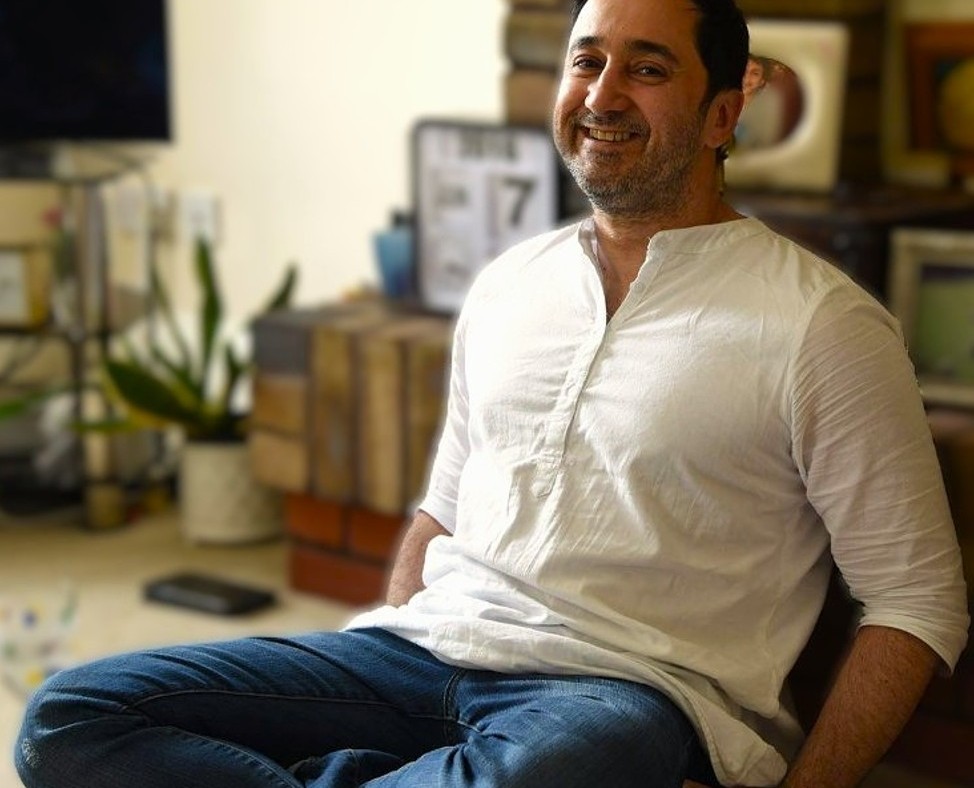
Arun Kapil, Food Editor of AN Editions, an punk food poet, founded and owns a spice company, Green Saffron Spices. He works sustainably direct with partner farms mainly to the west and north of India and some in the south. He works directly from source. He owns total chain of custody, depleting links in the chain, bringing direct line of sight to fields of cultivation. Arun and his partner Olive began by selling one or two sachets a week of bespoke blends with accompanying recipes at a farmers market stall in Mahon Point, Cork. They now sell spices and seasonings to globally based blue chips, onward food processors and are just in the throes of re-launching their brand, based on Modern India meal solutions, sauces, spice blends, naan, condiments and basmati. They started the business boot-strapping from the bottom up, managed with a good deal of jugaard. He considers himself to be a masaalchi and at best a khansama supported by a strong network of Irish, Indian and British agri-experts and businessmen.
Discover more from Ars Notoria
Subscribe to get the latest posts sent to your email.


You must be logged in to post a comment.