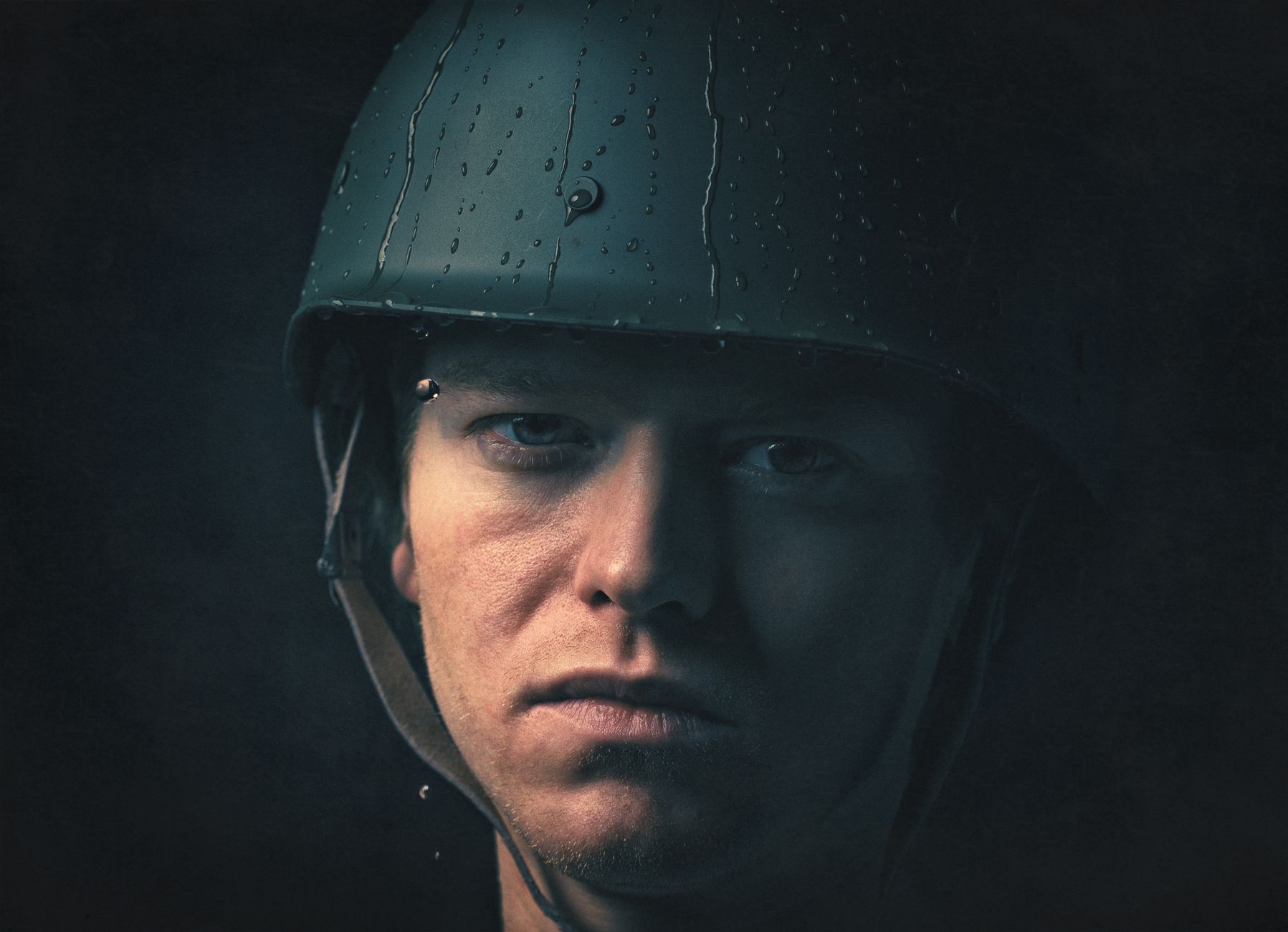
Photo by Murry Lee
Dear Lieutenant Yamaguchi
I am ashamed to admit this but I simply have to tell someone. I always considered you a friend during the war, not just my superior, and I trust your judgement.
I have been acting as a translator for the Americans since shortly after the surrender. Well today I received a letter from one Major Coleridge. It said this:
‘I love thee only…. I am athirst for thy beauty; I am hungry for thy body; and neither wine nor fruits can appease my desire.’
There’s nothing else, just a return address. What on earth is wrong with these Americans? Is he mad? How do you respond to a man who sends letters like THAT?
Yours sincerely
Kenji
Dear Lieutenant Yamaguchi
I have received another letter from him. I’m sorry to keep dragging you in, but I feel so unsure of how to handle him. This man could create real problems for me.
‘I sincerely apologise if you found my letter offensive. The last thing I want is to insult you, or impugn your masculinity. I seized on a quote that would express my feelings and clearly it came across as crude. I promise you, my emotions are not. I’m interested in you, physically, intellectually, spiritually. I respect you. Yes ok, we are both men, but I don’t think that makes it inherently wrong. Don’t withdraw because I misjudged how to express myself.’
I don’t think he means any harm? But this isn’t acceptable. Any idea what I should say?
Yours sincerely
Kenji
Dear Lieutenant Yamaguchi
Forgive me for not writing for so long. This foreigner approached me a third time.
He made it clear that he is in a position to utterly ruin my life if I don’t consent.
I have considered this carefully, and decided not to kill myself. But I think my options are death or consent.
I ask you not to despise me for my choice to live, or for sharing all this with you. I just felt I had to confide in someone, or the strain would be too much.
Yours sincerely
Kenji
Dear Lieutenant Yamaguchi
I have consented. May my ancestors forgive me.
Is this the next step in occupation? That they do this to us too? Haven’t they taken enough already?
Yours sincerely
Kenji
Dear Lieutenant Yamaguchi
I have been studying my captor. He seems like an unbelievably damaged man. He was a prisoner of war in one of our camps for two years. He speaks little about it, but there’s a lot between the words. Really a lot.
I asked why he didn’t kill himself rather than surrender. He just said westerners don’t. I have trouble believing that, but I somehow don’t think he’s a coward. Another mystery I suppose. Like his interest in me.
He thinks our wartime actions give us no right to protest – about occupation or anything else. And yet, he seems truly fond of me. He says he’s attracted to my intelligence, bravery, fortitude. I wonder why he really wants me though. Him of all people.
He calls this love. How can it be love, when he knowingly threatens me into it?
Yours sincerely
Kenji
Dear Lieutenant Yamaguchi
We have settled into a quiet routine. In the day I am his guide and translator, in the evenings we read until it is time for bed.
He’s an educated man. His rooms are stacked with western literature, but he loves the Arthurian legends the most. He says they’re part of his heritage, his roots. I think he is someone adrift in the world. He seems dissatisfied with both his own culture and ours.
He questions me about bushido and seems to dislike it. I take what he says cooly. We can’t expect former enemies to understand our values, especially one like him. He doesn’t know the meaning of restraint and discipline. If he did I wouldn’t be here.
I admit I feel less angry with him these days. He has not shouted since that first awful threat, and he has never once struck me. I almost wish he would. Perhaps if he beat me I could feel differently.
Yours sincerely
Kenji
Dear Lieutenant Yamaguchi
My captor is an odd man. We were discussing English literature today. He said wryly that only Americans need roots the way he does. I asked him to explain.
‘America does not know what it is’ he said. ‘We’re a very young country. Our roots lie elsewhere, in my case in England. That displacement means we need the culture of our ancestors. We need to be told what we are. We do need that.’
What a thing to admit to a former enemy! He looked at me intently then. ‘But of course’ he continued ‘this needs to be told. Who you are, what you are… do you have that too?’
Yours sincerely
Kenji
Dear Lieutenant
I’m beginning to feel like an actor in his play. It’s as if he’s constructing something around us. I feel uneasy, and I don’t know why.
This evening we were talking again. He was lounging on the tatami mats, me with my head in his lap (not by choice. He had me lie there.) He began talking in a slow deliberate tone about the relevance of myth to human action.
‘The beauty of Camelot’ he said ‘is in the idea of a just kingdom wrestled from chaos. Of course every generation finds new meaning in stories. But that is the meaning I find in it. We give myths our own meaning. And they confer greater meaning on us.’
Why did that chill me? I felt ice run down my spine as he let the silence sink in. There was something significant in what he said. But I can’t for the life of me imagine what he was thinking.
Why am I so uneasy?
Sincerely
Kenji
Dear Lieutenant
I can see what he is doing now. I can see, but I can’t fight it. This man is a strategist. He has my body, but what he wants is my soul. I won’t give it, so he’s laid out a plan of conquest.
I don’t know how to fight. I was never trained for this.
Physically, he is not cruel. He wants me to feel – comfortable. But mentally, he is doing something else. He asked me what the Japanese ideal of love is. I talked a little about Yoshitsune and Shizuka and he listened intently. Then he began telling me about Western ‘courtly love’.
A knight, he says, would give total fealty and submission to his love, the same as he would to his leige lord. In return, the beloved would direct him. She would shape his life and force him to prove himself. Love became a test of strength and discipline, ennobling both people.
I see what this is. He has laid out my path, but he is not pushing me into it. Instead he attacks bushido, tradition… everything I was taught to be.
Sincerely
Kenji
Dear Lieutenant
I was right. We have started reading ‘the Knight of the Cart’ now. Every reading session is now a lesson.
He waxes lyrical over Lancelot, and the hardship he endures for Guinevere. Self-abasement is pure, humiliation is honorable, blind obedience is admirable because it is for love. Love, he says, ennobles all of these things. That is what I am to believe.
I won’t be annexed.
Sincerely
Kenji
Dear Lieutenant
He was more open in intention than ever today. We were reclining as usual, my head in his lap, him caressing my hair. He asked if I wasn’t unsatisfied with this life.
‘I don’t quite understand’ I said carefully.
‘Yes you do’ he said. ‘You want a purpose. One that requires devotion, discipline. You feel the surrender took purpose from you. That was a blow. What I don’t understand is why you collapsed into apathy after that. It seems unlike you.’
‘What else was there to do?’ I said, biting down my irritation. ‘We lost.’
‘Purpose’ he said ‘can always be found elsewhere.’
Sincerely
Kenji
Dear Lieutenant
He seems upset at my resistance. I’m not playing to the script. He has redoubled his efforts on me.
I’m fighting a philosopher with a mind like a knife. He seeks out the root of everything I say, and he shreds it ruthlessly.
His arguments are relentless, piercing… dazzling. Yes, I’m dazzled by it, mad as that sounds.
This is bad, actually. I’m not equipped to deal with this.
Kenji
Dear Hiroshi
I’m tired. I am so, so tired of this. I’m not even angry anymore. Shall I tell you something? Our side tortured his friends. He witnessed it. He shook when he told me. For years this man was a victim and witness, to everything we want to deny.
But truth won’t be denied, will it? It has to be lived with. I can’t resent him for what he is doing to me now. Our hands are not clean. Nor are mine, Hiroshi. Nor are mine.
Kenji
Dear Hiroshi
I have been thinking lately about bushido. The type we were taught to accept in the army is not the real thing, is it? Not the code the samurai followed. Our military leaders lied to us about that. We dirtied our hands for a lie.
Real bushido valued mercy, restraint, integrity. Our bushido was tool to make soldiers obey. A perversion really. It glorified blind obedience and death. I never really thought about it in those days. You weren’t supposed to.
I know what is happening to me now. I’m being unmade. But did the army have any right to make me this in the first place? It comforts me now when he takes me to bed. He comforts me.
Don’t despise me.
Kenji
Hiroshi
He has found your letters.
Kenji
Dear Hiroshi
I can contact you again. Don’t worry, I’m fine. He was angry but it passed. He has decided to write to you.
I want to tell you first – please don’t end this correspondence. If I am left alone in this, it’s over. It may be over anyway, but I can’t hold out alone.
Instead, keep this in mind: He wants you either gone, or on his side. So he will try first to intimidate you. If that doesn’t work he will try persuasion. That’s an opening.
He respects intelligence and can listen to argument, if only so he can attack it. Use that.
Kenji
To Former Lieutenant Yamaguchi
I read your letters to our mutual friend. I only have this to say to you: back off. Back all the way off. You don’t understand the situation, and it’s none of your concern. Back off. Or face the consequences.
Very sincerely
Major Henry Coleridge
To Former Lieutenant Yamaguchi
I see. I thought a threat would send you running. You’re quite brave to talk to me like that. Let me lay out what you have failed to understand, and you will see why you need to end these letters.
You think I am a tyrant breaking down your friend, so you help him in any way you can. You call me a monster, advise him to pretend with me, talk about planning an escape. Do I blame you? Absolutely not. Of course I would do the same. But consider what I am dismantling.
All I’m taking apart is the twisted and failed structure that brought about your country’s ruin. Worse, the ruin of its people. It’s a structure unworthy of him, and it’s got to go. How many men rightly went to the gallows because of what they believed? I am draining out poison and offering a remedy. He only fights me because he was taught to.
When he sees things my way, which he will, he will know that I acted out of love. That I saw the man, not the soldier. That I had his best interests at heart. And so must you.
Yours sincerely
Major Henry Coleridge
Dear Hiroshi
I wanted to keep you updated. I don‘t know how much privacy I can preserve but I want to keep talking.
He read some parts of your response aloud. They made him amused, sarcastic. He says you never left the war behind, that you see him solely as the enemy, that you are scared of honesty. He smiled, the way he does when meeting a challenge.
I think you interest him. He may even like you, in a way. He’s going to take time crafting a response to you.
He wants to make you see things his way. He’s sure you will. He thinks you’re better than what you believe.
Don’t worry so much about my safety. He did beat me when he first found your letters, but it was light. I forgive him. And it was the only time he ever hit me. Remember our training? We had much worse beatings early on, almost every day. Frankly, he’s much easier to be around than some I could mention.
This may be the last letter from me, Hiroshi. If it is, I thank you for everything. You’re a good friend.
Kenji
From the Diary of Sato Kenji
He’s writing now. I can see that zeal in him rising again. He’s enlivened by the new challenge.
Maybe I should never have involved Hiroshi. After all, this all feels like fate now. Like we were always bound to collide.
We compliment each other very well, don’t we? He believes in just rule, I believe in honorable service. He sees himself as both a knight and a king. I imagined myself a samurai. We’re a match made in hell.
Something has happened.
He was talking about kings again this evening. All kings rule by default, he said, but why is Arthur held up as a good king? Because he was unlike those before him.
He began talking about mythic, unjust rulers – then he stopped. He turned pale. I asked what he had been about to say. ‘Uther…’ he said. He trailed off. He has not come near me since.
His letter to Hiroshi is on the desk, unfinished. He hasn’t touched it.
He’s pacing about. He’s avoided me for a day now, so I’ve been going through his things. I found these words written in his notebook:
‘We talk about advances to a lover, then conquest, then possession. You may as well apply those words to a city. And yet, we also hold that love is good and war is bad. That contradiction makes no sense, surely? There’s something wrong with it. So where does the flaw lie?’
I checked his books. King Uther was Arthur’s father. The last dishonourable king before him. He took a woman as his wife by force.
Now I see.
I don’t know what is happening to him. He was so poised, so confident. Now he paces like a caged animal.
He rants, first about the east, then the west. He talks about the camp, and Hiroshima, and moral failure on both sides. At times he seems near tears. I want to comfort him but this is frightening.
At one point he turned to me, pale, wild, and demanded to know why I seem content. If the world offers no solid morality, how could I be content!? I just said softly that I didn’t know.
I may be in danger.
He’s in his room. Quiet now. He told me once that westerners don’t kill themselves. I wonder if that’s really true. Maybe I should go to him.
He let me go.
He called me in to the room. He sat up on the bed, kissed my hand and spoke slowly: ‘we live in a world with no solid goodness, so we try to find goodness somewhere. I found it in myth. You found it in code. But they’re not real. Goodness can’t be an abstract. It must lie in actions. So… it’s time for you to go. I did love you, you know.’
My head is swimming. I feel numb. I found a room in a boarding house and I’ve moved my things here. He’s unlikely to find me. I have just enough to live on for now.
I have no idea how to conceive of a future. It’s shameful to admit this, even to myself, but I sometimes want to go back to him. He saw something in me worth going to all that effort for. Me! An obedient soldier, a true believer. Men like me must have terrified him once. Probably still do. Yet he saw something in me worth loving.
What drew him? The need to shape? To possess? Dominate, forgive, reconcile? I’ll never know, and these questions could drive me crazy.
I have a future. It’s a blank slate but it’s mine now.
It’s been two weeks. I feel I can breathe again.
I called my sister about helping me find a job. She sounded bewildered on the phone, but she spoke to her boss. They’ll find me a place somehow.
I suppose dropping out of her life for months raises a lot of questions. Too bad, I’m not answering them. Everyone will just have to accept that they’ll never really know what happened. Everyone but Hiroshi. And Him. The three of us will share this secret.
I’ve realised something. He woke me up. It may not have been his intention, but he did. In what he was trying to do to me, he revealed what the army had already done. I was blind to that, before him. I won’t say I owe him this because I’m determined not to owe. But I will say my eyes were opened.
It may be I can live without a creed now. Follow my own conscience, not what someone else has told me to think. It won’t be easy. I’ll make mistakes. I’ll live with uncertainty, every day. But I’ll stick to conscience from now on, however hard it gets.
I’ve carried something out of this I never expected to find. That’s enough to be grateful for.
From the Diary of Major Henry Coleridge, U.S. Army
I’m leaving tomorrow. It is high time I went home, though who knows what home will look like
I keep thinking back on everything that happened. No matter how hard I try, I can’t seem to see it streight. Everything slides out of proportion, too significant or too small. I try to make sense of him and me. Maybe there is no sense to it. Maybe I’m wrong to try and make sense of two people.
I keep coming back to that one moment of clarity. Goodness is in human actions. Maybe that’s the only truth I found. I suppose I’d better take it to heart. You can’t live by abstractions and call that goodness. That’s how monsters are created.
We defined right and wrong, all of us, on all sides, by the structures we created. They were beautiful and gave us purpose. But the potential for damage was incredible. Human goodness is fallible and unglamorous, but it is at least real. It serves no greater purpose. It simply is.
When our gilded creations come crashing down, we’re left in the rubble together. Perhaps only then can we truly see each other.
Francesca Young is a freelance writer from West London who writes in the genre of horror. She works as a librarian at a college in West London. Francesca has an interest in history, politics, power and how human beings relate to each other in extreme circumstances and this inspires her fiction.
Discover more from Ars Notoria
Subscribe to get the latest posts sent to your email.