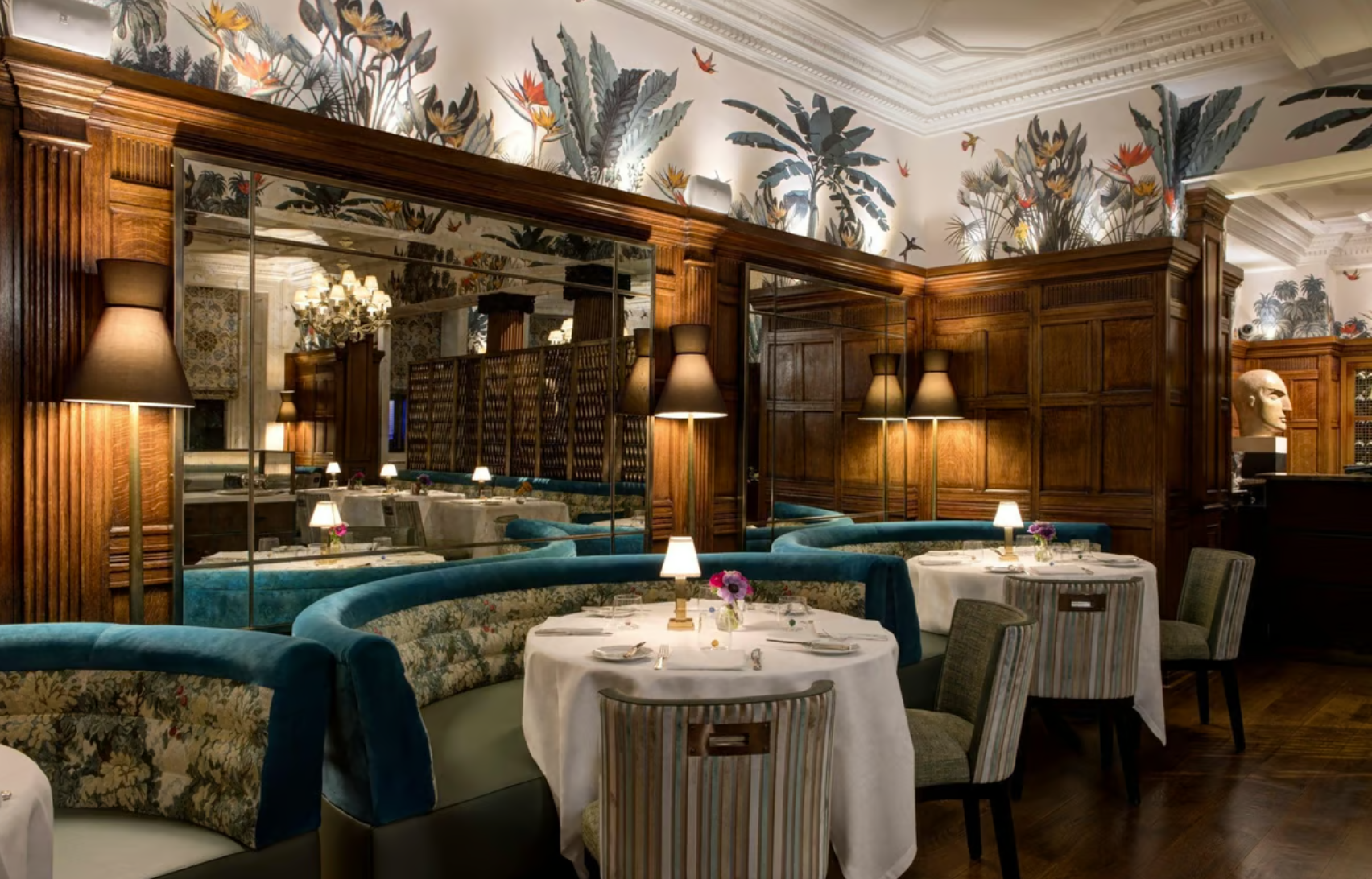
Charlie’s Bar, Photo sourced online
The heart of classical cooking is connection
by Arun Kapil
.
Classic cooking, in an environment designed to inspire and bring joy, stands the test of time. In a frantic world, classic dishes shine. I love the new and the innovative—bold flavours and mixed textures. I love the thoughtful modern tweaks a contemporary dish can offer—indeed, through my company Green Saffron, I pride myself on bringing new flavours, meals, and nutritious dishes to the commercial table. However, there are times when I hanker for a classic dish. I need that warming hug of a meal, a space to let happy memories flow. Enjoying classic dishes takes me away from the humdrum. They provide restorative bliss—the calm required before the shake-up, wake-up, and return to fast-paced reality.
There’s nothing quite so reassuring as walking up to a restaurant, brasserie, or café and being met at the door by a smartly dressed employee decked out in a top hat, turban, or peaked cap. Complete in formal attire, with shiny shoes and a smile, they usher you in as they hold open the door. This is the restaurant you booked a while back, the one you smartened up for, the one you have been looking forward to—the treat you’ve worked for. This simple, fleeting greeting sets the scene and creates expectations for what’s to come. Generous hospitality is the defining feature of a memorable meal.

Friends from Mumbai had mentioned they were going to be popping over to the UK for a month-long tour, so we decided on a date when we could meet, chat, and plan. On one late autumnal day, our meeting was to be casual, though nonetheless business-focused. We just needed to decide upon a venue that would suit—a restaurant with the balance of a classic London location, offering clean dishes that smacked of old-school British cooking, equally happy to cater to vegetarian preferences. We decided to go to Charlie’s Bar at Brown’s Hotel, a timeless spot that serves effortlessly delicious dishes created by Adam Byatt, perfectly executed by Head Chef Mike Shaw and served up by their extremely capable brigade. That day in autumn, Charlie’s Bar proved to be top of the picks.
There was a warm welcome in from the chilly autumn street. My brother and I headed for the wrong entrance but were gently encouraged to go to the correct door by a gentleman smiling under his top hat. Inside the bar, we were greeted with genuine warmth. We took a seat and ordered a couple of drinks, confident that our guests, on their month-long break, would be running on Indian time. A couple of drinks down, our guests arrived, and we were all ushered into a wood-panelled, beautifully styled dining room. The lunch tables were decked out in linen and dressed with delicately patterned china. Smartly upholstered crescent banquettes were arranged alongside the table. We walked past chatty diners and seasoned waiting staff.

When I say ‘seasoned,’ I mean at Charlie’s, the waiting staff have that healthy mix of youth and experience that makes for a confident, professional, and reassuring floor. I love the hum, buzz, and bang of a well-managed restaurant floor, where chaos becomes a dance of clockwork precision. The old boys were smartly dressed, with the odd fraying edge to their uniforms—an elegant nod to long and peerless service. They cracked their routine one-liners as each new table arrived. The younger members of the team, with pristine white creased shirts and dark black waistcoats, were more nervous – pulling out chairs, unfolding napkins, looking across to their mentors for reassurance. The menus arrived, and first-table drinks were poured…
I love the hum, buzz, and bang of a well-managed restaurant floor.
Classics are classics for a reason! When it comes to food, the classics have withstood the test of time. The roots of these dishes are embedded in tradition. Classic dishes offer more than sustenance; they take you on a journey that evokes memories, emotions, and a sense of connection to history and heritage. The techniques and recipes passed down through generations carry with them stories of cultures and communities. They preserve the essence of culinary culture. Chatting recently to Chef Fadi Kattan of Akub, a Palestinian restaurant in Notting Hill, London, he spoke passionately and with concern about the dishes of his youth fading away and about the difficulties surrounding the harvest of various crops; about how historical Palestinian olives were gradually disappearing. Ask Chef Mursal Saiq, and she could educate and entertain you at length about the joys and history of Afghan cuisine, about flame and grill cooking. There are many advocates for different cuisines on the modern food scene.

What defines a classic dish? I have been told many times: ‘You mustn’t mess with the classics.’ But I disagree. What makes a classic dish? The best sourcing, ingredients, produce, and provenance. Skilled technique and discipline applied in combination with time-tested knowledge passed down through generations. Cooks taught to keep alive the ‘best.’ Chefs teaching sous chefs, sous chefs training whole brigades—the passing on of culinary skills, and so continues the cycle of hard-won expertise in what can be the harshest of work environments: the professional kitchen.
Mothers and fathers encourage their children to learn to prepare the same dishes they themselves were taught to prepare by past generations. This knowledge draws them closer to lost ancestors. Cookbook writers are influenced by those whom they admire, by books they’ve read, and they are influenced most by their teachers. Good cooks write down their instructions so as to pass on their knowledge and teach about food in all its dimensions, not merely about food as a means to sating hunger. Occasionally, individuals pop up who seem to have an innate ability to innovate… and so the classic dish endures.

The unifying power of the classic is provenance: its ability to define a moment in time, a culture, and a community. No matter how much innovatory skill is applied, without a firm foundation in culture, community, and provenance, the dish will never be a classic. Stray from traditional guidelines at your peril. You might land badly and up appropriating rather than appreciating. At worst, you find yourself in a kitchen producing food that just doesn’t seem to quite get there, that doesn’t quite ‘work.’ Most likely it will be called… interesting, and your clumsy re-imagining has missed the mark.
This is my point: classic dishes need time-honoured, hard-won skills. Each generation subtly tweaks and builds on growing knowledge in order to enhance the classic dish. And so, given time, a modern classic, a new classic, springs from an old classic. From learning to correctly wield a chopping knife to learning which cooking technique to apply to which ingredient—braising, frying, roasting, poaching, marinating, sousing, or baking—it takes a depth of understanding to produce a depth of flavour and texture.
A classic dish doesn’t have to be Boeuf Bourguignon, Coq au Vin, Butter Chicken, Saffron Biryani, Cacio e Pepe, or Beef Wellington—you get the picture. It can be Beans on Toast, Fish and Chips, Steak Pie, Bacon and Cabbage, Ham Hock (pork knuckle), Cabbage & Caraway. Real classics are often of paysan, humble origins.

The humble origins of some classic dishes can be elevated through a true understanding of the raw material, flavour combinations, and through timely processing. Ferdinand Point, Myrtle Allen, Edouard de Pomaine, JP McMahon, and Aishling Moore are champions of the best seasonal ingredients, which they treat with respect and simplicity. From these ingredients, they produce Michelin-starred, truly delicious, classic dishes. Their focus stands wholly on the produce they work with, understanding with time and trial how to best make it shine and so create the most enjoyable eating experience.
This is not to claim that everyone needs to undergo a lengthy period of training in order to produce a dish that sustains; everybody can cook well if they take their time and take care—the ability to read package instructions is enough. But to really go beyond the ordinary, that does take time. The art of making a perfect béchamel sauce—one of Escoffier’s five mother sauces—needs the careful combination of butter, flour, and milk, encouraged by gentle heat, cooked to just the right consistency. In this way, the mixture is transformed into a velvety, luxurious sauce that complements any dish it touches—it is a thing of beauty.
Escoffier himself was no stranger to controversy. Before finding support and teaming up with his friend César Ritz, in César Ritz’s now infamous kitchens, Escoffier was accused of ullage far too often at the Savoy. His early years in the UK were troubled. The original proposal for the mother sauce, the key base sauce required as classic cooking knowledge, was conceived by world-famous chef Marie-Antoine Carême in the early 1800s. Auguste Escoffier, a hundred years later, tweaked the concept, adding a fifth, a tomato sauce. Escoffier developed and introduced the brigade system to the professional kitchen, bringing hierarchy and organisational structure. Was he a culinary innovator or a slick operator?
At the heart of any great dish is the classic combination of flavour, texture, and taste. Ingredients—animals reared, plants cultivated and harvested with care—all contribute to quality and taste and bring richness and authenticity to the table. Even the flavour of a perfectly roasted chicken, seasoned simply with salt, pepper, and fresh herbs, its skin crispy and golden, its meat tender and juicy, is a testament to the beauty and simplicity of quality ingredients and classical cooking. Simon Hopkinson’s Roast Chicken and Other Stories shows us how care, thought, and well-honed knowledge produce the best results. Hopkinson is a true master of his craft. Another such modern master is Chef Jeremy Lee known for his modern savoury or sweet ‘Tumbles’, arguably modern classics in their own right. Lee is a chef on top of his game, confidently creating the best of British dishes, employing meticulously sourced ingredients.
There are classic flavours, classic combinations: salt and pepper, butter and lemon, chicken, tarragon and garlic, parsley, anchovies and capers, ginger, garlic, and onions, etc. At the heart of any great dish is a classic combination of flavour, texture, and taste. When you first begin your culinary journey, you learn how to create flavours and what’s what. Chefs Richard Corrigan, Fergus Henderson, Pierre Koffmann, Chris McGowan, Niall McKenna, Will Murray, Jack Croft, and Ross Lewis, the Spiteri brothers Lorcan and Fin, are among those who use classic combinations with deftness.
Having created a classic combination of flavours, your journey must continue. You need to understand textures and mouthfeel—from crunch and pop to beautiful coatings to the satisfyingly unctuous—knowledge of each texture is equally important. Do you understand salt and sweetness? (Every time I type ‘bitter’ on my laptop, my ‘finger pokes’ result in the word ‘butter.’ My wife, Olive, an Irish farmer’s daughter, would convince you butter is an essential taste for any good dish, and who am I to argue? I digress.) Do you understand bitter, sour, and umami?
Though for those followers of Ayurveda amongst us, let’s be conscious too of the other two taste sensations, rasas: pungent and astringent. Vivek Singh, Vineet Bhatia, Avinash Shashidhara, Hrishikesh Desai, and Ravinder Bhogal push the Indian classic boundaries with updated sympathetic twists, and stalwarts of the traditional scene—Madhur Jaffrey, Asma Khan, Sanjeev Kapoor, and Vikas Khanna—preserve the classics, showcasing traditional dishes in modern, authentic settings. For them, rasa is another tool in their arsenal.
Bring the flavour, texture, and taste into one dish, and I believe you have the foundations of a classic culinary understanding. Now you must cook classical dishes and develop a repertoire. Just refer to works by Richard Olney, David Thompson, Elizabeth Day, Clarissa Dickson Wright, Jennifer Patterson, Rose Gray & Ruth Rogers, Jane Grigson, Sophie Grigson, Delia Smith, Camilla Panjabi, Julia Child, Darina Allen, Marcella Hazan, and you will succeed. Why not study Gizzie Erskine? She will instruct you in books and programmes on how to cook the classics and how to cook some classic dishes she herself has created. Add Jack Turner, David Burton, and Mark Kurlansky to your list to gain some real insights, and you are away.
My own take is that crossing borders with an inquisitive mind and a keen hunger to learn is how, I believe, the new classics, the best dishes, can be created.
…At Charlie’s Bar, the wine and conversation flowed; the dishes arrived with well-timed charm, grace, and humour. Each dish was impeccable—carefully, skilfully prepared, excellent: Almond and Macadamia Gazpacho, Datterini tomatoes, grapes, and celery. An Endive Salad with candied walnuts, pickled pear, and Roquefort. My main, an absolute favourite, delicately textured Calves’ Liver served with a grain mustard sauce and the dreamiest creamed potatoes. Without doubt, the pièce de résistance was our desserts. My brother and I recommended our guests sample a favourite of ours that digs up happy childhood memories—the chilled sweets cabinet of the early eighties M&S food section—the highly esteemed Rum Baba.
At Charlie’s, the restaurant is the theatre, but the serving is the show: show: a sculpted Genoise Sponge, freed carefully from its mould, barely heated and placed in front of each of us on pristine white porcelain. The maître d’hôtel, like a surgeon, cuts each pudding in half. Next, a waiter picks up a crystal decanter of rum and pours it skilfully and generously over each sponge. He swaps the decanter for a sterling silver jug of ethereally light crème anglaise and coats each sponge. A swift wipe with a white linen cloth, and the jug is placed back onto a platter. We were mesmerised. Then the waiter whizzed away with a cheery, ‘Bon appétit.’ It was a delicious end to a classic meal.
We bid fond farewells to our guests; my brother and I made our way back to the bar—a Negroni and Martini for the road. Sláinte!
Pasta alla Genovese

If you’d like to try a classic Italian Neapolitan dish that I recently cooked myself—perfect for warding off the chilliest of cold evenings—then please do try this Pasta alla Genovese. This dish relies on time, the reduction of onions (rather than stock) to bring sweetness, and a cut of beef that becomes meltingly delicious, resulting in a gloriously unctuous yet delightful ragù. As always, well-sourced ingredients are key.
Preparation:
- Preheat your oven to Gas Mark 3, 160°C, or 140°C fan.
- Peel and slice ten medium-large onions (about 3kg) and set aside.
Cooking the Base:

- Take a large casserole dish and place it on the hob. Add olive oil (or, even better, lard) and gently fry two finely diced carrots and one finely diced stick of celery.
- After about five minutes, add one-third of the sliced onions and continue to cook gently until soft. Avoid browning the vegetables.
- Add a generous squeeze of the best tomato purée, a glass of white wine, and a bay leaf.
Adding the Beef:

- Place a well-seasoned 1.5kg featherblade cut of beef (seasoned with sea salt and cracked black pepper) onto the softened onion mixture.
- Scatter the remaining sliced onions over the beef.
- Cover the casserole with foil, pop on the lid, and place it in the oven. Cook for 4 hours.
Finishing the Ragù:

- Remove the beef from the casserole and set it aside.
- Place the pot back on the hob over medium heat. Add a little more tomato purée, another two glasses of white wine, and a good crack of black pepper.
- Reduce the mixture down to a lovely sauce consistency.
- Chop and shred the beef, then slice a generous bunch of flat-leaf parsley. Add both back into the pot, stirring to combine until you achieve an unctuous ragù consistency. Set aside.
Cooking the Pasta:
- Cook some dried ziti, rigatoni, or paccheri pasta in well-salted water for about two minutes less than the pack recommends. Drain the pasta, retaining at least 150ml of the cooking water.
- Return the pasta tubes to the pan, spoon the ragù generously over the top, and heat through, adding pasta water as needed to achieve the perfect consistency.
Serving:
- Serve warm to 8 or so guests. Alternatively, freeze any remaining ragù and enjoy the rest over a couple of days.
Enjoy!
.
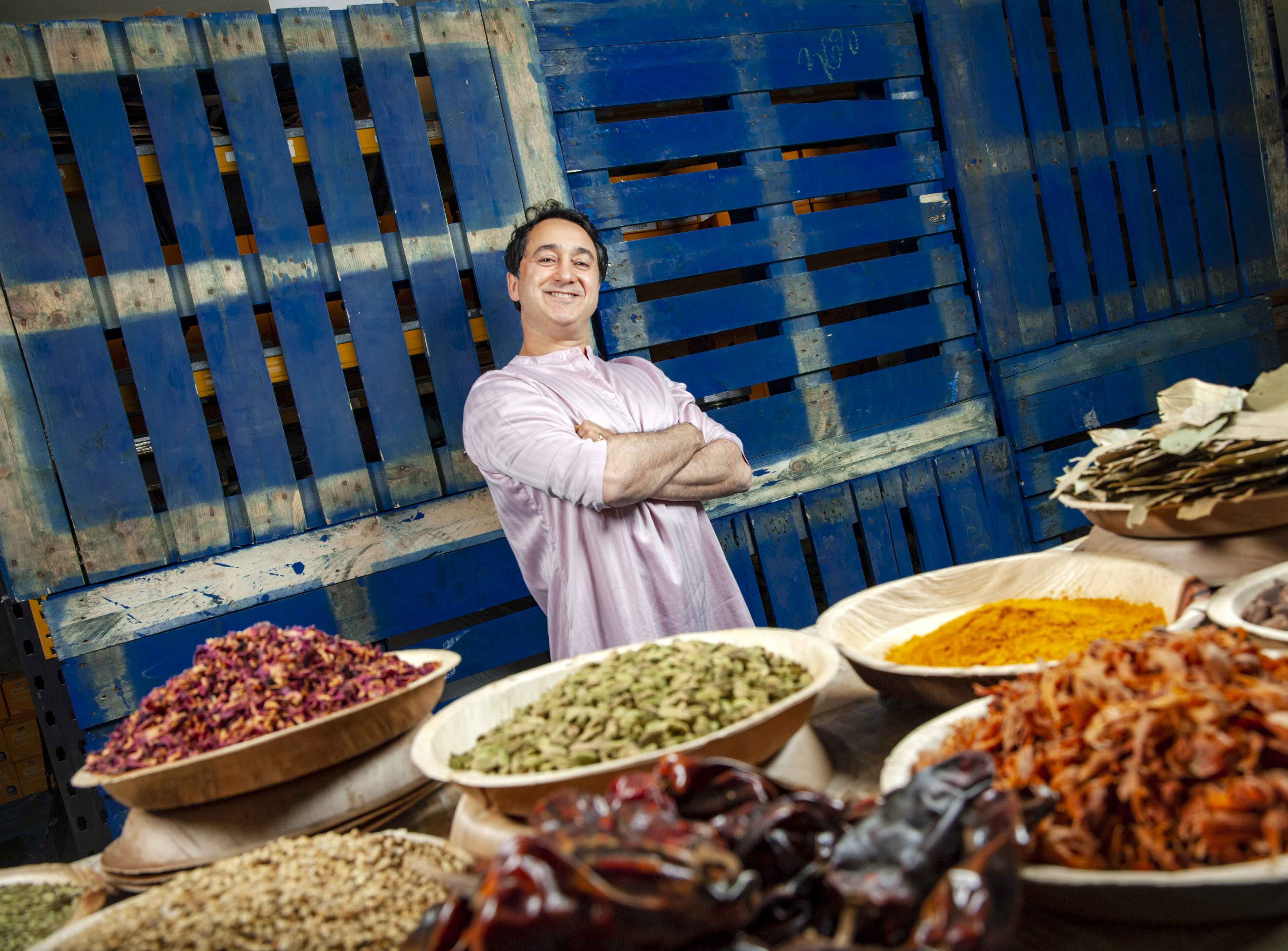
Arun Kapil, Food Editor of AN Editions, founded and owns a spice company, Green Saffron Spices. He works sustainably direct with partner farms mainly to the west and north of India and some in the south. He works directly from source. He owns total chain of custody, depleting links in the chain, bringing direct line of sight to fields of cultivation. Arun and his partner Olive began by selling one or two sachets a week of bespoke blends with accompanying recipes at a farmers market stall in Mahon Point, Cork. They now sell spices and seasonings to globally based blue chips, onward food processors and are just in the throes of re-launching their brand, based on Modern India meal solutions, sauces, spice blends, naan, condiments and basmati. They started the business boot-strapping from the bottom up, managed with a good deal of jugaard. He considers himself to be a masaalchi and at best a khansama supported by a strong network of Irish, Indian and British agri-experts and businessmen.
Discover more from Ars Notoria
Subscribe to get the latest posts sent to your email.
You must be logged in to post a comment.