James Wood interviews seasoned author and publisher Peter Cowlam on the subject of his new book
.
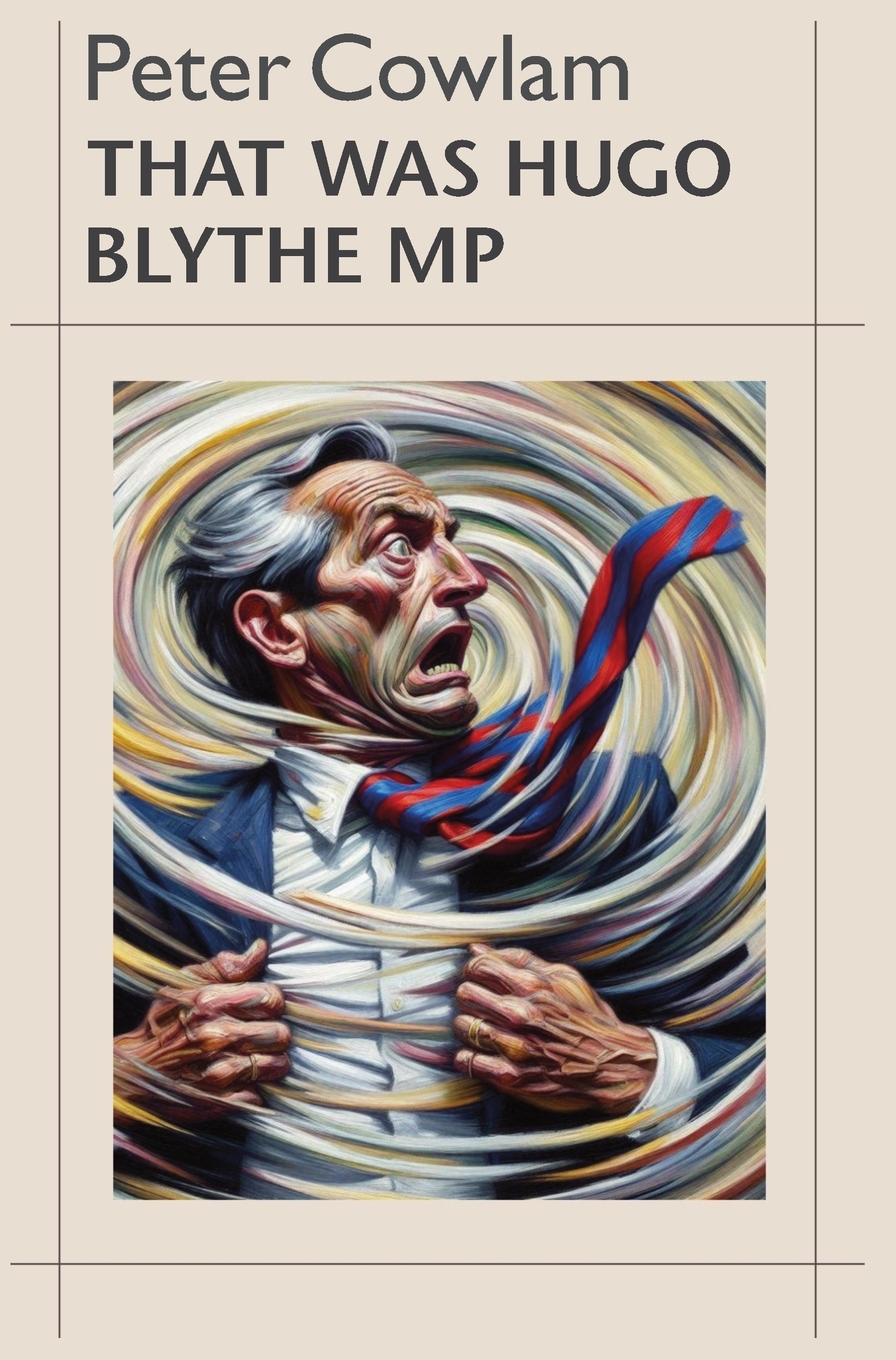
Wood That Was Hugo Blythe MP looks back to the early 2000s. To what extent were you conscious when writing this book of the comparisons that will be made by readers between the Blairite, ‘Things Can Only Get Better’ mantra and today’s Labour administration?
Cowlam First drafts of the book were actually written during the Blair administration, so I wasn’t thinking ahead to any form of posterity for it. In fact I was hopeful of finding a publisher during that era. All I managed was an agent, who was in loose partnership with a publicity firm, who on reading only a synopsis (and not the novel itself) opted to float it as espionage. That chosen genre was a non-starter, given that the novel does not involve any group of people determined to bring down the government (democratic governments generally do that job for themselves). The espionage trope often requires that the perpetrators operate from within, while my central character, the novel’s narrator – Alaric Casteele – is never more than a sceptic within, not necessarily an enemy, and a player with no fixed agenda. I had written, about a decade before, a precursor and what I now regard as the sister novel to Hugo Blythe, with the draft title Electric Letters Z. Its narrator, Alistair Wye, occupied the same position as Casteele in Hugo Blythe, as employee – though not of the Party. In his case Wye acted as amanuensis to a celebrity novelist of the 1990s, touted by his publisher and a cabal of obedient critics as ‘the best of his generation’. When publishers attribute that epithet to one of their own one might assume they have scoured an entire generation of writers in determining just who is the best. Most of us know this to be absurd, that in terms of the ‘best’ in anything in public life reputations are more likely to be constructed than earned. Realistically, personal intrigues are the sine qua non where careers are at stake, a social phenomenon that has given me the same theme – the same human motives – focused on in both That Was Hugo Blythe MP and Electric Letters Z.
Wood You’ve chosen the diary form for the book, written as the professional journal of government researcher Alaric Casteele. Was there any reason for that choice, or did it select itself?
Cowlam It was natural for the novel Electric Letters Z when writing about the daily, domestic life – rather than public life – of a celebrity novelist, to mould it as the professional insights of the writer’s amanuensis. A daily journal of events seemed apt, so Alistair Wye was my narrator of choice. Alaric Casteele followed my whims and acted likewise.
Wood Satire is making a raging comeback these days, though at present most of it remains on the fringes of literary and popular culture. Do you see it growing further as the political chaos we’re experiencing continues to fester?
Cowlam Events in America are a cornucopia for all satirists everywhere. What goes on there eventually spreads itself here.
Wood You’ve authored an extensive corpus of prose across various genres. What’s next for Peter Cowlam – another novel? More satire?
Cowlam I have in draft a sequel to Dracula, and a climate-change novel. The latter centres on a new kind of city state under construction somewhere in the northern hemisphere, though progress is hampered by climate-change sceptics and an in-coming administration that regards the science on that subject as bad science. Again I have chosen a central narrator, who is not a sceptic, though I won’t say at this stage how it ends for him.
.
Peter Cowlam is a poet and novelist. As a novelist, he has won the Quagga Prize for Literary Fiction twice, most recently in 2018 for his novel New King Palmers, which is at the intersection of old, crumbling empires and new, digital agglomerates. The Quagga Prize is awarded for independently published works of fiction. Other work has appeared in The Battersea Review, The San Francisco Review of Books, The Blue Nib, The Galway Review, Easy Street, Literary Matters, Eunoia Review, Valparaiso Fiction Review, The Four Quarters Magazine, The Liberal, and others.
J. W. Wood is the author of five books of poems and a novel, all published in the UK. His first collection of short fiction is forthcoming later this year with AN Editions. His work has appeared in The Poetry Review, London Magazine, TLS, etc. and has been shortlisted or nominated for several awards, including the T. S. Eliot Prize for Poetry and the Bridport Prize. A dual citizen of the UK and Canada, he is the recipient of awards from the Canada Council for the Arts and the British Columbia Arts Council. You can find out more at his website.
.
Discover more from Ars Notoria
Subscribe to get the latest posts sent to your email.