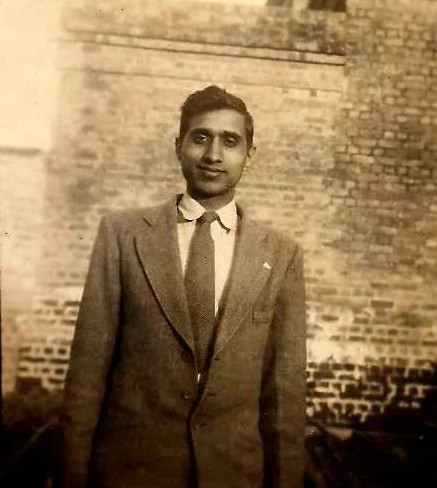
Gyan Kapil: ‘Dad’s genius was knowing instinctively where to save time without losing flavour.‘, photo Arun Kapil
Fast or slow, sacred or street, flavour keeps its own clock
by ARUN KAPIL
Time is the quietest ingredient in the kitchen. It doesn’t shout like chilli, doesn’t perfume the room like saffron. It sits there, invisible, stretching or snapping depending on how we treat it. You taste it in the slow ache of a dum biryani, rice grains swollen with patience. You feel it in the slap of a two-minute omelette on a Delhi roadside, eaten before the pan even cools. Both are cooking with time. Both are meals with a clock stitched into their skin.
Our world, of course, is obsessed with shortcuts. Express masalas. Ready-to-eat biryani pastes. The microwave promising “three minutes.” But even the fastest food drags threads of time along with it. Those chickpeas in the can? Soaking in a farmer’s field months ago, sun-fat and green. That sachet of garam masala? Ground last week, whispering of a harvest a few months back. Cooking with time isn’t optional. It’s the ground we stand on, the breath inside the bite.

I grew up in kitchens where time was both sacred and casual at once. My father’s chana masala was the family clock. He’d boast he could “have it ready in minutes,” the bubbling pot ticking louder than the wall clock above his head. Practical, unfussy, always with an eye on hunger, he treated time like a flexible muscle: stretched when needed, snapped when the day demanded speed. And my cousin in north India, queen of pakoras, could turn a rainy afternoon into carnival in under ten minutes, batter whipped vegetables, oil roaring, chillies slit and dunked. Sacred slow. Sacred fast. No hierarchy, just instinct. Indian food teaches if you listen: tempo is flavour. Not everything deserves a long wait, but nothing tastes of rush alone.
And here’s the punk truth: taking time, or refusing it, is rebellion. Street cooks bend time to feed a crowd in minutes, wrists keeping beat with a hundred mouths. Wedding cooks stretch it, layering spices overnight, meat softening in yoghurt for hours, refusing to be hurried. Both defy expectation, both play with tempo like musicians. One bangs a drum solo, the other holds a bass note until it rumbles through your bones.
We like to pretend time is linear: fast is modern, slow is old. Rubbish. Fast food has been with us for centuries: hot jalebis dropped into oil, sugar-soaked and eaten in seconds. And slow food isn’t always nostalgic. Sometimes it’s radical, like fermenting millet for three days when everyone else is grabbing white bread. Time in cooking is cyclical, instinctive, mischievous. Masale bolte hain (the spices speak), yes, but time speaks too – you just have to listen.
Dad’s Speed Ethos

Dad didn’t cook for theatre. He cooked for the table. His measure of success wasn’t complexity or duration but satisfaction: could he have his chana masala, a pot of rice and a simple sabzi curry ready before you even had time to complain? That was his flex. Speed wasn’t a cheat it was care translated into urgency.
He’d been taught three dishes by his sisters before leaving India in the early sixties – insurance against hunger in a new country. In England, those lessons stuck. Rice was his anchor. Papads crisped on the tawa or, if speed was essential, slipped into the microwave. He stripped recipes to their bones, kept the masalas, shaved off everything ornamental. His genius: knowing instinctively where to save time without losing flavour.
Watching him taught me the difference between speed and hurry. Speed is precise, generous. Hurry is panic, flavour sacrificed, the clock winning over the cook. And in his speed there was devotion. Feeding hungry mouths quickly was its own form of prasad, love without speeches. His chana – efficient, nourishing, spiced just right – was a sermon in instinct.
Cousin’s Pakoras / Street Speed
If Dad was the clockmaker of our kitchen, my cousin is the cuckoo. She could turn an ordinary afternoon into a riot of pakoras with just a bowl, a spoon and oil roaring like monsoon thunder. Batter whipped till it hummed, onion, potato, coriander leaf and turmeric dropped in without ceremony. Ten minutes later the house smelled alive – coriander, chilli, cumin fizzing through hot air, neighbours drawn to the doorstep.

That was speed as theatre. Her pakoras didn’t pretend to be efficient, they were a flex, a salt sprinkled, catsup-dipped joyride. Each one eaten so hot it scorched the roof of your mouth, every bite proof food isn’t meant to wait.
Step outside and the same rhythm belongs to the streets. India has always been a fast food country: bhurji scrambled to order, chaat clattered together in seconds, vada pavs flying from hot pans into newspaper wrapping. The genius isn’t just the recipes, it’s the tempo, the way cooks sync with hunger in real time. No ticket machine, no timer; the wrist and the ladle keep perfect beat.
And it isn’t only Indian. At Glastonbury in ’86, sodden, half-lost, I stumbled into a Mexican taco stall. Corn, beans, chilli, lime – fast food as revival, heat and acid snapping me back. The rain thrashed down, my clothes clung and suddenly I understood: fast food at its best is salvation.
Every culture has this pulse. A bowl of ramen slammed on a counter in Tokyo, gyros carved in Athens, a New York slice folded and devoured on a pavement. Not inferior meals, but the beat of a city, proof speed can still hold soul if the cook trusts instinct.
Prasad & Sacred Slow

If pakoras are the quick-fire beats, prasad is the temple gong. Long, slow, resonant. Visits to cousins in the south of England became ritual. My Taiji would arrive, sari rustling, presence filling the house like incense. She carried not just spice tins but ceremony. Threads tied, chants led, air coaxed into sanctity. My cousin at her side, chopping, rolling, stirring – devotion turned into rhythm.
The feasts were always vegetarian, always abundant, always patient. Curries growing richer as the afternoon light shifted. Parathas hand-rolled, approval measured in roundness. Pickles sharp enough to wake the tongue. Rice fragrant as breath. Always sweets: suji halwa glowing, gulab jamans dripping syrup, burfi square and shining, first offered to the deity, then to us.
This was time as devotion. Nothing rushed, nothing casual. Every step an offering, every pause charged with meaning. Prasad taught me time in cooking can be sacred performance. But also that slow doesn’t mean stiff. A feast can hold hours of devotion and still leave room for a shortcut or tweak. The gods understand hunger.
Family poojas, where prasad is devotion in miniature, intimate. Weddings on the other hand are devotion at scale. Whole communities bound by the same kitchen clock. Music outside – dhol, DJ, brass – but inside the rhythm is ladles, knives, grinding stone.

One of my first catering jobs was just this: a North Indian wedding in Dublin, 250 mouths to feed, the kind of kitchen where you don’t just cook, you endure. Galawati kebabs, soft as breath, with fiery coriander–chilli sauce. Badaam Pasanda – lamb legs bathed in saffron-cardamom yoghurt, roasted until surrender. Pilau fragrant with spice, chutneys sharp with vinegar. Hours of marination, slow frying, rice steaming in giant pans. And then, in a blur, gone. Plates cleared, bellies filled, music rising. Days of labour, consumed in minutes, remembered for years.
An Irish summer, my cailín deas Olive by my side, our own marquee wedding. Different tempo. A menu we wrote together: chicken and mushroom puff pies, new potatoes, buttered garden carrots and green salad, followed by blackcurrant summer pudding and cream. Simple, seasonal, everything made from scratch. A feast of scale, but also intimacy. Time measured in berries picked, pastry folded, puddings set in the fridge. Traditional recipes cooked with instinct, love the constant ingredient.

That’s the truth of weddings: they bend time to fit their shape. Sometimes stretching across generations, sometimes snapping into something humble and fast. Collective time is elastic. It can carry 250 guests, or just two newlyweds. Either way, food marks the hour, seals the vow.
Fermentation on the other hand, is time defiance in a jar. Quiet punk. Jars lined up like soldiers who refuse to march. Pickles, syrups, ferments all saying: we will not be rushed. In India, every kitchen has its pickle season. Green mangoes sliced, salted, left in the sun until sharp edges collapse into sour fire. Lime pickles that sting the tongue and last for years, each spoonful carrying the memory of the summer it was born. Foods that laugh at expiry dates, holding flavour hostage until time releases it.
Once, in Gurgaon, my Taiji opened a jar of mango pickle she had kept for sixteen years. The flesh darkened, the oil turned deep with spice. Served sparingly, with ceremony, each bite treasured like jewellery. More than food: memory preserved, patience crystallised, history offered on a teaspoon.
Across the world, the story repeats. Kimchi buried underground, sauerkraut tangling cabbage, misos and soy sauces that take months, years, decades. Time isn’t decoration here, it’s the main ingredient.
And in our impatient age, this slowness feels radical. To wait weeks for a jar to ferment when you could buy factory funk in seconds. That’s resistance. To respect bacteria as co-chefs, to listen to their rhythms instead of your own – that’s humility. Fermentation proves cooking with time doesn’t just preserve food. It preserves us. Every jar is rebellion against forgetting. It says: this season mattered. And when you open it months later, the taste is layered with memory, with stubborn patience…
Monaco. A yachting festival just last week, a myriad billionaires’ boats moored like floating fortresses and me, a Masaalchi guest among provisioners and boat chefs to the gilded. Three voices: Andrea Marzocchi preaching zero-waste bravado; myself, carrying rice and spice from farm to hand; and the Venerable Jeongkwan, Korean monk whose food is as much philosophy as it is cuisine.
We stayed three days in a chateau together just outside the city. Jeongkwan revealed what cooking with time truly means when you step outside clocks altogether. Tofu, soy sauces, syrups, ferments laid down for years until nature decides they’re ready. Not recipes, but lifetimes in jars. I tasted a rice syrup she’d created – sweet, malty, ancient and new all at once. A genuine revelation bottled.

Her sense of time was ethereal, but her smile was earthly kind. In that smile I saw my father. She carried the same calm warmth, as if saying: you’re on the right path. Food as connection, as lineage, as a measure of life.
Whilst the Venerable Jeongkwan held one clock, Eli and Graziano, Maison Del Gusto owners and our hosts extraordinaire, spun another. Italians provisioning to the billionaires’ yachts, they live by rhythm and poetic chaos. Debate, disagreement, disbelief to compromise, resolution and coffee. Their timing isn’t about serenity; more joyous punk-opera. Yet the result the same: uncompromising excellence arriving where it’s needed, when needed with warmth and professional assurance.
That is the truth of cooking with time. It isn’t one rhythm. It is many. Sometimes ethereal, patient ferments, jars laid down for years. Sometimes punk, messy, full of verve and swagger, but still in perfect sync. Both honour the ingredient, the eater and the bond between them.
I occasionally think back to when I first began honing my skills, to the Ballymaloe cookery course I attended and earned my first cooking accreditations. One morning whilst in ‘practical class’, a student asked how we’d know when the dish in the oven was done. No instructions, no timer. “When it’s cooked”, I said. Not trying to be clever or facetious, just honest. She looked puzzled, but walking by at the same time, our tutor of the day just nodded, “Yes. Exactly that…” Everything has its time.

Cooking teaches you. Time to learn. Time to fail. Time to know when something is complete not because a clock says so, but because you know. Your senses tell you, your gut beckons you. That’s what makes flavour: not a stopwatch but a study in joy, in taste, in endless small improvements and the constant pursuit of balanced perfection.
That’s why I cook. The pursuit. How I cook? By instinct, by culture, with spice, with joy. I find time isn’t separate from flavour – it is flavour. It’s rhythm, rebellion, patience and hunger. It is the everyday act of serving and being served, of feeding and being fed.
Masale bolte hain. And when they do, they don’t whisper. They roar – in minutes, in years and in every glorious bite we take.
Punk Pear Pickle, Pumpkin Ribbons & Fermented Funk
Ten minutes, one jar, autumn on the edge of rebellion.

Take a hunk of pumpkin or squash – butternut, crown prince, whatever’s glowing at the market – and shave it thin into ribbons with a peeler. The thinner the better: you want ribbons that bend and curl, that’ll drink in flavour like scandal. Then take a firm autumn pear, slice it, core it, cut it lengthwise into elegant wedges – long, slim, pale crescents.
Toss the pumpkin and pear together in a bowl with a good pinch of sea salt, whisper thin strips of pared lemon zest, a squeeze of lemon juice tempered with a splash of fino sherry vinegar and just enough sauerkraut brine (or kimchi juice if you’re bolder) to make them twitch. That’s your fermented funk – a ten-minute ticket to a depth most jars wait months for. Now drizzle in the black-gold: a spoon of date molasses, dark, sticky, autumn-sweet. Crack in black pepper, scatter a pinch of nigella, five cloves and crush a dried red chilli, then loosen it all with a thread of good olive oil. Toss till the ribbons and pears glisten, stained with shine and swagger.
Taste. Adjust. This is punk pickle, not packet pickle – you decide when it’s right. Maybe it needs more acid, maybe more salt, maybe just another sly spoon of the brine. Serve in a jar at the table, let people fork out what they dare. Or plate it high-end: a curl of pumpkin, a wedge of pear, a drizzle of molasses syrup around, a scatter of toasted hazelnuts on top. If you’re really feeling Michelin, crumble over a shard of blue cheese and watch the whole thing detonate in sweet-funk-salty glory.
Ten minutes. No centuries of waiting, no grandma’s storeroom. Just autumn in a jar: pumpkin earth, pear elegance, fermented edge, humble fruit swaggering like its centre stage.
Arun Kapil, Food Editor of Ars Notoria, and punk food poet, founded and owns a spice company, Green Saffron Spices. He works sustainably direct with partner farms mainly to the west and north of India and some in the south. He works directly from source. He owns total chain of custody, depleting links in the chain, bringing direct line of sight to fields of cultivation. Arun and his partner Olive began by selling one or two sachets a week of bespoke blends with accompanying recipes at a farmers market stall in Mahon Point, Cork. They now sell spices and seasonings to globally based blue chips, onward food processors and are just in the throes of re-launching their brand, based on Modern India meal solutions, sauces, spice blends, naan, condiments and basmati. They started the business boot-strapping from the bottom up, managed with a good deal of jugaard. He considers himself to be a masaalchi and at best a khansama supported by a strong network of Irish, Indian and British agri-experts and businessmen.
Discover more from Ars Notoria
Subscribe to get the latest posts sent to your email.


You must be logged in to post a comment.