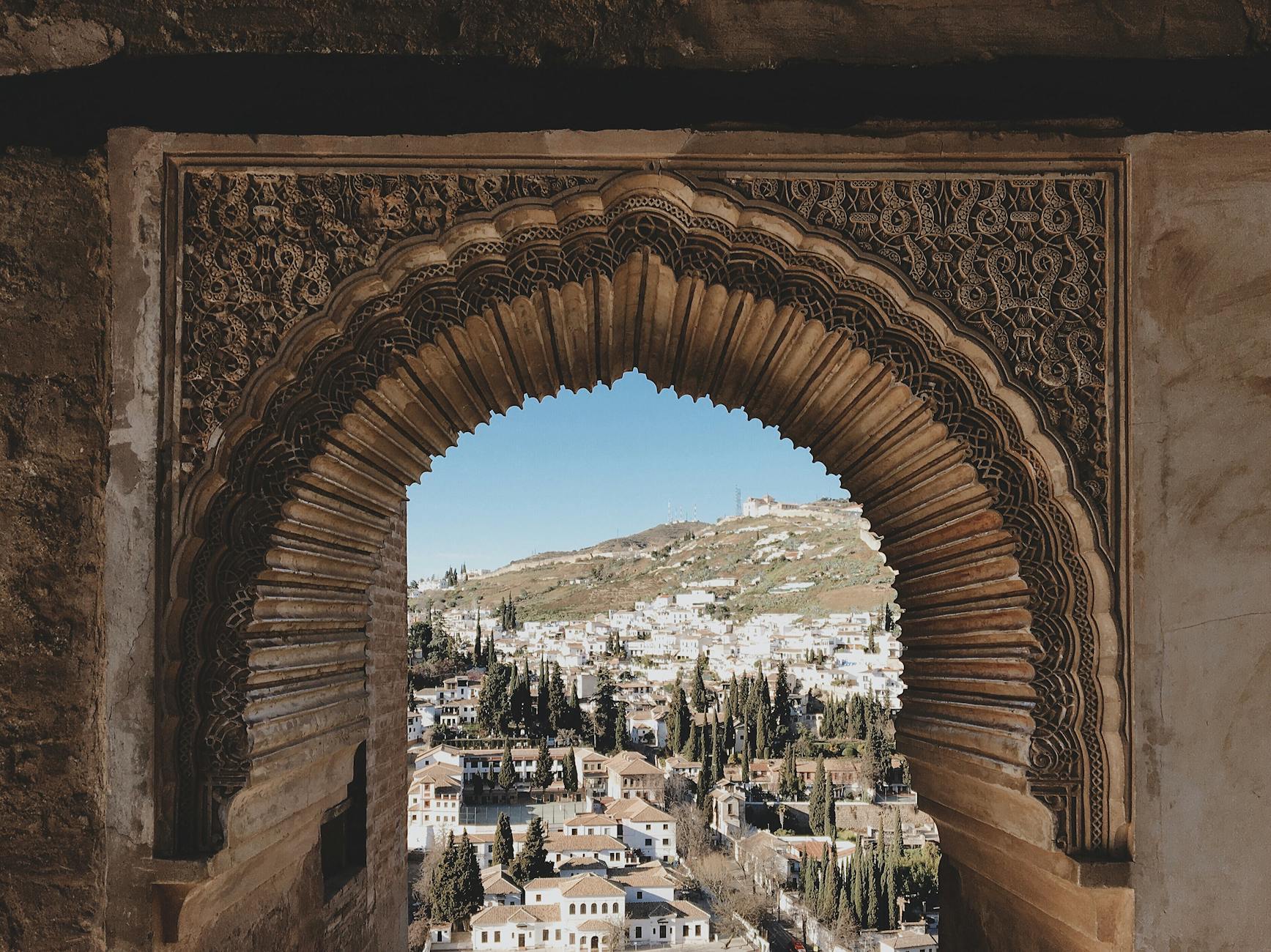
Chichen Itza, Photo by Edgar Rodrigo, Pexels
by Phil Hall
.
For most of the journey, I sat in a cramped seat on the long distance Estrella Blanca coach next to a secretary from Mexico City. It was a sweaty and close 36-hour drive. Occasionally, the bus stopped. We got off at Villahermosa to buy high roast instant coffee served in thick polystyrene cups.
It was two am when we reached Merida. Julie and I stepped off the bus and walked, slowly unfolding in the darkness. We were heading towards the cheap hotel. We could hear leaves rustling, but couldn’t see trees.
There was a taco stand on the way. Three wide-awake people inside. Yellow electric light.
That first night, they prepared our tacos Merida-style with a filling of cochinita pibil.
“Some salsa, please.”
They look at me. “It’s very hot.”
“I know.”
They pass me the bowl.
In the evening, the secretary from the bus phones me from her hotel room. I hadn’t told her where I was staying.
“Hola, ¿te acuerdas de mí?”
“Yes, I remember you.”
.
Cochinita Pibil

First, fatty pork is marinated in achiote, and the achiote is dissolved in sour orange juice. Achiote is a bright red ochre paste made from a type of seed native to the Yucatan called anato. The pork, covered in its red mixture, is baked slowly, wrapped in banana leaves. The wrap is placed in a clay pot in the oven, or in a pressure cooker. The cochinita is ready in about an hour and a half. When the pork is cool, practiced fingers shred the meat into its fibers, and the fibers soak up the juice and oil. Then the cochinita is spooned onto hot tortillas.
Basic Salsa, Yucatan Style
Habanero slices and chopped red onion rings soaking in ‘Naranja agria’—the same orange that grows on the trees that line the Merida avenues.
.
The following morning, we took a bus to Chichen Itza for the summer solstice. The journey was much shorter. We see the observatory, the Caracol. We wander around the site, admire the snake heads at the bottom of the flight of steps, climb to the top of the pyramid.
I stand there, at the top. Look down at the people below. A voice calls out over the loudhailer.
“It is time! Will everyone please come off the monument?”
I wait a minute. About fifty faces look up impatiently from the base of El Castillo. Are they from the USA? Are they Europeans? Also staring up at me, there is one brown face in the middle of the group of foreigners. A Mexican-American?
This is two decades before the Maya Long Count calendar cycle comes to its completion. I think: ‘These people are preparing for the end of the Earth and I am in their way’. I stare down at them. A few of them call up impatiently, waving. I am the last person at the top of the pyramid. I climb down quickly before the solstice begins.
A few thousand people are now gathered at the base. Julie and I meet up and decide to stand on the fringes so as to avoid the crush. Fifty ‘gueros’ start to circle the pyramid, setting up eddies in the larger crowd.
As the equinox approaches, the tall, glossy, steak-fed man I had noticed earlier on takes off his coat and climbs onto the pyramid, a UNESCO World Heritage Site. He is dressed like a Mayan with headress of long green feathers and he has bracelets around his ankles and wrists with bells on them. He performs a dance on a broad ledge at the base. Voices in English from the Americans and Europeans call out, chanting something in unison. The stamping, swaying, jingling man moans and hums. He makes a sound rather like the Sundance song of the Sioux people I once heard on a record in a New Age bookshop in Brighton.
A murmur of irritation spreads through the Yucatan crowd, and the loudspeaker makes another announcement:
“Will the tourists who are on and near the pyramid please show some respect for our culture and stop what they are doing right now.”
The Mayan does an extra little jig, then he climbs down. He comes off the monument to the sound of boos.
We watch. The sun, when it arrives at midday, casts the shadow of the steps onto the side of the pyramid in the figure of a serpent. The shadow grows until the body of the serpent joins the snake heads at the base.
Kinich Ahau has hushed the throng.
I watch carefully . . .
. . . and feel no uplift, no inspiration. All I see is stone, light, shade, and people.
The next day, Julie went on a side trip, and I decided to go on my own to the beach. I went to Progreso, a town not far from Merida. The coastal sky was overcast—dim and bright at the same time.
The beach was broad. I walked along it. The sea was rough so I decided not to swim. The sand was an oddly volcanic grey and heaped up in piles. There were a few battered fishing boats that had been hauled up out of the water and piles of rotting seaweed.
After an hour there, I decided to go back to Merida.

A week later, in Mexico City, in the library of the Cultural Institute, I looked up Progreso and found that it shared a beach with another town: Chicxulub. Chicxulub was only a kilometer away. Progreso, along with Chicxulub had been at the exact site of the K-T extinction. Progreso had been at the epicenter of the catastrophe that destroyed most of the creatures on earth 65 million years ago.
Discover more from Ars Notoria
Subscribe to get the latest posts sent to your email.