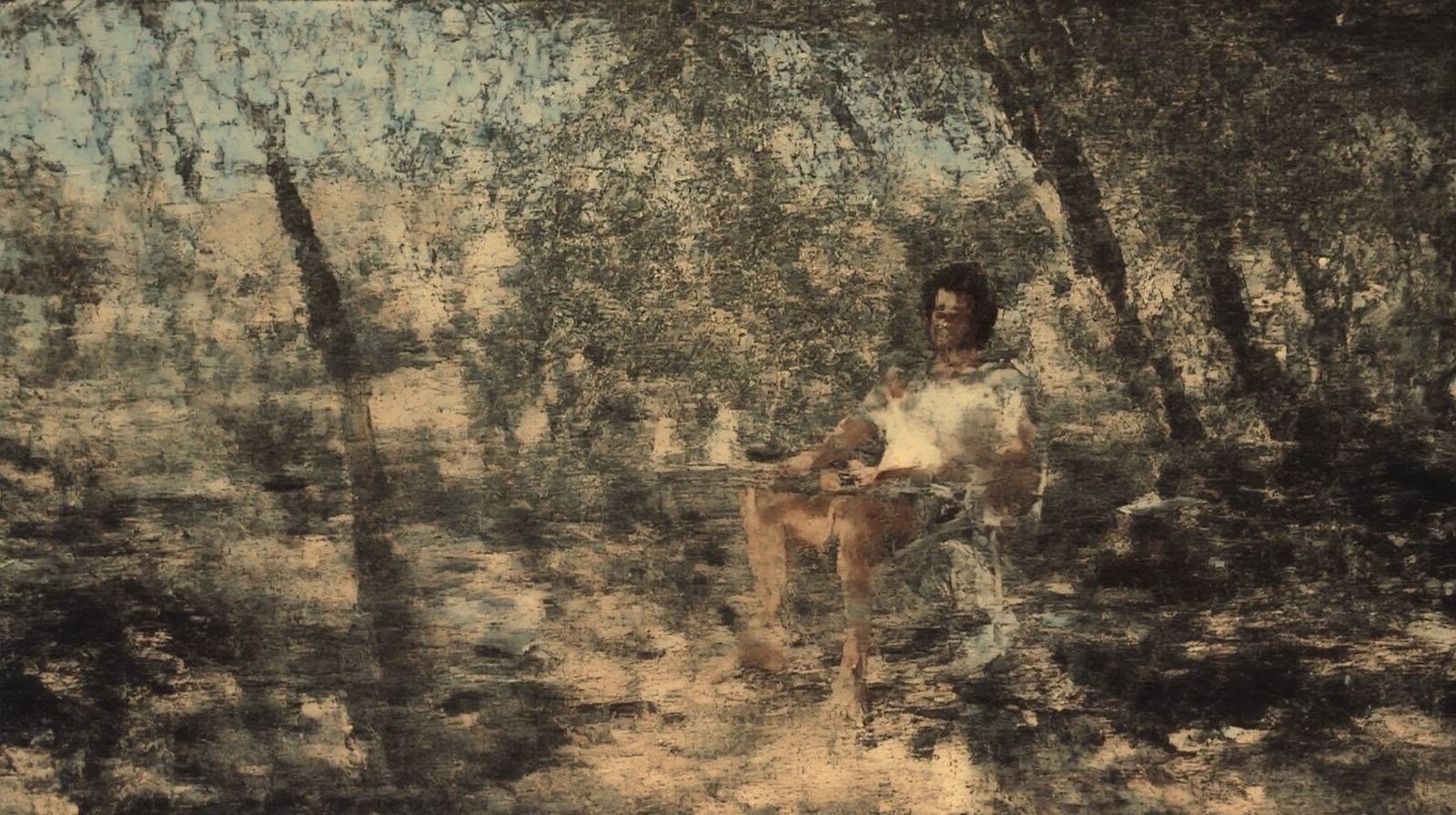
Trabzon 1976.
We must embrace complexity, and evolve to meet the challenges of our time
A person who understands that all people are members of his body is a sound person to guide them.
Paraphrased from the Tao Te Ching
by Martina Winter
The self emerges from stories. There is no Atman, no Platonic essence, no individual soul, not really. Daniel Dennett called the self the mere “centre of narrative gravity”. Jill Bolte Taylor had a stroke and explained that when her brain injury had affected the SELF generating module of her mind. She felt a blissful, boundaryless overlap with the entire surrounding world. People who take brain-peeling psychedelics often have visceral encounters with the unfiltered complexity and enormity of reality.
There is an architectured idea of the self-contained human. But the body itself is not a sealed container, it is more like a conduit; for air, water, food, and inheritance. Life and substance flow through our bodies in a shared cycle with all other living beings. The boundary of the self is a practical filter, not a rigid, existential separation from everything else.
The idea of the self as integer is the temporary, self-deluding lie cultivated at the human apex, in mid life when the human being has maximum agency and the illusion of independence. But you are not an astronaut!
An individual’s lifecycle maps onto the illusion of being an independent creature, but we arise from a state of visible, extreme dependency: the cosmos of our mother; the cosmos that nurtures and propitiates our existence. Many of us briefly forget our utter and extreme dependence on everyone and everything else during the apex of our journey through life. Let us call this the astronaut phase. Then, once again, in old age, we return to visible dependence as the wave dies back into the sustaining human, social and physical ground.

The idea of the self as integer is the temporary, self-deluding lie. Photograph Martina Winter
In fact, the integer of the self is a the product of multiple interconnected and interacting systems. Integers, on the whole, are fuzzy components generated out of complexity. In reality, the integer (that clean, discrete, countable unit of mathematics) is not a fundamental feature of our human experience, it is a composed simplification of the continuous, flowing, and fundamentally ambiguous nature of the real, divided into static, manageable chunks.
The real, in all its seemingly fuzzy continuity, must precede the crystalline ideal. The Procrustean fetish for whole numbers and simple geometric shapes, with time, gives way to the acceptance that Chaos Theory and fractal models better describe nature.
Reality itself is well beyond our current comprehension, even that of a modern renaissance man/woman. Now we require a new kind of human in order to be able to comprehend and embrace reality. This means we require an expanded educational system and human evolution in order to better get to grips with it.
What we perceive as chaos is simply an order we cannot understand. We need a language to describe that order that we do not yet command. There is deep, overlapping, syncopated sense to reality itself which, at the moment, we only seem able to sense through art. What existentialists and entropists dismiss as meaningless or messy is often actually a deeper more complex order.

The Integer of the self is a the product of systems. Photograph Martina Winter
The greatest obstacle to the direct perception of reality is the mirror of self-regard which brings us to a standstill, because the irrational vanity of holding on to treasured personal theories in the face of evidence to the contrary leads us up the garden path and into multiverses of nonsense. We project ourselves onto reality in a narcissistic celebration of our human achievements that wastes time and takes up the oxygen in the room. Vanity puts a break on increasing human understanding because new understanding comes at the expense of undermining what we think we already know.
Nietzsche was right to expostulate! We need a new kind of human to in order to be able to confront meaninglessness and create value. However, we have no need nowadays for confident Victorian heroes like Cecil Rhodes or Isambard Kingdom Brunel or James Watt. Conquering a country and building a bridge or a railway line and inventing a steam engine is not equivalent in difficulty to being able to cure cancer, manage climate change and establish social equity. The ability to solve the latter problems requires deeper questioning.
Ultimately, the human failure to tackle these intricate and serious modern problems is the fault of the Principle of Least Effort (PLE). This is the efficiency principle which governs human cognition and communication, and puts a thermostat on the accumulation of certain types of knowledge. In actual fact, the PLE goes far beyond its role in human cognition and communication. Every aspect of the material universe is governed by a related principle of efficiency: the Principle of Minimum Energy (PLE). This is what physicist Richard Feynman often discussed calling it the Principle of Least Action (PLA). So nature acts as if it is “lazy.” It wants to use as little energy and effort as possible.
The tendency then is for matter to simplify and energy to disperse. In reality the PLA is a cogwheel in the motor of entropy. But the engine of life might turn out to be anti-entropic to a surprising extent. The engine of life drives us forwards to evolve and face complex realities, and so overcome the immediate PLE. The anti-entropic driver is evolution; evolution understood here as the need to exert effort in order to learn to adapt, or to exert effort consciously as a result of the self imposed and self-generated need to learn. This human need is the imperative to model, simulate, and thrive, in increasingly complex environments.

Festivals of celebratory consensus redirect attention away from the increasingly complex flow of reality. Photograph Martina Winter
A vital corrective for delusion, and to help overcome lazy assumptions, is the act of intense observation; the methods developed by Thales, Aristotle and Leonardo da Vinci. They, along with many others all over the world, tried to understand all that they actually perceived, breaking away from traditional idealising forms derived from prior ways of thinking; breaking away from ways of thinking which usually result in the imposition of inaccurate abstractions.
But even with education, there is no substitute for the progress that comes with slow human evolution which is frustratingly slow and generational. We and our children and grandchildren and their children need to evolve. We need to decide to evolve and equip ourselves fully to engage with the real in all its variegations and complexity. The heroism that is required to do this is the heroism of openness and vulnerability that comes with the need for self correction. The bravery of diversity and inclusion and human growth can help us evolve in order to adapt. We need to adapt to a wider and wider world.
Everything that happens is welcome when it propitiates the transition of modern humans and society that results in the actual Novii Chelovek and in new forms of a saner and better society; even the negative things.
Let us call this Novii Chelovek The Kardashev Type I human. Such a human will be capable of dealing successfully with problems like climate change, ending war, and oppose to exploitation and injustice. All reality is a school. Everything that does not challenge us to expand our being and to grow and learn in the 2020s is a drag. Drag is the inertia of the old world, the comfortable small, confined environments.
Heidegger, with his concepts of heroism rooted in ‘authenticity’ and racial purity set us back. He was a recidivist, a philosopher dog returning to his philosophical vomit. The hero is not a recidivist, but an outgoing adventurer. The hero travels far. The purpose of travel and adventure is becoming. The smaller, the more restricted, the more ‘authentic’ the environment, the smaller the mind and the more limited the capacity for thought and imagination. The hero grows and has a transcendent arc.

Go back to the forests and you return to being a kind of human animal, perhaps a predator, a wolf. Photograph Martina Winter
Sometimes the problems we face are so complex that some people give up on their ability to ever understand them, and they resign themselves for reabsorption into nature, voting against humanity. Voting for humans to become compost. Climate change illustrates this failure of the misanthrope. Solve the problem of climate change and you become the new human. Go back to the forests and you abdicate your humanity.
The narrow overlap of human with reduced environments produces vulnerable fragile, half-baked ecosystems. Rich emergence requires a large richly endowed environments. To tackle complexity we need people who are emotionally, intellectually, materially capable of dealing with the problems that arise, without being suffocating by their own insular self justifying systems of beliefs and circumscribed worlds.
Biologically, socially and culturally, the foundation of human robustness is the same; success comes from sharing, with mixing and blending! The mixing of peoples and cultures and of all living things produces culturally, socially, psychologically robust humans capable of dealing with problems that affect us all. Purity, whether racial or cultural, is a toxic absurdity, and the road to fragility and destruction.
Reliance on technology harms humans seriously. It is a form of castration. Technology leads humans by the nose, debilitating them. Combatting this reliance on technology is a precondition for the emergence of organic human evolutionary robustness and creativity.

Complete environmental robustness requires the incorporation of all living things. Photograph Marina Winter
In real time. Nikola Tesla, for example, could simulate an entire machine in his mind, running and testing it before a single part was cast. A human being should also be taught to be able to do perform similar feats if that human is not simply to remain a clever monkey with a phone. In order to be able to solve real world problems a robust human has to be more capable of modelling complex reality and acting on it without relying on a technology that is more a technology of mass control rather than mass enlightenment.
Let us also call this new expanded idea of the human being leviathan because such an expanded and evolved human will have more gravitas. A Kardashev scale of the human leviathan would say that a type I Kardashev human adapts to a whole planet, and its biosphere. We are far from this.
If type I is the planetary leviathan, the biosphere made more self conscious, then Type II is a stellar leviathan, integrating all life systems around a star or set of stars. Type III, then would be the galactic leviathan, the integration of the life systems of a galaxy. Type IV and beyond is the Cosmic Leviathan, or God. Each level of being emerges in a larger environment.

The real excitement is in the becoming, and the road is almost infinite. Photograph Martina Winter
The human leviathan need not look different from a modern human, or be much bigger. The human leviathan carries connections with the biosphere within itself. It is gene-stuffed, cognisant, syncopated and capable of taking on complex reality. All humans (their descendants) should eventually become leviathans, interconnected in an organic, planetary, overlapping network.
Leviathan perceives time differently; experiencing the forward arrow as we do, but also experiencing time “sideways”, as an extended present. Increasingly, with interconnection, the aperture of the present widens out. The syncopated rhythm of the entire system can be felt and now decisions can be made together that benefit the whole organic system.
Adventure is the road to Leviathan. Every encounter is on the road. The real excitement is in the becoming and the road is almost infinite. The excitement, beyond all ennui, comes with movement, exploration, walking and in confronting and overcoming complex problems like war, space travel, prejudice, climate change, cancer and the equal distribution of wealth. People need to confront this head on, not crawl back into some fetid national, or tribal, lair.
All that propitiates this transition to the Kardashev I human leviathan should be embraced. Everything that limits human exposure to reality is literally a drag: the inertia of the small and familiar and the intellectual paralysis in front of the mirror. As Arthur C. Clarke said, humanity is now at childhood’s end. It’s time to grow up.
References
Aristotle (1984) The Complete Works of Aristotle: The Revised Oxford Translation. Edited by J. Barnes. Princeton, NJ: Princeton University Press.
Clarke, A.C. (1953) Childhood’s End. New York, NY: Ballantine Books.
da Vinci, L. (2008) Notebooks. Edited by I.A. Richter. Oxford: Oxford University Press.
Dennett, D.C. (1991) Consciousness Explained. Boston, MA: Little, Brown and Company.
Heidegger, M. (1927) Being and Time. Translated by J. Macquarrie and E. Robinson. Oxford: Blackwell.
Kardashev, N. (1964) ‘Transmission of Information by Extraterrestrial Civilizations’, Soviet Astronomy, 8, pp. 217–221.
Lao Tzu (1944) The Way of Life According to Laotzu. Translated by W. Bynner. New York, NY: John Day Company.
Nietzsche, F. (1883–1885) Thus Spoke Zarathustra: A Book for All and None. Translated by R.J. Hollingdale. London: Penguin Classics.
Taylor, J.B. (2008) My Stroke of Insight: A Brain Scientist’s Personal Journey. New York, NY: Viking Penguin.
Tesla, N. (1919) ‘My Inventions’, Electrical Experimenter. Serialised February–October 1919. Available in collected form as: Tesla, N. (1982) My Inventions: The Autobiography of Nikola Tesla. Williston, VT: Hart Brothers.
Thales (n.d.) in Barnes, J. (ed.) (1987) Early Greek Philosophy. Translated by J. Barnes. London: Penguin Classics.
Martina Winter is a ghostwriter, and amateur historian raised in Abingdon-on-Thames. She lives in a pebbledash, mock-Tudor cottage in the countryside near Shoreham in Kent, somewhere near the chalk hills and ancient trackways of Samuel Palmer’s “Valley of Vision”. A member of both the Surrey Archaeological Society and the Ramblers’ Association, she writes on political culture, technology, landscape, and deep history. When not walking or exploring the Downs or the Mediterranean, she lives in Kent with her dog and cats.
Discover more from Ars Notoria
Subscribe to get the latest posts sent to your email.


You must be logged in to post a comment.