
The Scots Guardsman Photograph IDMacpherson1964
Scottish independence is an opportunistic distraction, not a solution rooted in ethnic or historical victimhood
by Richard Steinhardt
Around 430 million years ago, the piece of land that would be Scotland slammed into the land that would be England, stitching the British main island together. The join is called the Lapetus Suture Zone and runs along the Scottish English border. This was the real union between Scotland and England. The mixing of the peoples of the archipelago is also irrevocable.
The Union’s origins are often misremembered. It was a Scottish king, James VI, who first united the crowns in 1603 when he inherited the English throne. Scotland joined to England, not the other way round. James was no gift to women. He was a vicious, superstitious witch-burner who wrote Daemonologie, and personally oversaw the torture of the accused. His state was an instrument of religious terror. James VI initiated the British imperial project, and the slave trade. The first recorded Africans arrived in the English colony of Virginia in late August 1619. Both nations’ elites began to be enriched at the expense of the world. The Scottish Parliament consummated the union of Scotland and England in 1707. In the froth and rot of the post-Reformation, after a number of attempts, the Scottish Parliament was finally absorbed by the English Parliament in 1707.

James IV, copy by Daniël Mijtens of a lost contemporary portrait. National gallery of Scotland, Wikimedia Commons
Ordinary Scots against the Act of Union, were not enfranchised, but the Scottish landowners, bankers and merchants, supported it and the Duke of Queensberry pushed the act through. When Queensberry came to London to announce his success to the king, the duke was greeted by cheering crowds of gentry along the way.
When the Jacobites revolted, the same landed interest that had pushed the Union stepped in with British regulars, loyalist Scots, and foreign auxiliaries, and the Duke of Cumberland crushed the opponents of union at the Battle of Culloden on 16th April 1746.
Increasingly, what united Scotland and England and Wales was the British empire. At the dawn of empire, the ruling classes of both England and Scotland worked together to build it. Scottish merchants trafficked human beings and used enslaved labour on their plantations. In Jamaica, 30% of plantation owners were Scots. And while it only became illegal to own a slave in Scotland in 1778, following the Knight v Wedderburn decision, the trade itself continued under the Union flag until 1807. Wealthy families continued to keep young black children as servants long after.

Slaves Planting the sugar cane, British West Indies, 1823
After Culloden, the Highland Clearances saw tens of thousands driven from their homes to make way for sheep, more profitable than tenants. Some of the displaced poor Scots were packed onto ships for the colonies; others died in the straths. Once sheep farming declined in profitability, huge swathes of the Highlands were converted into sporting estates for deer stalking and driven grouse shooting of the aristocracy that still owns these tracts of land. That ran from the mid-19th century well into the 20th, and what should be the common property of all the people is managed for the recreation of wealthy estate owners and paying guests.
As the empire expanded, the Scots intermingling with the rest of the inhabitants of the islands, carved out their niche. In India especially, they were the soldiers, doctors, administrators, educators, and engineers. The historian Tom Devine’s assessment stands: “The English ruled the empire, but the Scots ran it.” Glasgow swelled into an industrial powerhouse, and Edinburgh became a centre of learning that provided some of the intellectual justification for British imperialism and capitalism.
Adam Smith’s The Wealth of Nations gave ideological justification for the opium war, for the specialisms the British introduced into its colonies: Jamaica for sugar, South Africa for gold, Sri Lanka for tea, Malaysia for rubber and so on. Clydeside built the empire’s ships. Scotland was not a victim of British colonialism, it was fully integrated into the whole project, playing its role just as Newcastle and Durham did in the North East, or Liverpool and Manchester did in the North West, or Bristol did in the South West.
A generation after the formal end of British Empire, a depression and two world wars, different forces held the Union indissoluble; not complicity in the colonial project. Instead the trade unions and the Labour Party became the new glue of the United Kingdom, promising a more equal, wealth-sharing society. The creation of the welfare state after the Second World War rescued most Scots from dire poverty.

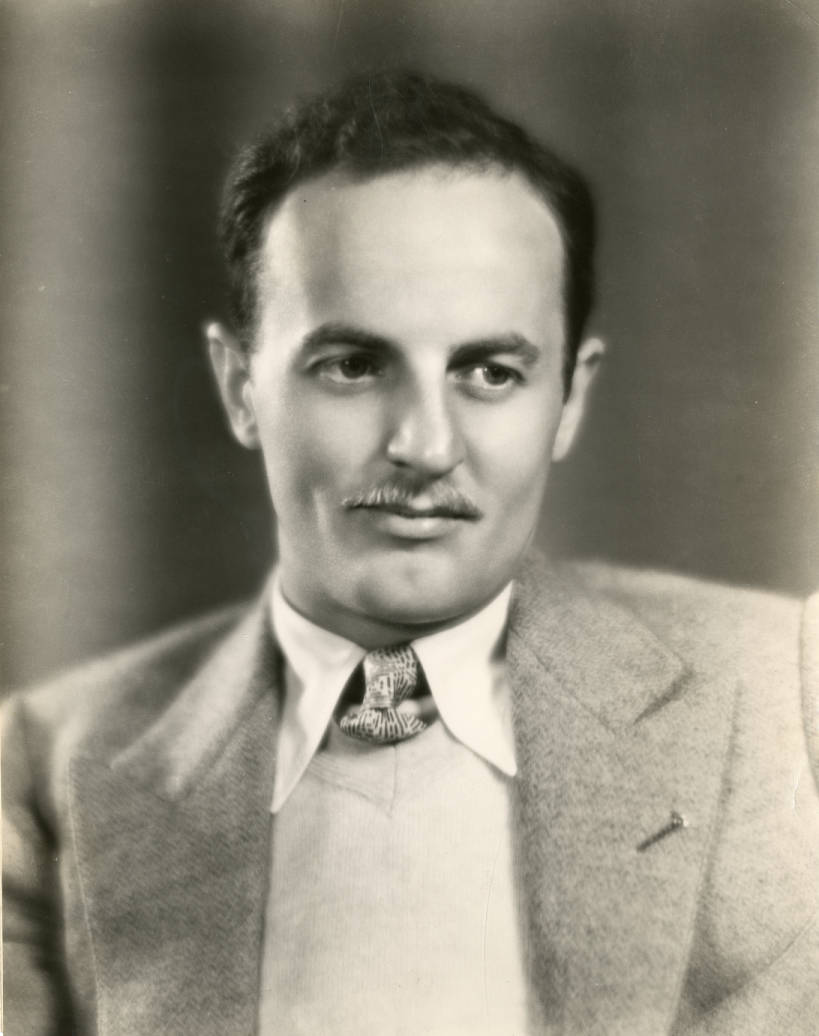
James Ramsey McDonald in 1923, the first Labour Prime Minister of the United Kingdom. Photograph Walter Stoneman, Library of Congress Public Domain
The question of independence came to the fore with the Thatcherite assault of the 1980s, destroying much of Scotland’s industrial capacity. The oil and gas that powered British homes and industry from the 70s came from the North Sea, as well as fields located northeast and northwest of Shetland. Regardless, BP was progressively privatised by Margaret Thatcher between 1979 and 1987, with major shareholdings and finally the controlling interest moving into American hands. The proceeds that the nationalists considered theirs, were being wasted on financing mass unemployment and neoliberal policies. During the Tory years, inequality grew and grew.
The 1999 devolution settlement and the new Scottish Parliament offered some control and a measure of regional sovereignty that acted as protection from rampant neo-liberalism. In Scotland higher education is free. But the overall trend towards inequality across the whole of Britain was never reversed. The nationalists argued that full fiscal and political independence would allow Scotland to become more like one of the social democratic Scandinavian countries. They saw their reflection in Norway. And throughout it all, wars of choice in Afghanistan, Iraq, and Libya were carried out in the name of all British people. Perhaps Scotland could wash its hands of some degree of complicity in these aggressions. The majority of the people of Scotland were in favour of remaining in the European Union.
The 2014 independence referendum was the moment the Nationalists seized their opportunity. Despite an angry surge in support, the majority of Scots, acknowledging the deep reactionary recidivism of ethno-nationalism and seeing the opportunism of the Scottish Nationalists, voted against independence for Scotland.

Yes campaign. Photograph Mary Hutchison Wikimedia Commons
The UK remains one of the most unequal countries in Europe, and the temptation to set up shop as a completely independent nation and not simply a proudly devolved country that is part of the UK, arises again.
If Andy Burnham could genuinely reinvigorate the welfare state, reverse decades of managed decline, and restore the post-war compact, the temptation to resurrect that desperate measure of estrangement and divorce, another referendum on independence, would weaken. If Burnham could stop squandering British money and soft power on US global corporate capitalism’s wars in Ukraine, Palestine, Iran and (potentially) Taiwan, and rebuild the social fabric, the pull of solidarity in adversity against a bestial ruling class would become powerful. Secession will not solve the problem of capitalism and exploitation. Neither will taking away the rights of migrants into Scotland or the rest of the UK. If Burnham were an old style Labour politician he could end the travesty of the parasitical public-private partnerships that leech off the exchequer and the public and provide such expensive and tragically inadequate public services. The PFI hospitals creaking at the seams, the outsourced probation services, the shareholder-dividend water companies, the energy cartels profiteering from misery, sewage in our waters, public transportation that costs the earth and functions far worse than it does on the continent.
But he won’t. Burnham is a Blairite with a veneer. He is in favour of spending all the billions on US wars. In favour of military Keynesianism. He is in favour of public-private partnerships. The social democratic verbiage is a mask. He’s not even a Brownite. Burnham has no intention of relinquishing the neocon politics that have done the UK such real damage to the benefit mainly of its financial elite.

Burnham has no intention of relinquishing the neocon politics that have done the UK such real damage to the benefit mainly of its financial elite. Photograph The wub Wikimedia Commons
It was Thatcherism that destroyed Scotland’s industrial capacity and the industrial capacity of the North East and North West. Of the whole of the British isles. It was not the ‘English’ what did it.
It was monetarist Thatcherism acting for a piratical vulturine elite that took the oil wealth, the same privatisation of BP that moved controlling shares into US corporate hands, wasting the proceeds on financing mass unemployment in order to break working class power. It was Thatcherism lite under Blair that turned housing, water, energy, and care into vehicles for shareholder dividends. Blairism consolidated Thatcherite capitalism, repackaged it, and sold it back with a grinning face. Burnham is the heir to that macabre Blairite tradition. He won’t make ordinary Scottish people happy.
The food banks on one hand and the drone and missile factories on the other, all of it flows from a politics dominated by corporate power and the City of London that (masks off) treats social good as an obstacle to profit. Burnham will not break from this. He will manage UK PLC with a smile and a northern accent, and the social fractures will widen.
The fracturing of the Union is a sideshow and the main chance for ethnic nationalists everywhere on the make, and the racists and flag-shaggers.
A state that, increasingly, cannot house, feed, or provide healthcare becomes the enemy of its people and risks fragmenting. The Scottish nationalists are opportunists and chancers. They will attach themselves to the oncoming crisis. Their project is a hiving off of spoils, a grift. The people they claim to represent will be the ones left while the new Scottish elite divides the spoils among itself.
The Union was born in the gold and blood of 1707, secured at Culloden in 1746. The reality is, scratch someone English or Welsh or Irish or Cornish and you might easily find Scottish ancestry. Scratch a Scot and you might easily find English, Irish, Welsh and Cornish ancestry. We are both ethnically and socially one on these islands, and an entirely modern multicultural country. But the oncoming and deepening crisis in UK society means once more the nationalist chancers and opportunists are knocking at the door offering their stop gap solutions and eyeing up the oil and gas.
References
Devine, T. M. Scotland’s Empire, 1600–1815. Penguin, 2004.
Hobsbawm, Eric. The Age of Capital, 1848–1875. Weidenfeld & Nicolson, 1975.
Hobsbawm, Eric J. Industry and Empire: From 1750 to the Present Day. Revised ed., The New Press, 1999.
Hobsbawm, Eric. The Age of Empire, 1875–1914. Weidenfeld & Nicolson, 1987.
James I. Daemonologie. 1597.
Smith, Adam. An Inquiry into the Nature and Causes of the Wealth of Nations. W. Strahan and T. Cadell, 1776.
Richard Steinhardt is a committed socialist and a radical humanist and has published in the Morning Star and a variety of other communist and socialist publications. He believes that human conscience and understanding should always precede dogma and deterministic formulas posturing as ‘social science’.
Discover more from Ars Notoria
Subscribe to get the latest posts sent to your email.


You must be logged in to post a comment.