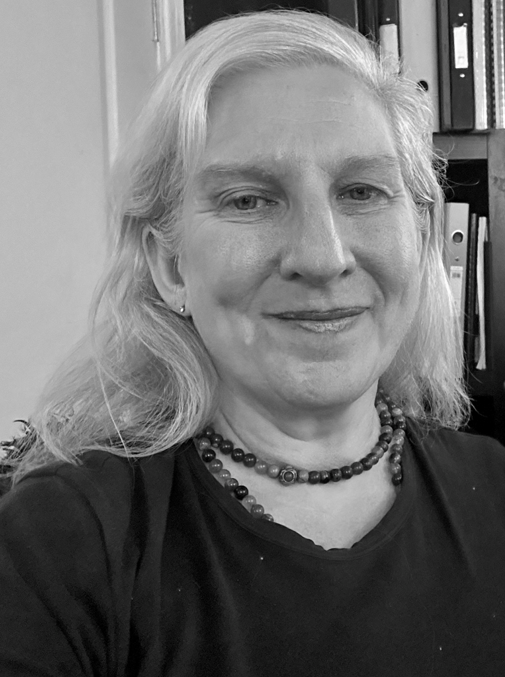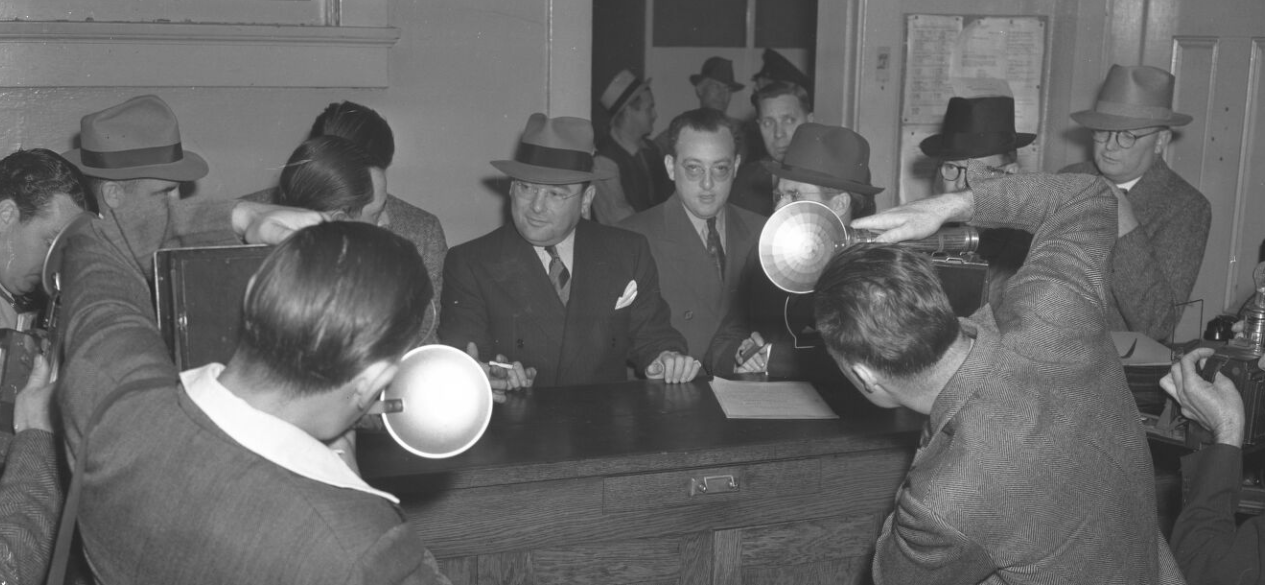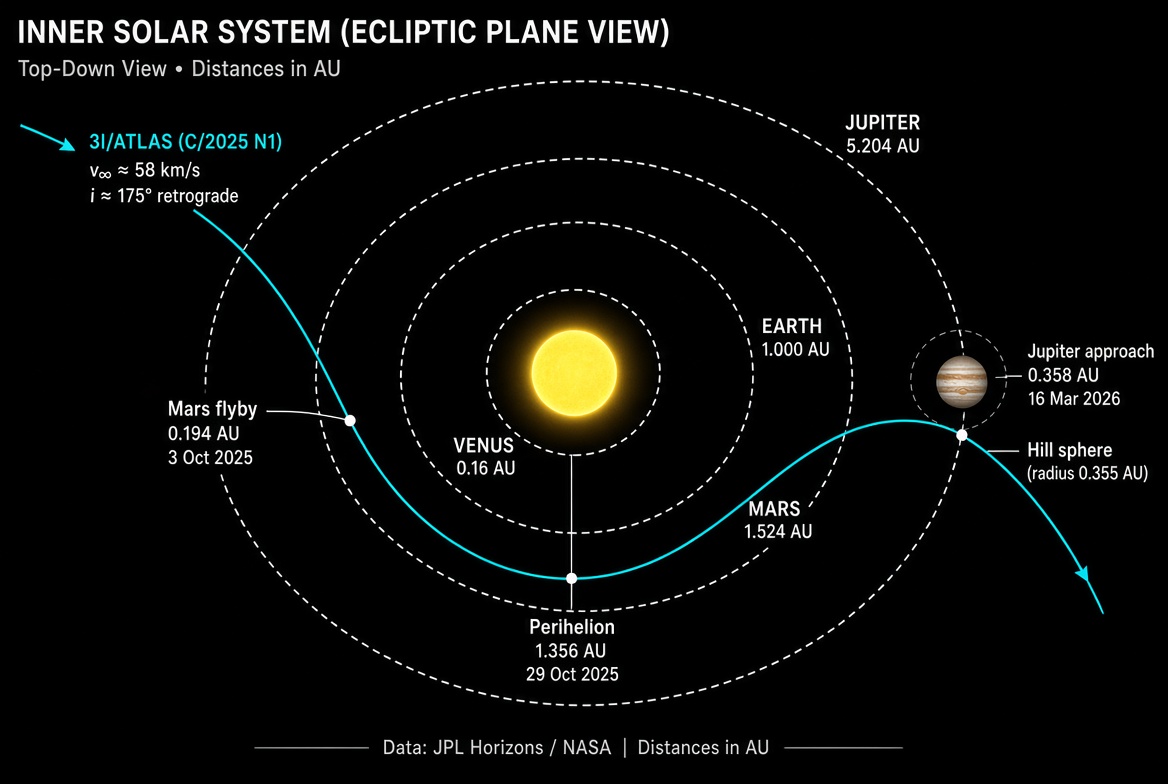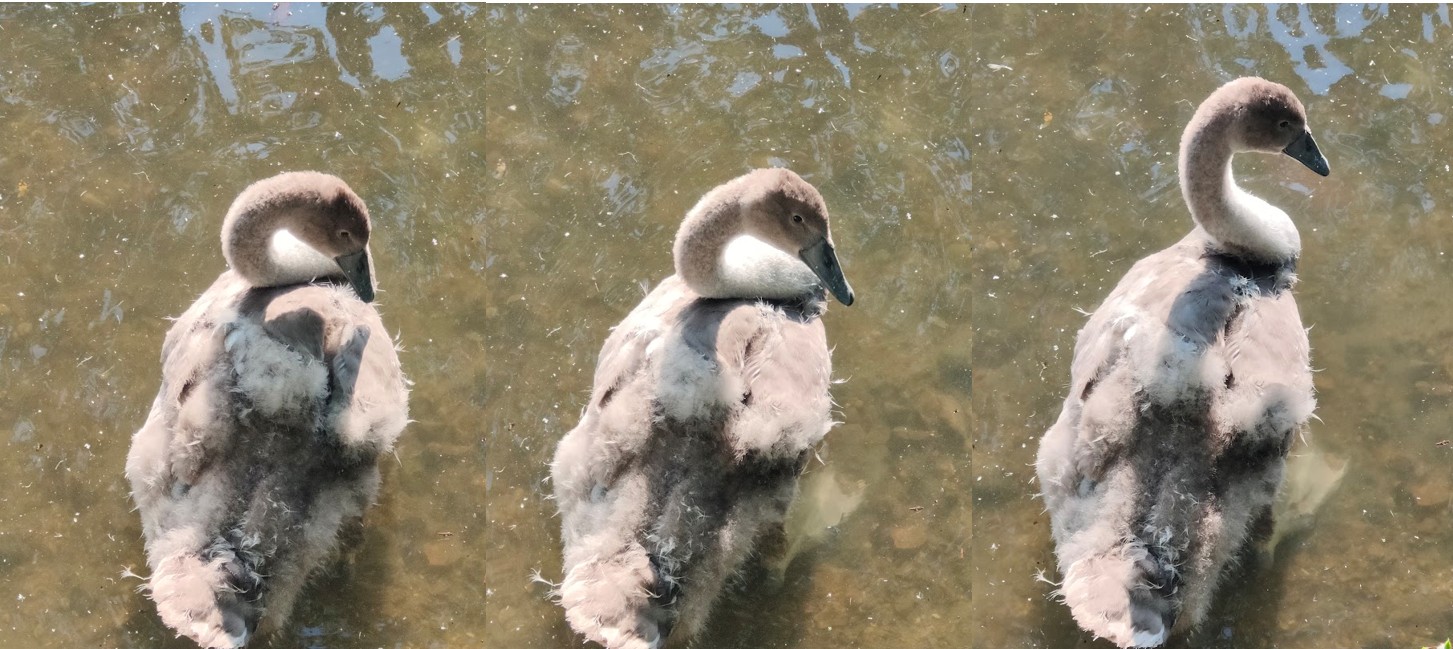
Ars Notoria. Is arsnotoria.com an ugly duckling? Photograph Phil Hall
Dear Friends,
I’m writing to share where Ars Notoria, the online Humane Socialist magazine, stands as we approach the next issue—and the next phase.
We’ve been running this magazine for six and a half years. In that time, we’ve built something with genuine prestige across poetry, literature, photography, art, politics, lifestyle and even (with the addition of Ismael) philosophy. That’s no small thing.
It’s time to consolidate, clarify. Before I get to the concept, I want to address something that came up recently, in an editorial meeting; the question of Google rankings, and the assumption that I don’t quite understand how they work. Let me put that to rest.
I’ve been executive editor of this magazine for six and a half years. For every single article we’ve published, I’ve tracked its Google ranking from the beginning. And before that, I ran a magazine under the same name from 2007 to 2010, where I did exactly the same. So please don’t be under any misapprehension: I know how Google ranks content. I know how tags, subjects, and analytics function. I know the terrain.
I also know its limits. Years ago, I wrote a speculative piece about an astronomical phenomenon, a bubble of gas around a star, and its possible connection to Kardashev civilisations. It wasn’t a scientific paper. But it went viral, was cloned across websites, and soon enough, if you searched for that phenomenon, my small thought piece sat at the top of the results.
That was the moment I pulled the plug on that first magazine. I realised that momentum alone, which came about because of the frequency of publication and accumulation of articles, had turned my writing into pollution. Instead of decent information, people were finding me.
I went away for a decade after that. I worked in Saudi Arabia and the Emirates. But I was determined that when I returned, and when articles began surfacing at the top of rankings again, a new Ars Notoria would hold its nerve. Politically. Poetically. In cultural commentary. Geopolitically. Artistically. In every way. That meant the quality had to be raised. It has been. This issue is one of our best.
I’m also well aware that organisations like Google and Facebook are instruments of hegemonic power. That’s not an accident. Before you were a Barclay brother, or a Robert Maxwell, or a Qatari and paid your millions and got your newspaper published. Either that or you had the imprimatur of a state that reflects economic forces far more than it does genuine democracy (Oh Jeremy Corbyn!).
Now the monopoly operates differently. It operates through filtering, through disinformation, through subtler forms of control. But the fact that the secret police might be listening doesn’t mean you stop using the telephone.
We are humane socialists (or the rough equivalent). We want a fair and just society, and that is fundamentally at odds with out-of-control, bestial corporate capitalism. The people who see this bestiality most clearly are not at the centre. They are on the periphery. And increasingly, as the crisis deepens, we all get a taste of our own imperial medicine. But that’s an aside.
Here’s the practical reality now. There is a filter. If Google, or its AI, favours one of our articles, it’s clipped and placed at the top of results. A key sentence is highlighted with the image alongside. Google, strangely, actively promotes some of our articles with ‘clips’.
But if an article is difficult—the Karaganov piece, for example—it takes days rather than hours for Google’s crawlers and bots and people to let it through. Two days or more.
On other search engines, Ars Notoria articles appear almost immediately at the top. So this is primarily a Google filter. But I’m somewhat reassured, because almost whatever we write—whether an interview with Alex Gordon of the Marx Memorial Library, a diatribe against war, or something else challenging—it still seems to percolate through. Don’t underestimate our online presence. Few people do.
Now, analytics and promotion. When we started, I used a version of WordPress that logged Facebook shares. Some articles registered two or three thousand shares. Paul’s articles have always had the most; I came second. When I changed the design, that logging disappeared. The analytics now show perhaps five hundred visits a day, sometimes under a hundred. But that never corresponded to the share counts, and that was six years ago.
The Tao Te Ching says the fish that stays under endures. That’s been accurate. The moment you raise your head above the parapet, things happen. My brother the photojournalist told me as much when the Press Association tried to fine us £1,300 for a single photograph. “You’re a real magazine now,” he said. “That’s why you should expect these things.” Imagine twenty such photographs. Twenty thousand pounds. We settled. We paid.
And then you start thinking about libel, about accusations of advocating terrorism or antisemitism, or working for enemy powers. These are the genuine reasons alternative media platforms have found it so difficult to establish themselves over many years.
At the moment, the magazine seems to have its ducks in a row. What it needs now is to go from being, an eccentric thing into being a fully functioning magazine.
If we produced anodyne corporate material, churned out by hacks and marketing people, we’d cover our bases easily. That’s not what we are. There is an edge. There is risk. But if we want union support, or sponsorship from socialist, ecological, or cultural organisations, then there needs to be some retrospective editing and polishing of the site. I’m going to engage in that alone and in consultation, unless anyone else has the time to join me.
My next project, having secured the ISSN number thanks to Yogesh Patel’s promptings, is to produce a PDF version of the magazine and get it distributed through one of the organisations that share magazines and newspapers online. There are other things to be done. Everything emerges. What exists is a platform.
And it’s a strong one. Among poets—thanks to Yogesh, Sudeep, Ulises, Ismael, and others—Ars Notoria is a heavy hitter. In politics, it gets read. Photographers know about it. My brother has had recognition through it. Thanks to Paul, and our interviews, we’re probably one of the most interesting magazines out there for illustration—with Arun and food, we’re at the forefront. Thanks to Margaret and David, we’re at the forefront with memoirs and people’s lives. The short stories and essays from James, Peter, Amal, Tina and others have been very sharp. The community writing, especially poetry, is pretty damn good. As far as I can see, everything’s ready.
So now to the question: What exactly is Ars Notoria?
Years ago, my friend and former colleague Rob Hyde—now a major journalist for the Mail, the Times, the Telegraph, and many others—asked me, “Phil, what are you guys doing? Why is everything so disparate?” What’s the angle? The answer has come into focus through years of conversation with Paul, James, Arun, Peter and others. We ARE a high-concept magazine.
Ars Notoria means the art of the noteworthy. When I say “Ars Notoria” and put alongside it “the art of the noteworthy,” I’m not adding anything. It’s an explanation of the concept. There’s the overtone of the grimoire, too—the prayer for understanding and knowledge, which is ironic and deliberate.
Do people need to read about what’s noteworthy? In essence, that’s what any serious magazine or newspaper is: writing about what is relevant, what is worthy of being noted. The difference is this: when we say the art of the noteworthy, we mean the art of the noteworthy specifically from a humane socialist perspective. A humanist, egalitarian perspective. Now that’s a broad church that could include communists and progressive liberals unconvinced by war, imperialism and the need for austerity and monetarism.
This isn’t complicated or difficult. It’s clear. And it’s the reason we work together on occasion. We need to make this very clear to the members of our scattered community, who are becoming increasingly enthusiastic about our shared work. Know this. Humane Socialism is not a pushover or soft left.
That is the current status of Ars Notoria magazine; written for like minded people, for those who want to stay in the loop and feel they can help—and for those who have, in the past and in the present, contributed so much to the growth and development of a new cultural platform. Before publishing we must ask the question: What is noteworthy, from a humane socialist perspective?
If you are a humanist and a socialist, or the rough equivalent, then you really can’t afford to miss an issue of this magazine. The next issue is coming out on 1st of November and we have room for submissions before it does and we would really appreciate any offers of support because we need the resources and the help.
With warm regards and resolve. Do enjoy this issue. I think it is our best so far.
Phil Hall
Discover more from Ars Notoria
Subscribe to get the latest posts sent to your email.