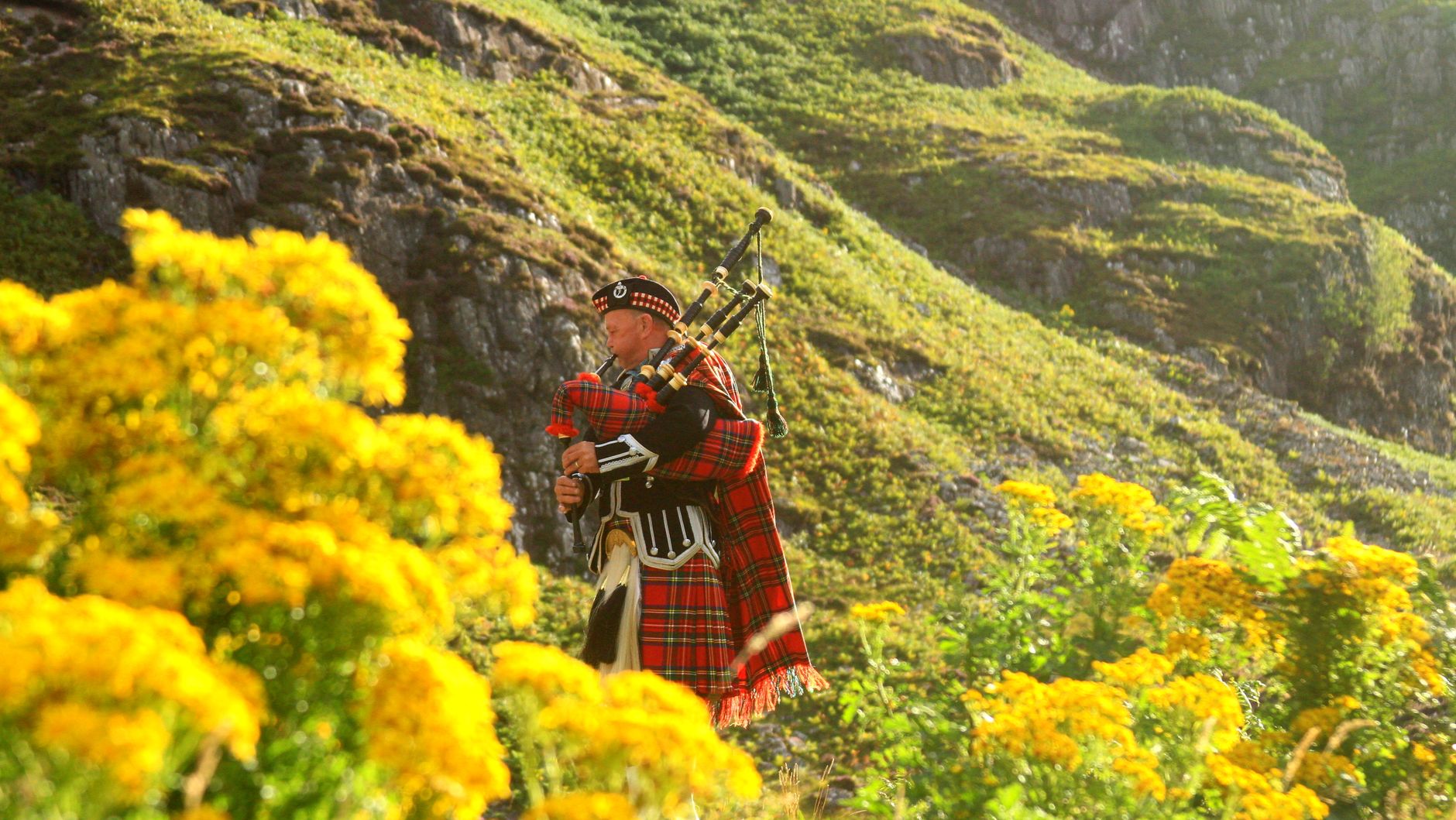
Photograph by Gene Taylor on pexels
Or, how it feels to be cancelled by the SNP.
by J.W. Wood
Edinburgh, January 2009.
The pub is packed: you’re reading as one of four up-and-coming poets, all with your first books or pamphlets published in the last eighteen months.
You yourself have just had the longest single poem since Tony Harrison’s V published in The Poetry Review – the magazine of the UK Poetry Society.
You begin to read that poem. More than 200 lines, which started as a drunken joke when the Literary Editor of The Scotsman challenged you to write hexameters in English.
A voice bellows out from the crowd when you’re a few lines in: “Why don’t you fuck off back to England?”
Hands that belong to that voice start throwing pound coins at you.
“There’s your bus fare too. Now fuck off.”
You resist the temptation to point out that four pounds won’t even get you to the airport, let alone any means of escape from their Nationalist fantasy. After a pause, you carry on reading.
After the reading, you say your goodbyes and go home to bed. The next day, you find out that arguments about your poem had raged on until 4AM. Someone in an internet chat room – the sole internet chat room in Britain dedicated to poetry – describes your poem as “incendiary.”
Why?
Because you had pointed out the truth. That the leaders of the National Party of Scotland, rebranded as the Scottish National Party, sympathised with Adolf Hitler during the Second World War. And that one of them described his hobby as “Anglophobia”.
Soon the fatwa is in force. The Editor of Poetry Review resigns suddenly, with no reason given. Invitations to read vanish, as they say in the country your forefathers lived in, built and fought for over six hundred years, like snae aff a dyke.
Any mention of your poem disappears from the internet. A decade later, the only proof that the poem ever existed is the physical copy of Poetry Review which you keep in your desk drawer, and the manuscript copy given to a friend.
You emigrate and continue publishing overseas after the fashion of those samizdat writers you’d translated from Czech while living in Prague decades earlier.
Time passes – but the truth remains. The SNP destroy civic life in Scotland. People without the legal right to remain in Scotland become public representatives. The party that wants to run a country can’t build a ferry to its islands. A centuries-long reputation for educational excellence crumbles, its economy a shadow of “the atom that civilised the world.”
And now Ars Notoria has republished my poem, enabling readers to judge for themselves. For the first time in two decades. Read it – here.
Song of Scotland
atollens humero famamque et fata nepotum
Scotland. Scot-land. Scot-land. The call that rings around
football fields from when we used to lose to when
we’re winning now. Winning. Smacking it thirty yards beyond all hope
into the top of the net and Thierry’s disgusted face.
Welcome to a new day ™ – and take that for your airport
slogan. Madness, rhyme and reason served up in a haggis
and whisky sauce just the way
they say
we sweaty socks
like it.
Scotland. Scott-land. Invention of a nineteenth-century novelist,
from the station in Edinburgh to the pubs
and the islands and the history – who can say whether
we really exist?
Scotland. Sot-land. Full of drinkers
and booze and blades shining from sea to skin and see
you Jimmy et caetera, every incident leading
to an initiative that echoes from the Ochills all the way
down to Stab-don, where the real violence lies. Woken
from sleep
in the early hours of a new nation we look out
on a la-la-landscape bequeathed by those who said
they knew best, those from the West, whose God and Glasgow
Labour Party would provide. This their mess, this underperformance
theirs, heirs now to an early death, corruption their
disease. Ours
is now what they were. Left
with what? A nation? I’m no’ so sure. No nation without
representation, but we’re the most over-represented
non-Nation on Earth. One hundred and twenty-nine numpties sat
on the world’s most expensive wall. Look instead to the North
and East, where the black gold flows and the numbers know
the future lies, away from clichés about poverty
and deep-fried pies, towards culture and prosperity
born from hard work, not depravity. Take a trip then from the barren
southern border up through brokerdom in the Lothians
and into Prince Billy’s saintly Kingdom, then on to that
stem-cell science park once known for its journalism (I
mean Dundee) and on. And on. Into Western Europe’s
most precious resource, under waves that used to teem
with fish but boil now with regulation: this is where
the money is. Where our future is. Socialism
and Scottish Equity,
what a load of shite:
the country
that created capitalism, old Adam, couldn’t cut it
ourselves and had to head, Tam in hand, southwards
for a generation.
But not now, no noo doon their, where
it’s a round million for a wee flat, less water than
the Sudan, more stabbings than Compton and a transport system
that’s like Chaos
only less well planned. Tens of thousands
slipping over the border each year, rediscovering roots:
“of course my grandfather was half Scottish”—like they
cared – and the country houses one fifth of the price. Oh
we would move but
it’s the climate. Climate? Climate
of optimism rather than greed and fear of being stabbed
on your doorstep? No such thing as bad weather, only
inadequate preparation, as that great Englishman
and laureate Hughes had it. So don’t give me climate
give me the truth instead, that you like the baw-bees that help
you to feather your bed, the braying parties and that sense
of belonging to something exciting. Exciting. Excitement.
who said what in The Observer? Oh him, I knew his sister
at Oxford: the modern mode, seeking a thrill and a thrill
and a thrill, not listening to anything that lasts
like the moon above Loch Torridon, hills carved three millennia
ago in agony standing watch, the deer and horses,
fish butting through the waves in February, Nature all so
unscared unscarred and another
world from the filth-filled tubes
and monotomorons. Am I being too scathing? Well then:
celebrate instead
the absence of everything
that gives
our neighbour presence, once again a nation defined by what
and who we are not: not overpaid, not riven with anxiety
about our position, subject to the risk of global
derision. After all, when no-one knows your name, who can call
you a failure?
IN GER LOND IN-GER:LON DING ER LON—innit
knaa wot I meen? 4 reel. Imagine trying to translate
official documents into that, elevate vulgarity
to the status of language just as we did
with the Scots leid. And don’t give me that about dear old Rabbie,
great fearty and tax collector, hid himself when they sang ça ira,
now he’s the toast of every pension-padded radical
Professor, rugby club gentleman and all who like to think
of themselves as Scottish, even though they’ve never set foot. Come
with me, let’s go West a while – and see what a mess
the Irish made when WBY sang about that terrible
beauty from a charming flat in Pimlico and 1916
ushered in seventy years of backwardness and theocratic
muddling. That what we want now? Now as dawn breaks,
now at last
after sixty years of the dead corporatist hand,
do we want to throw ourselves under exclusion’s wheels? I
say more: no just man can justify this obsession
with what is Scottish and what isnae, a quasi-modern
almost-űbermensch unhealthy interest in where you’re from
and wha yer faither kent.
Scotland. It’s-not-land. We’re no English. We’re
no’ bothered. We’re no – just plain no. And all we can have
that might no’ be no is to welcome them in from wherever,
faìlte forever to the dynamic hands and brains and tongues
of Poland and yes England to plug the yawning
hole in our fecundity, a new ism-scheme-schism
for this empty generation, a multi-tongued many-accented
nation where we will be who we are not who we are
not. O we love to sing:
And in the past they must
Remain—indeed. That stood against them – against who? Ourselves? We need
to go hamewards tae think again. Think again: isolate
the elements, imagine what it looks like – well. More people
here, for one thing, many more, not more in West London
than there are up here. More. More: more money, more jobs,
more prosperity och but no ye’ll ruin oor proud heritage
and oor identity.
Heritage of what? Of failure
and degradation? Forget it: go and get something
new instead:
for us increase should mean addition
and not dilution. And if you want an example,
think about those Western neighbours:
Ireland, Ireland – who stands on guard
for green? (Federal Reserve, that is, not Fields
of Athenrye) … and what about us? Blue? Dinnae
talk tae me aboot that colour
even if it’s the one
on your flag. Blue, blue: the sea, thalassa thalasso,
blue like the crossed cursed symbol of this story nation,
blue the sea that covers us on three
sides from the Western Isles to Orkney to Berwick on Tweed,
the sea, bringer of mystery, giver of all we need:
beauty, haddock, inspiration and at least thirty years
more petroleum revenues to feed our national
subsidy junkie habit until we all die out and then
De’il tak the hindmost to the ones who’ll inherit. As well
be hanged for a sheep as hanged for a lamb, whatever
that means in global geo-political discourse. Wake up now
as the daylight grows, the bell tolls Attolens—
the bell tolls, he lifts up, the bell tolls— will we be
the ones who keep sleeping, keep faith with the past
and the treble chins of the Glasgow politburo
who pat their bellies contentedly and assure each other
that they sacrificed lucrative careers for public service? Or
are we the ones who could change things? History
would suggest not, but then
bollocks to history. Roll up
your sleeves and get started – I left in seventy-three because
I saw there was no hope.
So where’s hope now? Stuck
on the M25? Mortgaged to death and beyond in a semi
in Sevenoaks? Give me a break:
the past is over, time to start again he lifts up
throw out the clichés
[atollens humero (he shoulders the sheild)]
and the myth of brain-drains, heart disease and weather,
look long and hard at what we’ve got and haven’t. Hard
work. Honesty. Fresh water. Community.
Pride. Cheap houses. Footballers (sort of). Poets
obsessed with themselves and cheating Christ-
opher Murray Grieve.
Back comes the stone
of Scone in ninety-seven, a lump of granite
with a hole in it, symbol of our people and our freedom.
our freedom, our fame, our freedom, our name,
freedom fame name fate shift the letters around
your plate, batter your mate, set a date and then
another because you failed to win…fama. Fame.
your reputation. The thing no man may steal though many
will resent it, what you do, the thing you build,
your brand equity in a global marketplace©; your fate—
you make your own luck, it’s up to us: he lifts up the shield
Of his people. And we will write empty, tired rhetoric
(such as starting our sentences with “and”) unless
we match our words with deeds, indeed
by their deeds shall ye know them, as Knox
loved to say. The shackles are off, the box is open,
the country fresh before us, the oceans hum
with unharvested electricity and our whisky
is being swallowed from the Punjab to Shanghai. So
take up these shields, write your own stories upon them,
this is a time for heroes, here, not elsewhere-oes, heroes:
stay in Scotland and bet your life on it, famamque et fata
Nepotum, he lifts up the shield of his people,
Their fame and fortune written upon it.

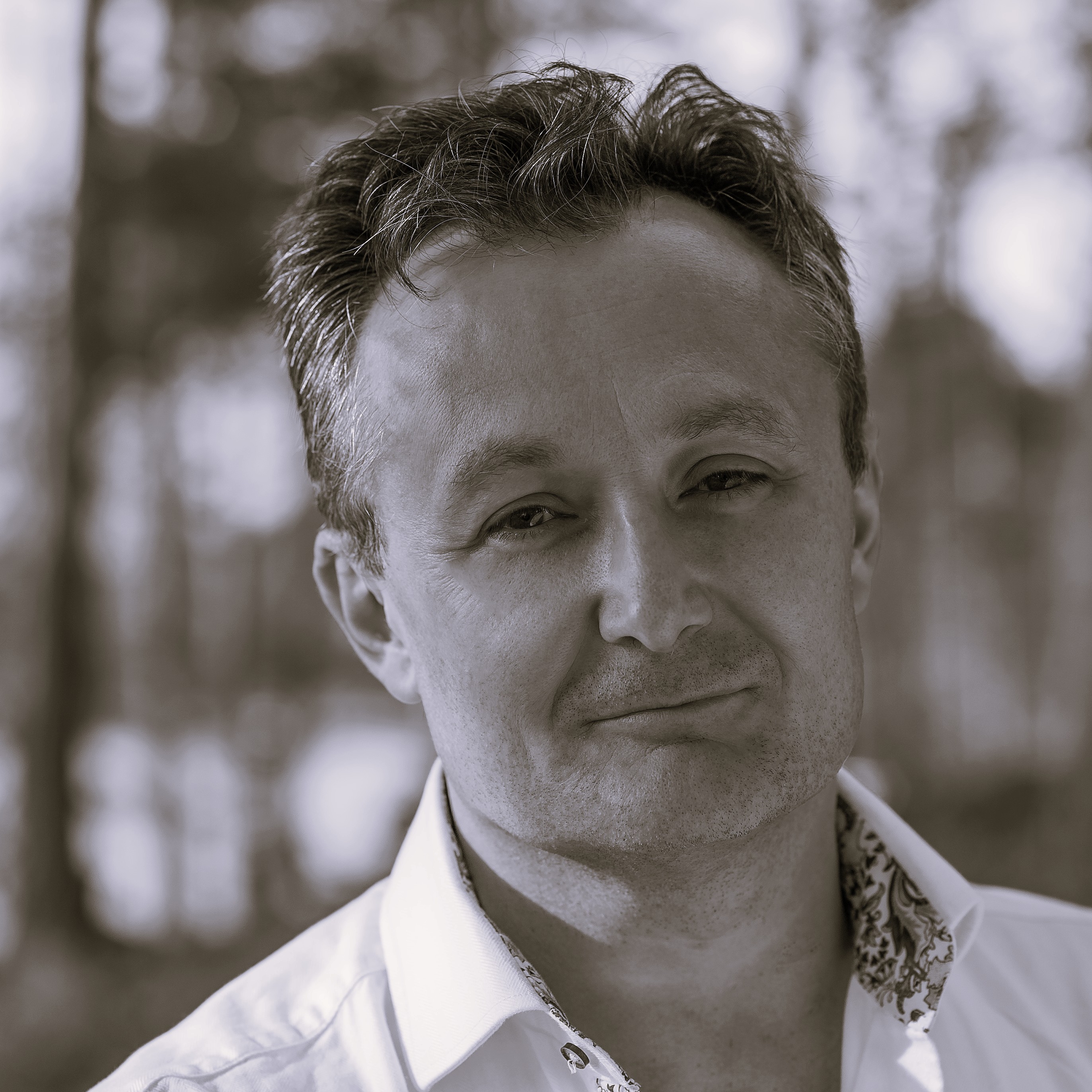
J.W. Wood. Photograph courtesy of the author
Born in Paisley, Scotland, and raised across the United Kingdom and Canada, J.W. Wood is an internationally acclaimed author and poet whose work spans poetry, thrillers, and short fiction. He earned his degree in English at the University of Cambridge, where his debut book was published with university sponsorship and launched with a national reading tour. He subsequently refined his craft alongside literary luminaries, studying under Nobel laureate Derek Walcott, US Poet Laureate Robert Pinsky, and Sir Geoffrey Hill, before spending two decades as a global copywriter and content strategist across Europe, Africa, Asia, and the Americas.
His published works include the poetry collections The Theory of Everything (2006), The Anvil’s Prayer (2013), and the award-nominated titles Inextinguishable (2008) and The Emigrant’s Farewell (2016, Saboteur Award nominee). In 2011, his breakout thriller Stealing Fire sold out two print runs in six weeks and was selected for the Rome Film Festival.
Recently, he won the 2024 Strands International Fiction Award and was shortlisted for the Mystery Writers of America’s prestigious Edgar Allan Poe Award. His short fiction collection, Captcha This!, was released in 2025 by AN Editions.
Discover more from Ars Notoria
Subscribe to get the latest posts sent to your email.

You must be logged in to post a comment.