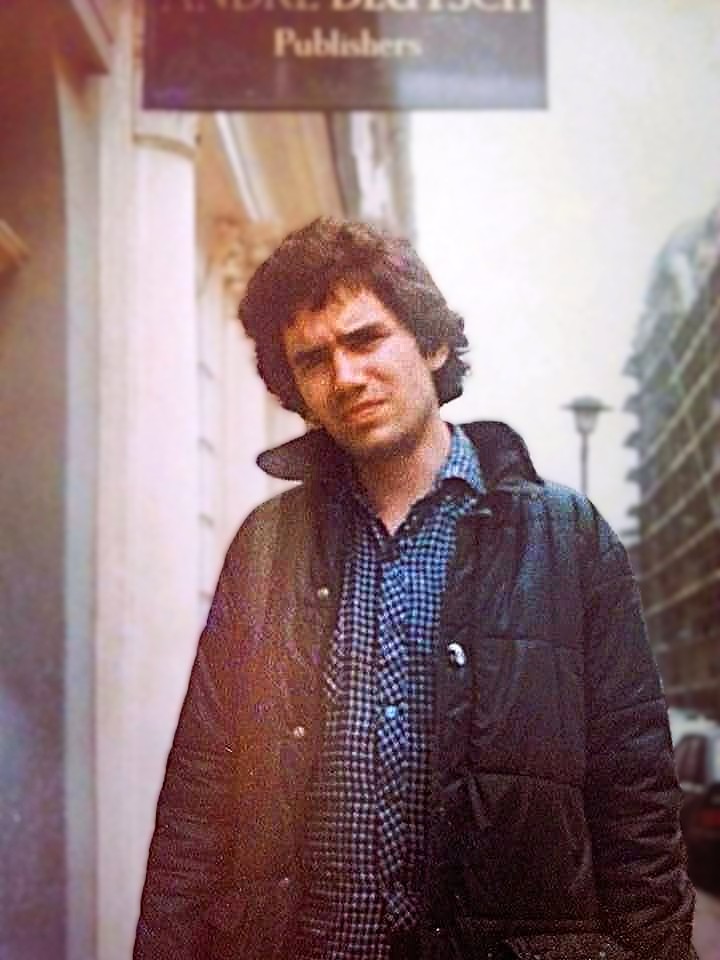
Back from Kiev in 1984. Photograph Benson
“In so far as the Soviet Government have departed from this admirable principle, and they have done so less than the United States have done in Greece, China, Italy, and France, they have acted not on revolutionary or doctrinaire grounds, but out of concern for their national security. Sometimes their fears have been exaggerated. But all too often they have been justified by American intervention and power politics.”
Konni Zilliacus (1894–1967) Member of Parliament for Gateshead (1945–1950) and Manchester Gorton (1955–1967).
by Phil Hall
Political, social, and geopolitical situations are complex and demand one’s full attention, reading, reflection, and reliable sources of information. For this reason, for modern communists and humane socialists, the situation in Ukraine is a triple shit show. Caught in the middle of this conflict, humane socialists and communists face a difficult choice and are tempted to reject all three: the imperialism of the Anglosphere and Europe, resurgent fascist-inspired Ukrainian nationalism, and Russian national chauvinism and social conservatism. However, in the end, holding our noses, it is best for us to oppose Western imperialism.
Immersed in the virtual reality fantasy world of geopolitics generated by embedded Western mainstream media organisations, people hold strong and mistaken opinions about what is happening beyond the manufactured spectacle presented to them: powerful, interwoven, carefully crafted stories of “unaccountable” Russian aggression and conquest against a smaller nation. Western state- and billionaire-funded media outlets conduct daily hate sessions in the newspapers and on the TV channels, flooding social media with algorithmically weighted narrative spam.
A key ingredient that goes into making that spam is Anne Applebaum. She was a student of Russian in Leningrad at the same time as I was and, from what I gather, associated with the same circles. They were New Age types who followed the Finnish band, Leningrad Cowboys. Like their Western counterparts, their New Age open minded veneer belied an inhuman and elitist belief system. Many of them, despite their friendly appearance, were quite lumpen and criminal; several of those who attached themselves to foreigners were Lithuanian and Latvian Soviets, carrying their own deep-seated historical grievances. Others were children of professionals and the communist elites.
This is the exact combination of people that went on to play a big role in the politics of the new republics set up after the dismemberment of the USSR, as well as in the political life of former Eastern Bloc countries like Poland. They offered themselves up as candidates to be compradores. They despised “ordinary,” “brainwashed” Soviet people and workers, and they made their living by associating themselves with foreign visitors.

Anne Applebaum
One of their primary techniques was to love-bomb foreigners, inducting rather ordinary, sheltered middle-class Western students (perhaps people like Anne Applebaum) into what felt like a glamorous, wild, and edgy underworld. In that milieu, often marriages between westerners and easterners were treated as commercial transactions. One of our fellow students (she was older, more cynical, and a talented artist) was quite willing to enter into a marriage of convenience in exchange for a large sum of money and various other concessions.
Applebaum strikes me as having been remarkably naïve, as she seems by her accounts, to have taken the stories and aggrieved posturing of these hustlers at face value. It was through the lens of these people, who stuck to foreign visitors like tourists, that she must have formed her view of Soviet society. To an American fresh from New York, Leningrad naturally felt rather glum, and that circle’s stories and cynicism must have reinforced that sense of bleakness. This is speculation. Yet the city I remember was spotless, full of imperial palaces and romance, and home to places like the canals and Dom Knigi, deeply impressive in its own way. Not everywhere on earth can be as shiny and busy and exciting as Manhattan. Leningrad is the Venice of the North.

Photograph by Vitaliy Mitrofanenko on Pexels
At the same time, as a Jew, the antisemitism that was rife in the USSR must have been deeply alienating to someone like Applebaum; I witnessed it myself close up. Coming from an American Jewish background, shaped by Cold War liberalism and surrounded in Leningrad by Baltic and elite circles eager to validate Western prejudices, someone like Applebaum was uniquely susceptible not only to an anti-Soviet critique, but to a sweeping, and strangely racialist anti-Russian narrative. Strange because many of the people touting it were half Russian. Where she saw an irredeemably oppressive Russian empire through the eyes of its alienated periphery and disaffected elites, I was looking through a completely different prism.
It is also worth noting the self selecting system at work in the West. No one holding positive views of the USSR would ever have been recruited into the civil service in the UK or the USA, nor promoted to the top of major editorial boards. During a 1996 BBC interview, when the journalist Andrew Marr protested that he had never been told what to write and asked Noam Chomsky how he could possibly know that journalists were self-censoring, Chomsky cut straight to the heart of the matter:
“I’m not saying you’re self-censoring. I’m sure you believe everything you’re saying. But what I’m saying is, if you believed something different, you wouldn’t be sitting where you’re sitting. Nobody ever tells you what to write. That’s the whole point. You’re completely free to say what you want, because you have already been filtered through a system of socialisation and selection so that what you want to say happens to be what the institutions want said.”
Across American history departments, magazines, newspapers, and academia, those with the “right,” establishment-friendly instincts are consistently selected, fostered, and elevated precisely because they do not need to be told what to write, especially when it came to the cold war and or when it concerns, as it does now in the Ukraine conflict, Western hegemonic imperialist strategic interests.
Applebaum is a prime product of this ecosystem. Beyond her student days, she went on to acquire a deep fluency in the worldview of an embittered, anti-communist Eastern European comprador elite, one tightly bound to Western capital, partly because she married directly into it. She is thoroughly well-versed in its grievances, and she has built a career translating and explaining them to a Western audience.
Of course, there was indeed a rot at the heart of the USSR: too many of the nomenklatura gamed the system for their own benefit, and most Soviet workplaces suffered from the worst kind of backstabbing office politics.
Yet my own trajectory, and the view I formed of the USSR, was the result of a very different upbringing and experience. Children carry the political weight of their parents forward into life, and I felt compelled to study the Soviet Union. Growing up in the shadow of South African apartheid, with the brutality of the Vietnam War and the Iberian dictatorships as a daily backdrop, I didn’t experience the USSR as a distant geopolitical adversary. I saw it as the indispensable counterweight to Western imperialism. We were predisposed to think well of the USSR because of its foreign policy. The great victory over fascism in World War II was a communist victory, not a victory for Russian chauvinism. The world was rescued from fascism by the USSR.
The Red Army that defeated Nazi Germany was not a chauvinist Russian force bolstered by revived Orthodoxy, rejecting Marx and denigrating Lenin. It was a communist army supported by the productive capacity of the people of a communist country. The Russian workers and peasants who sacrificed to defeat Nazism stood alongside those of Armenia, Azerbaijan, Belarus, Estonia, Georgia, Kazakhstan, Latvia, Lithuania, Moldova, Tajikistan, Turkmenistan, Ukraine, and Uzbekistan.

Distances are great, our hearts are close. Soviet poster supporting the Vietnamese resistance
The USSR was not an Open Society. Despite its inherent structural problems of corruption and inefficiency, the prejudices it conserved, its rejection of free speech, and the political and personal bickering that characterised it, the USSR is still fondly remembered by many of its ordinary people for its free healthcare, education system, bonhomie, peppercorn rents, country cottages (dachas), pensions, unemployment benefits, guaranteed jobs, free holidays, cheap flights, and cheap tickets to all kinds of cultural events. None of those were the markers of a failed society.
Many people around the world involved in anti-colonial and anti-imperial struggles received vital help from the Soviet Union. The Soviets were the counterweight to Western imperialism, even if they could not be so for every struggling, developing country that tried to use its own resources for the benefit of its own people. Soviet foreign policy, whatever motivated it, helped free the Portuguese colonies in Africa, Vietnam, the People’s Republic of China, Cuba, South Africa, and other nations, providing a model for society that was imitated to varying degrees throughout the world. Some of those societies aided by the USSR have now been prompted by events and concrete support to transfer their sympathy and allegiance over to the Russian Federation. Anyone who has been involved in the struggle against colonialism, neo-colonialism, and imperialism in Latin America, Africa, Asia, and the more neglected parts of Europe understands that the USSR was always their main ally and defender for as long as it existed.
Before going there myself, I studied Russian for three years. My teachers embodied the raw, unresolved contradictions of Soviet history. Mr Bondarenko had been captured by the Nazis and forced to fight for them; when he was subsequently captured by the Red Army, they refused to understand his situation and sent him to a prison camp in Siberia. After that experience, he would only eat food he had prepared himself. Another lecturer, Gerald Brooke, had been jailed in Moscow for handing out Bibles and spent time in Lubyanka before being traded for a Soviet spy. And a famous Soviet literary critic in exile taught us Tolstoy and Zoshchenko, hissing and swearing at me in Russian because of my Soviet sympathies. Yet I didn’t blame him. In the end, I knew I had no right to judge Mr Bondarenko, the dissidents, or the former spies until I had got to know the place myself a little better.

Mikhail Zoschenko 1938. Photographer unknown
This was a decade after the era of the Vietnam War, a daily reminder of U.S. foreign policy’s brutality, alongside the entrenchment of South African apartheid and the dictatorships in Portugal and Spain. The geopolitical lines seemed stark. South Africa had not yet been liberated. I was seeing the USSR from the viewpoint of a South African, directly and tangentially involved in the struggle against apartheid, who was clear about where his obligations and loyalties lay, not from the viewpoint of a New Yorker and a Zionist.
I went to the Soviet Union as a student, to Kyiv in 1984 and Leningrad in 1985, and later returned to the same institution in Kyiv to teach as a lecturer from 1990 to 1991. When I first arrived in Kyiv in the mid-80s, I had no real idea of where I was going. I had studied the Russian Revolution, read many books, and immersed myself in Russian literature. I knew about Bulgakov, though I knew very little about Ukrainian culture and identity. Trying to make sense of everything perceived in the USSR was a long process. My observations were not made from the privileged vantage point of a spy, a military attaché, or a member of the diplomatic service, but from the ground level of a young student, and later a university lecturer, and from the viewpoint of someone who fell in love with a young Soviet woman.

Kiev 1984. Photograph Phil Hall
In Kyiv as a student, I lived the place from the inside out. I walked the banks of the Dnipro and rowed across its waters, wandered through the ancient grounds of the Pechersk Lavra monastery, sang Russian folk songs late into the night, and stood on the steps of a Catholic cathedral protesting for it to be returned to the faithful. I got into a fistfight with a drunk, huddled around an open oven for warmth when the radiators broke down, and scoured the city to find food for my pregnant wife. I played basketball, ate bowls of tvorog and smetana dusted with sugar, learned the history of the Rus from academics, and how to make Russian salad and drink the juice of birch trees, and did all the ordinary, reckless and sincere things that young men do. And yes, I visited Babi Yar to understand the horror of it, and I watched a former Ukrainian Jewish Olympian mourn his murdered son.
I got a close look at things, and it was there that my preconceptions began to fade and a new, more sober understanding dawned.
When I returned as a lecturer in 1990 and 1991, I watched the breakup of the USSR unfold at close quarters. The woman with whom, alongside others, I shared a large apartment was called Oxana. The bright colours that Oxana wore masked a dark and dangerous ideology. From inside that flat, I saw first-hand how the Ukrainian diaspora operated through figures like her, using money and logistical support to cultivate and manipulate the newly elected deputaty. Most chilling of all, I listened to her casually refer to John Demjanjuk, the notorious Treblinka camp guard, as a family friend. The Nazi sympathies that festered in the anti-communist diaspora have played a divisive and destructive role in countries like Ukraine, and those sympathisers and collaborators have helped turn what should have been neutral buffer countries into the USA’s attack dogs.
Meanwhile, figures like Applebaum, speaking for that same hawkish Atlanticist consensus that is so poisoned by the Eastern Europe’s hatred of Russians, appears in recent interviews almost to lament that NATO has not yet found a pretext to invoke Article 5 and plunge directly into a shooting war with the Russian Federation, dismissing calls for peace as mere appeasement. To watch commentators treat a potential nuclear confrontation between NATO and Russia as a test of Western resolve is staggering. God save us from such people.
Still, today the USA remains the enemy of almost every independent nation, or nation fighting for real independence in the developing world. Because the USA spearheads Western global corporate capitalism and remains the primary aggressor, many communists and socialists, reluctantly perhaps, align with the Russian state despite the fact that, just over a decade ago, they actively despised it for its social conservatism, corruption, oligarchic rule, racism, suppression of free expression and LGBTQ+ rights.
Phil Hall was born in South Africa into an ANC family with British, French, Austrian, and German roots. After his parents were exiled, they lived in East Africa and India before returning overland to the UK. In the UK he studied Russian and Spanish literature, politics, and economics. After graduating he specialised in descriptive and applied linguistics. Phil has lived and worked in Spain, the USSR, Mexico and the Gulf. Returning to London during the pandemic, he co-founded the Humane Socialist magazine, Ars Notoria (the Art of the Noteworthy) and the micropublisher, AN Editions.
Discover more from Ars Notoria
Subscribe to get the latest posts sent to your email.

You must be logged in to post a comment.